
Restaurant Patio Pergolas in South Florida: Turn Outdoor Seating Into Reliable Revenue
In South Florida hospitality, patio seats are profit seats — until the 2 p.m. sun makes them unsellable or an afternoon shower clears the section entirely. A restaurant patio pergola with a motorized louvered roof turns outdoor dining from a weather gamble into reliable, bookable capacity. Here’s how restaurateurs, hotel F&B directors, and club managers across Miami-Dade, Broward, and Palm Beach are using engineered shade to grow covers, average check, and guest satisfaction at the same time.
The economics: shade is revenue
Run the math on your own patio. If sun and rain make outdoor tables unusable for even three hours a day, a 20-table section loses hundreds of covers a week in a market where outdoor seating is exactly what guests came for. A motorized louvered pergola makes those hours sellable: louvers track the sun through lunch service, close completely when a shower passes through, and open to the stars for evening turns. Use our outdoor-living ROI calculator to estimate the payback for your own patio.
Unlike fabric awnings and umbrellas — which fade, tear, and read as temporary — an architectural aluminum pergola adds the kind of permanent, premium structure that supports higher menu pricing and private-event bookings. Our commercial pergola page covers the full product line; this article focuses on what matters specifically for restaurant and hospitality operators.
Designed for service, not just shade
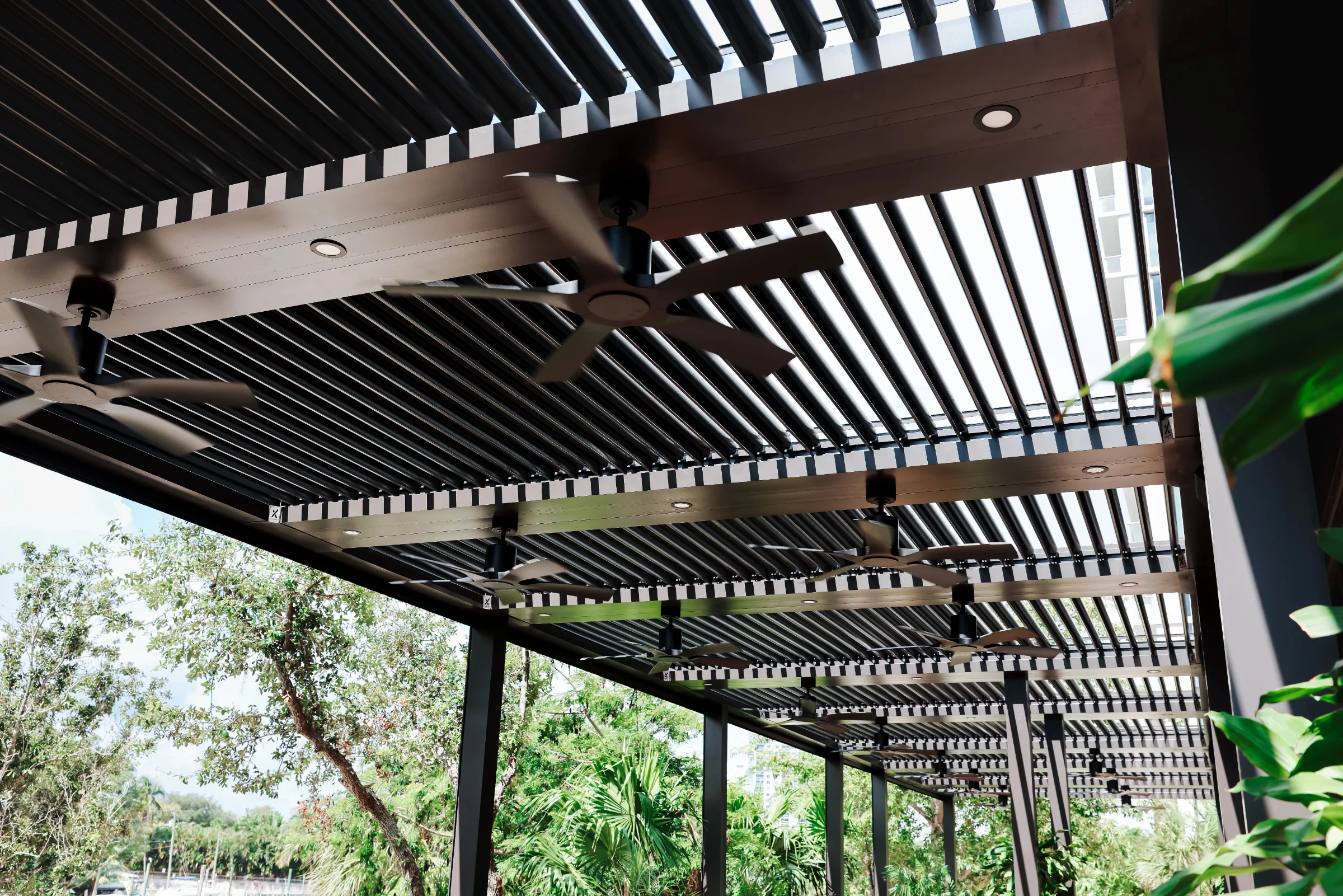
Integrated everything. Lighting circuits for ambiance and task lighting, ceiling fans for August, infrared heaters for the January cold snaps, speakers, and misting systems all mount inside the structure with concealed wiring — no conduit zip-tied to posts.
Rain response in seconds. Integrated rain sensors close the louvered roof automatically, so service continues instead of evacuating to the bar. Internal gutters and in-post downspouts move water away from guests and walkways.
Side protection on demand. Motorized screens drop to block low-angle sun on west-facing terraces, cut wind on rooftop decks, and add privacy for buyouts and private events.
Branding-grade finishes. Powder-coat colors match brand standards, and structures are engineered around sightlines, hood vents, and existing architecture.
Permitting and wind codes for commercial structures
Commercial outdoor structures in South Florida face the strictest scrutiny in the country: High-Velocity Hurricane Zone wind loads in Miami-Dade and Broward, ADA circulation requirements, and fire/egress review. This is where experienced commercial installers earn their fee. Every StruXure South Florida commercial project includes sealed structural engineering, permit management with your municipality, and installation by our own licensed crews — the same all-inclusive approach explained in our cost guide. For operators worried about storm season, our guide to hurricane-rated pergolas covers how these structures are engineered for named storms.
Beyond restaurants: hotels, clubs, and multifamily
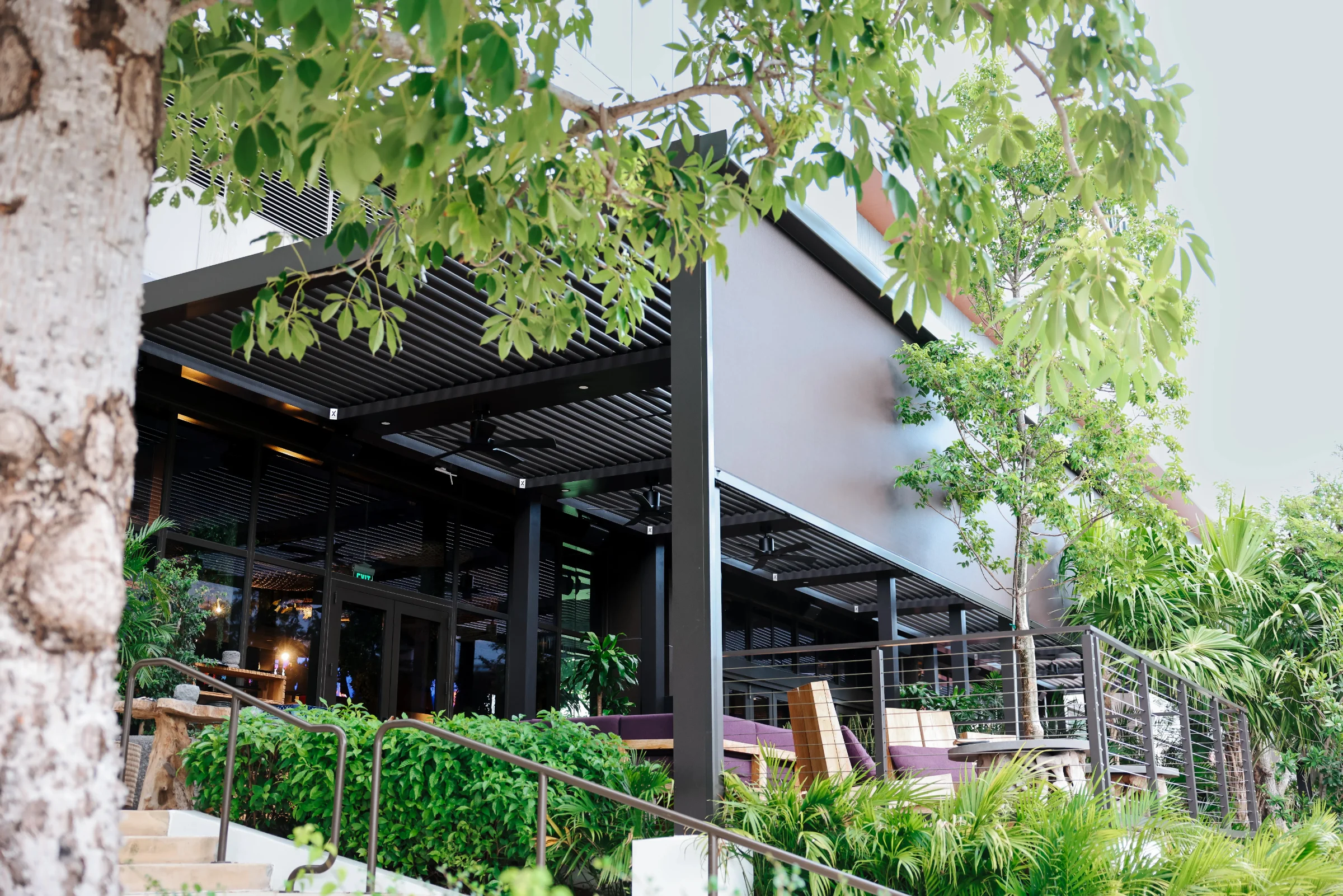
The same systems serve pool decks and towel bars at resorts, outdoor fitness and yoga pavilions, country-club dining terraces, and rooftop amenity decks at multifamily properties. Pair pergolas with Cabana X units for rentable poolside cabanas — a direct ancillary-revenue play hotels recover quickly. We’ve completed installations from beachfront resorts in Palm Beach to restaurant groups in Miami and Fort Lauderdale; see our recent commercial pergola guide for South Florida for project types and planning details.
The project timeline
Commercial projects typically run from a site consultation and concept design, through engineering and permitting, to installation scheduled around your operating calendar — including overnight and off-season installs to avoid closing sections during peak revenue weeks. Most installations are completed in days once permits clear, not weeks.
Frequently asked questions
Can a pergola be installed over an existing dining patio?
Usually yes. We evaluate the slab and substructure, then design footings and anchoring to suit — including rooftop decks with structural review.
How do operators justify the investment?
Most clients model it as added sellable capacity: newly reliable covers per service, times average check, times services per week. Add private-event premiums and the payback period is typically short relative to the structure’s lifespan.
Will it survive hurricane season?
Our commercial structures are engineered and permitted to South Florida’s HVHZ wind standards, with documented load calculations — not marketing claims. Screens and accessories have their own ratings and storm protocols, which we document for your operations team.
How do we start?
Request a commercial consultation. Bring a site plan if you have one; we’ll bring layout concepts, finish samples, and a single all-inclusive number.