
Pergola Insurance in Florida: Coverage, Permits and Wind Mitigation Explained
Adding covered outdoor space raises a question most South Florida homeowners only face after signing: how does pergola insurance actually work? Does your homeowners policy already cover the structure? Do you need to tell your carrier? Will building one change your premium? Policies differ enormously, so treat what follows as the questions to bring to your agent rather than as advice about your own contract.
One thing is clear. The paperwork behind a pergola matters to an insurer as much as the aluminium does. Permitted, engineered structures behave very differently at claim time than undocumented ones.
Where pergola insurance sits inside a homeowners policy
Standard Florida homeowners policies separate the dwelling from other structures on the property. An attached pergola generally falls under dwelling coverage, because it connects physically to the house. A freestanding pergola usually falls under other structures coverage, which most policies cap at a percentage of the dwelling limit.
That distinction has a practical consequence. Other structures limits are often modest. A substantial freestanding louvered roof with motors, lighting and screens can approach or exceed the cap. If your structure represents a significant investment, ask your agent for that limit in dollars rather than in percent, and ask whether it needs raising.
Named storm deductibles apply separately, and they are usually percentage based rather than flat. On a South Florida policy that deductible can run into five figures. Understand it before you assume a claim will be worth filing.
Why permits decide how pergola insurance responds
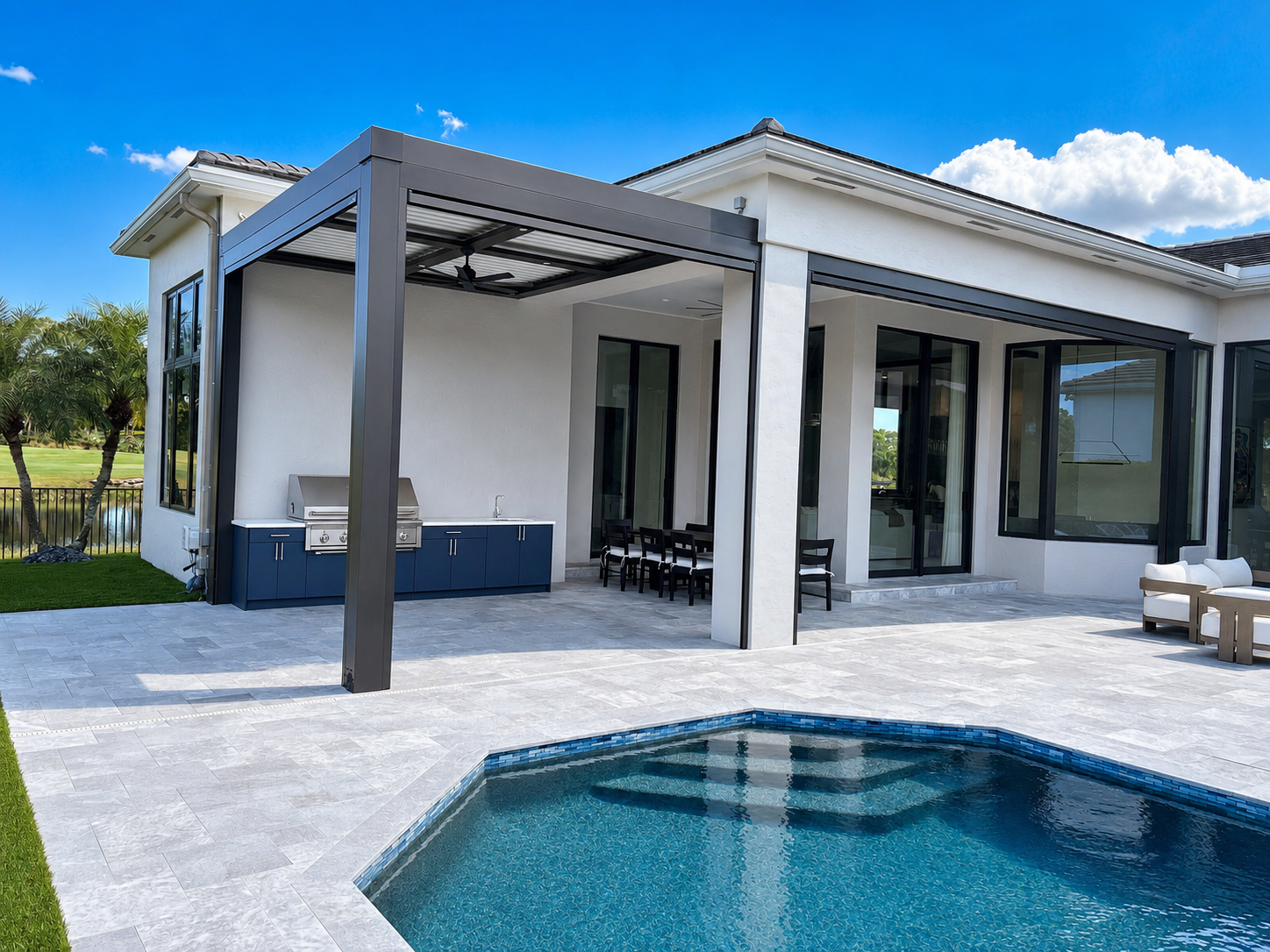
This is the part that catches people out. Many Florida policies exclude loss to structures built without required permits, or let the carrier deny a claim tied to unpermitted work. An insurer investigating a storm claim simply asks the county for the permit history, and an unpermitted structure shows up immediately.
The same logic extends to the engineering behind that permit. Structures in South Florida get engineered for their specific address, exposure category and attachment substrate. A product approval confirms only that a system met a test standard within the sizes and pressures it was tested at. It does not approve your installation. What protects you at claim time is the sealed, site-specific package your building department reviewed, plus the final inspection that closed the permit.
Keep the closed permit, the engineering set and the inspection record with your policy documents. Our guide to pergola permits in Florida explains what that paperwork should contain.
Wind mitigation and what pergola insurance credits will not cover
Florida law requires insurers to offer premium discounts for specified wind-resistant construction features. Homeowners document those features through a wind mitigation inspection. The form focuses entirely on the main dwelling: roof covering, roof deck attachment, roof-to-wall connection, roof geometry, secondary water resistance and opening protection.
Here is the honest answer contractors rarely give. A pergola does not appear on that form. It will not by itself earn you a wind mitigation credit. Anyone promising that a louvered roof lowers your premium through mitigation credits is overselling.
Opening protection is the one adjacent area worth raising. If a structure incorporates rated protection over glazed openings, mention it to your inspector. Motorized insect and solar screens do not qualify, because nobody rates them as storm protection. The Florida Office of Insurance Regulation publishes consumer material explaining how these discounts work.
Flood zones and the second policy nobody mentions
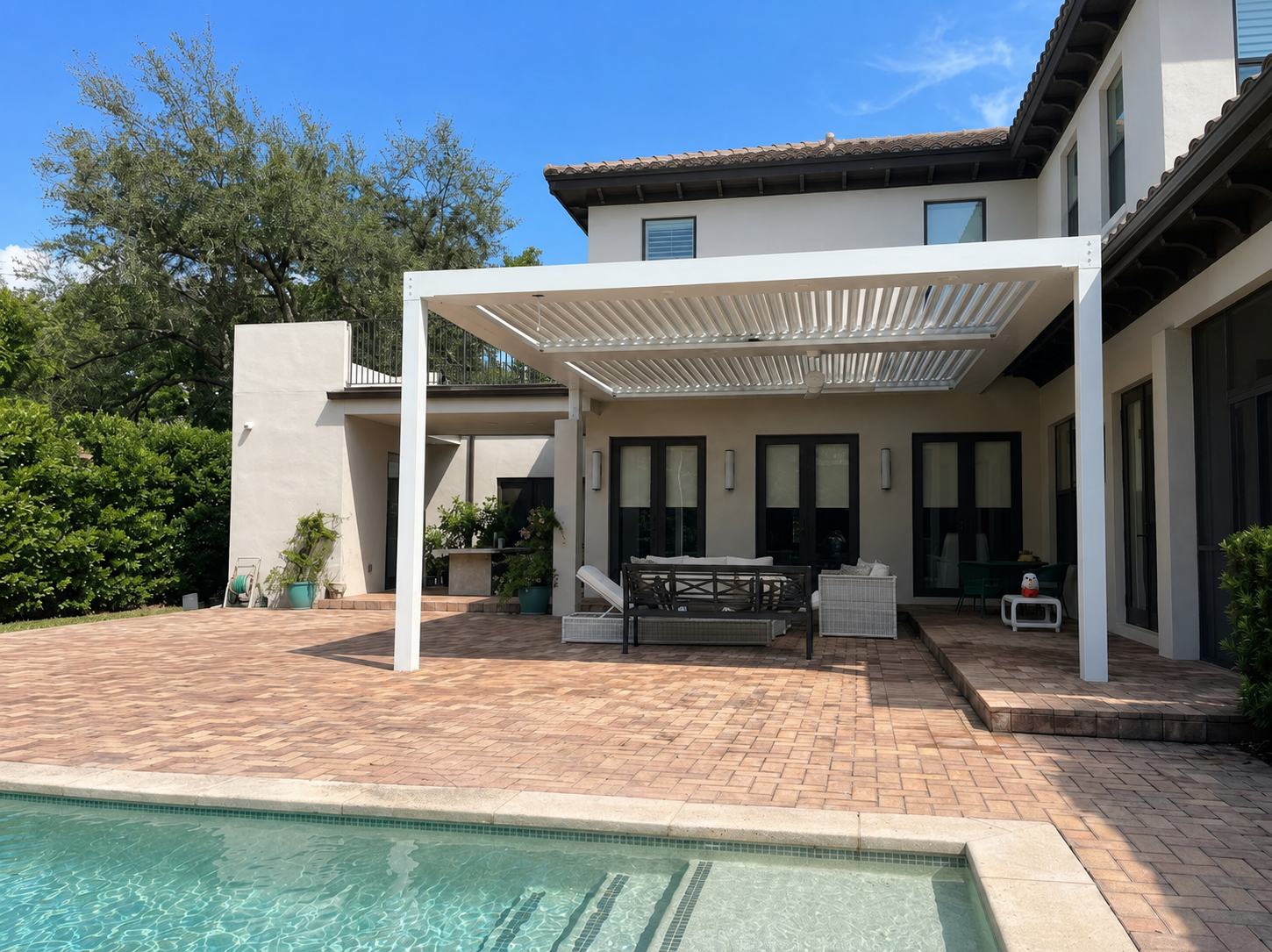
Homeowners policies exclude flood. Across coastal South Florida that gap matters, because a ground-level covered patio sits exactly where surge and rainfall flooding arrive first.
Flood insurance also treats structures differently from wind policies, and coverage for detached structures is limited. Elevation rules in special flood hazard areas can change what you may build and how you may build it. Check your property through the FEMA Flood Map Service Center before you design anything, because the flood zone drives footing details and permitting alike.
If your structure includes an outdoor kitchen, built-in appliances or substantial electrical work, ask specifically how the policy treats those items. They often represent the most valuable part of the installation and the least clearly covered.
Telling your carrier: when notification matters
Most policies require notice of material alterations to the property. A permanent structure with footings, electrical service and motorised components qualifies in the view of most carriers, even where the wording stays vague.
Notifying costs nothing. It also closes off any later argument that the carrier did not know about the risk, and it gives you a chance to confirm limits before you need them. Ask three questions in writing: which coverage part applies here, what the limit is in dollars, and whether the named storm deductible applies.
Insurance is not our field and we give no coverage advice. Your agent or broker should read your actual policy language, and their answer is worth having in writing.
Condos, HOAs and whose pergola insurance applies
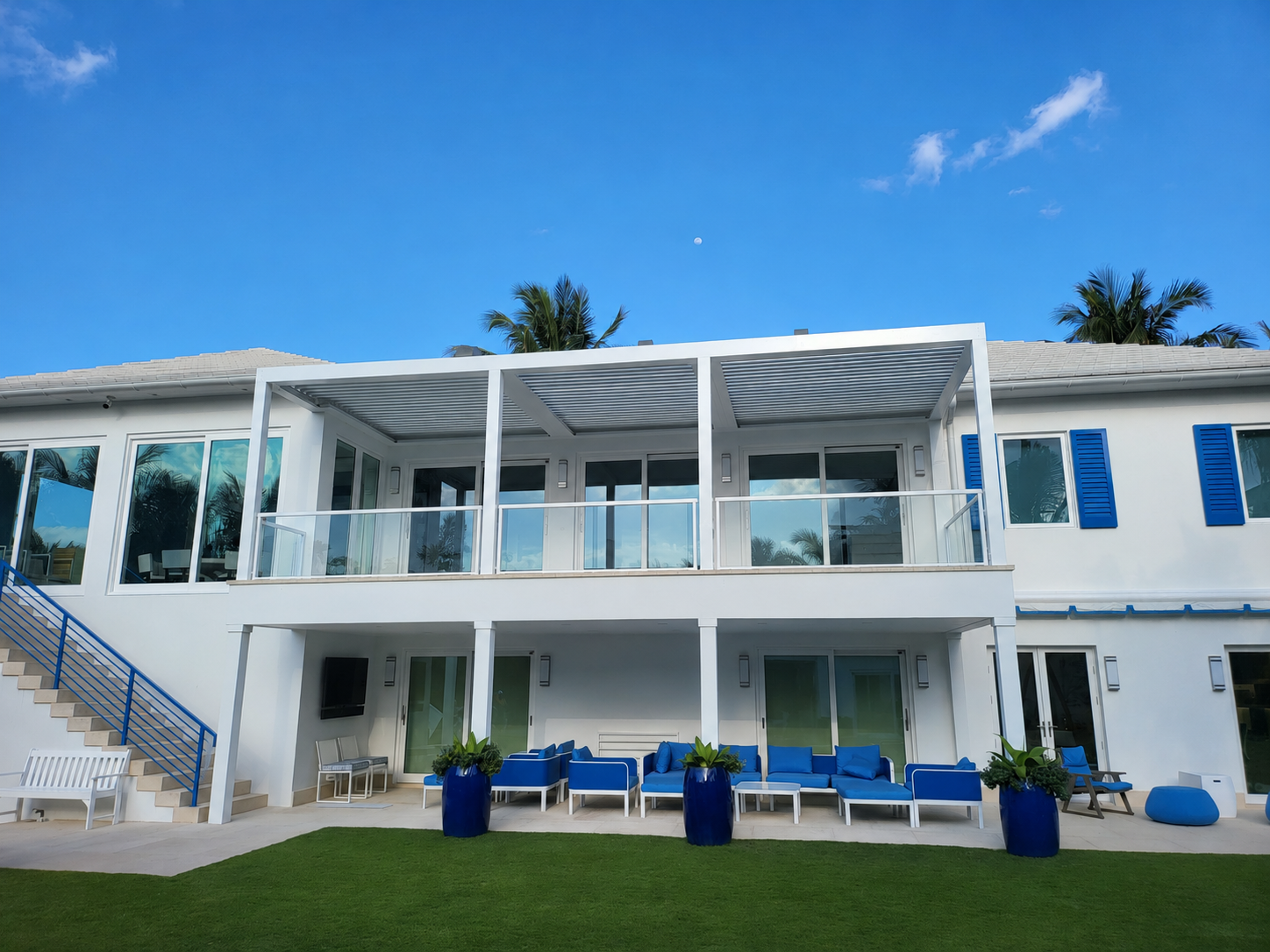
Attached homes complicate the question considerably. In a condominium, the association’s master policy covers the building and the common elements. The unit owner’s policy picks up what falls inside the unit boundary. A pergola on a terrace or a limited common element sits right on that line.
Read three documents before you build. The declaration defines what you own and what the association owns. The association’s insurance requirements often dictate minimum limits and may name the association as an additional insured. The architectural guidelines set what the board will approve at all.
Boards frequently require a certificate of insurance from your contractor before work starts. Many also want proof that you carry coverage on the finished structure. Written board approval matters as much as the building permit here, because a board can order an unapproved structure removed at your expense regardless of what the county says. The Florida Department of Financial Services runs a consumer services division that handles homeowner and association coverage questions.
Documenting the structure for appraisal and resale
Insurance paperwork does double duty at resale. Appraisers treat permitted, documented covered outdoor space as an improvement with measurable value. They treat an undocumented structure as a defect, and a buyer’s lender may refuse to overlook it.
Build one folder and keep it. It should hold the permit application and its closure, the sealed engineering set, the final inspection record, the manufacturer documentation and warranty, the electrical permit if the work carried one, and dated photographs of the finished installation. Store a copy off site or in the cloud, because storms tend to destroy paperwork and structures together. Our article on whether pergolas add home value covers the appraisal side.
What actually reduces risk, and therefore claims
Premium credits sit largely outside your control on a pergola. Loss prevention does not, and fewer claims is what keeps a policy renewable in this market.
Close the louvers or move them to the manufacturer’s storm position before a named system arrives. Retract every screen. Screens carry no storm rating, and a deployed screen in high wind loads the tracks in ways nobody designed for. Clear furniture, planters and anything else that turns into a projectile. Keep gutters and internal drainage clear so water leaves the structure. Our hurricane guide sets out what these structures can and cannot withstand.
Photograph the finished installation from several angles and file the images with your documents. Post-loss disputes usually turn on what existed beforehand, and photographs settle that faster than anything else.
Frequently asked questions about pergola insurance
Will building a pergola raise my premium?
It can, because you add insured value to the property. The effect depends entirely on your carrier and your current limits, so ask for the number before you build rather than at renewal.
Does a permitted pergola help at claim time?
Substantially. A closed permit with sealed engineering and a passed final inspection removes the most common basis for disputing a structural claim in Florida.
Does pergola insurance cover motorized screens?
Usually as part of the structure they attach to. Damage from leaving screens deployed during a storm may count as neglect rather than storm damage, though. Retract them.
What if the previous owner built it without a permit?
Raise it with your agent and with the building department. Retroactive permitting is harder than permitting new work, but an undocumented structure carries risk at claim time and again at resale.
Pergola insurance in one paragraph
Insurers care about two things here: that the structure was built legally, and that it resists the loads at your address. Both come from the same place, which is a properly engineered and permitted installation with the paperwork retained. We include engineering and permitting in every project across Miami, Fort Lauderdale and West Palm Beach. You can arrange a consultation to review what your property needs.