
Pergola Tree Removal Permit Rules in Florida: Protected Trees, Root Zones and Arborist Reports
A pergola tree removal permit is the approval most South Florida homeowners never budget for, and it is the one most likely to stop a project the week before the footings go in. The structure fits the yard beautifully on paper. Then someone notices that the rear post lands two feet from a mature live oak, and suddenly the project needs an arborist, a tree permit, and possibly a redesign.
The rules here are widely misunderstood, partly because people routinely quote a 2019 change to Florida law out of context. So it is worth being precise about what the statute does and does not do.
When a pergola tree removal permit is actually required
Tree protection in Florida is local. Counties and municipalities adopt their own ordinances, and those ordinances typically define protected trees by species, by trunk diameter at breast height, or both. Many South Florida jurisdictions also maintain a separate, stricter category for specimen or heritage trees.

If a protected tree has to come out to make room for your structure, you need approval before it goes. If the tree stays but your footing lands inside its critical root zone, you may still need approval, because most ordinances protect the root system as well as the trunk. That second case surprises people far more often than the first.
What Florida Statute 163.045 does and does not exempt
This is the provision everyone cites. Under section 163.045 of the Florida Statutes, a local government “may not require a notice, application, approval, permit, fee, or mitigation” for pruning, trimming or removing a tree on residential property when the owner holds qualifying documentation.
Read the definitions, though, because they are narrow. “Documentation” means an onsite assessment performed in accordance with the tree risk assessment procedures in Best Management Practices — Tree Risk Assessment, Second Edition (2017), which an arborist certified by the International Society of Arboriculture or a Florida licensed landscape architect performs and signs. “Residential property” means a single-family detached building on a lot actively used for single-family residential purposes.
Two consequences follow, and both matter. First, the exemption applies to trees that present a documented risk. Wanting the tree gone so a pergola fits is not a risk finding, and no honest arborist will write one. Second, the exemption does not reach condominiums, townhouse associations, commercial sites or common areas. If you live in one of those, the ordinary local process applies in full.
You can find a qualified professional through the ISA’s Find an Arborist directory.
The root zone problem nobody plans for
Footings are the real conflict. A pergola post needs an excavated footing, and excavating inside a mature tree’s root plate can kill the tree slowly enough that nobody connects cause to effect for two or three years. Ordinances anticipate this, which is why many require a tree protection plan and barricading during construction even when nobody is removing a tree.
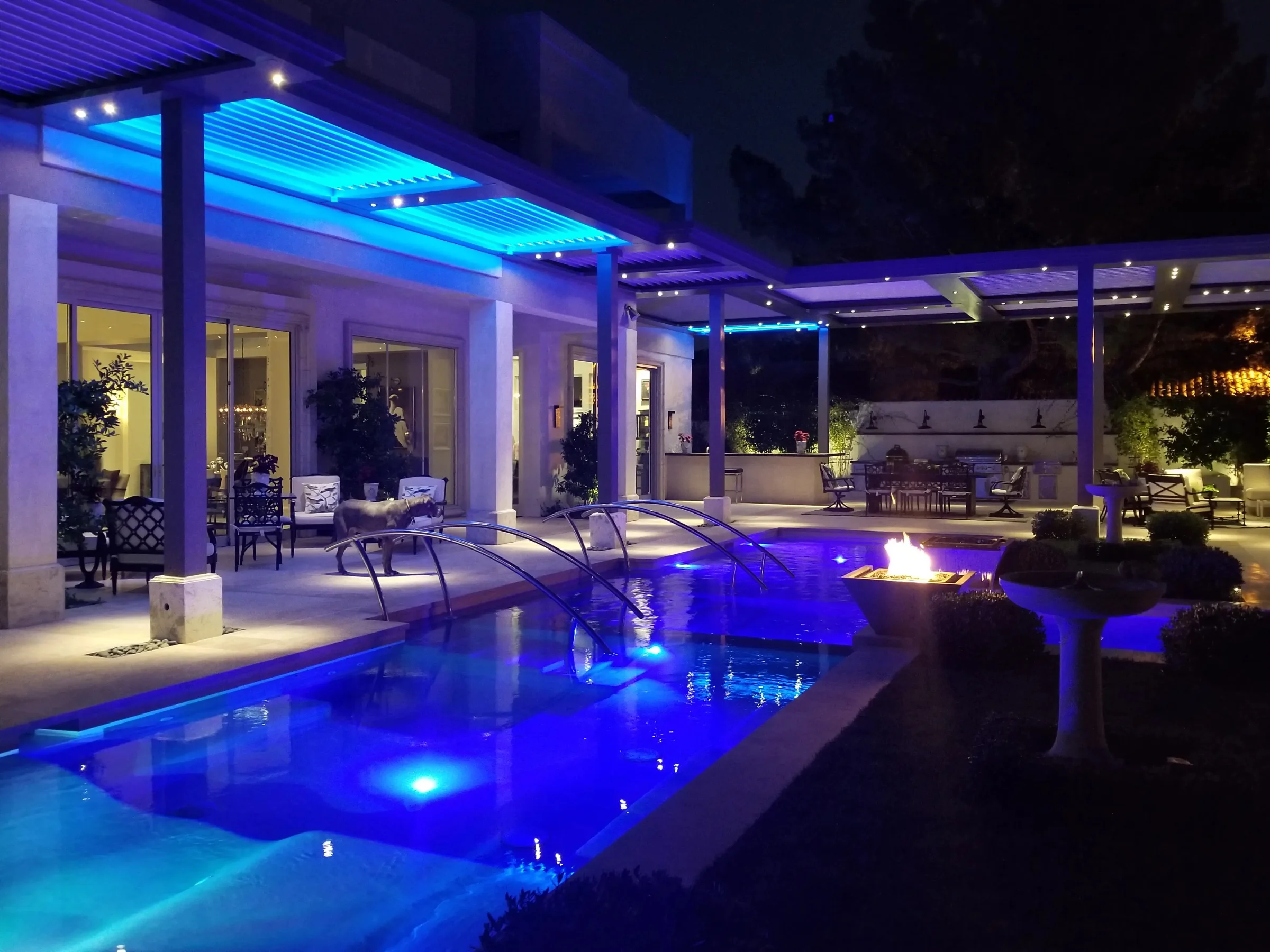
There are engineering answers. Smaller and shallower footings reduce excavation. Relocating a single post by a few feet frequently clears the root plate entirely. Cantilevering the beam lets you delete a post altogether, which is often the cleanest solution available. Our guide to footings and mounting explains what each option demands structurally.
Getting a pergola tree removal permit approved
Applications succeed when they demonstrate that removal is genuinely necessary and that they considered the alternatives. So show the work. Submit a survey with the tree located and its trunk diameter recorded, a site plan overlaying the proposed structure and footings, an arborist report on the tree’s condition, and a short statement of the alternatives you tested.
Reviewers respond well to evidence that you tried to keep the tree. A plan showing a post shifted, a bay shortened or a footing redesigned reads very differently from a plan that simply deletes the tree and asks for permission.
Designing around the tree instead
Frequently the better project keeps the tree. A mature canopy provides shade a structure cannot buy, and a louvered roof sited beside it rather than under it gives you both. Working under a canopy does introduce real maintenance considerations, since leaf litter, sap and bird traffic all land on the roof, and our article on outdoor privacy screens covers one way of managing the sides of such a space.
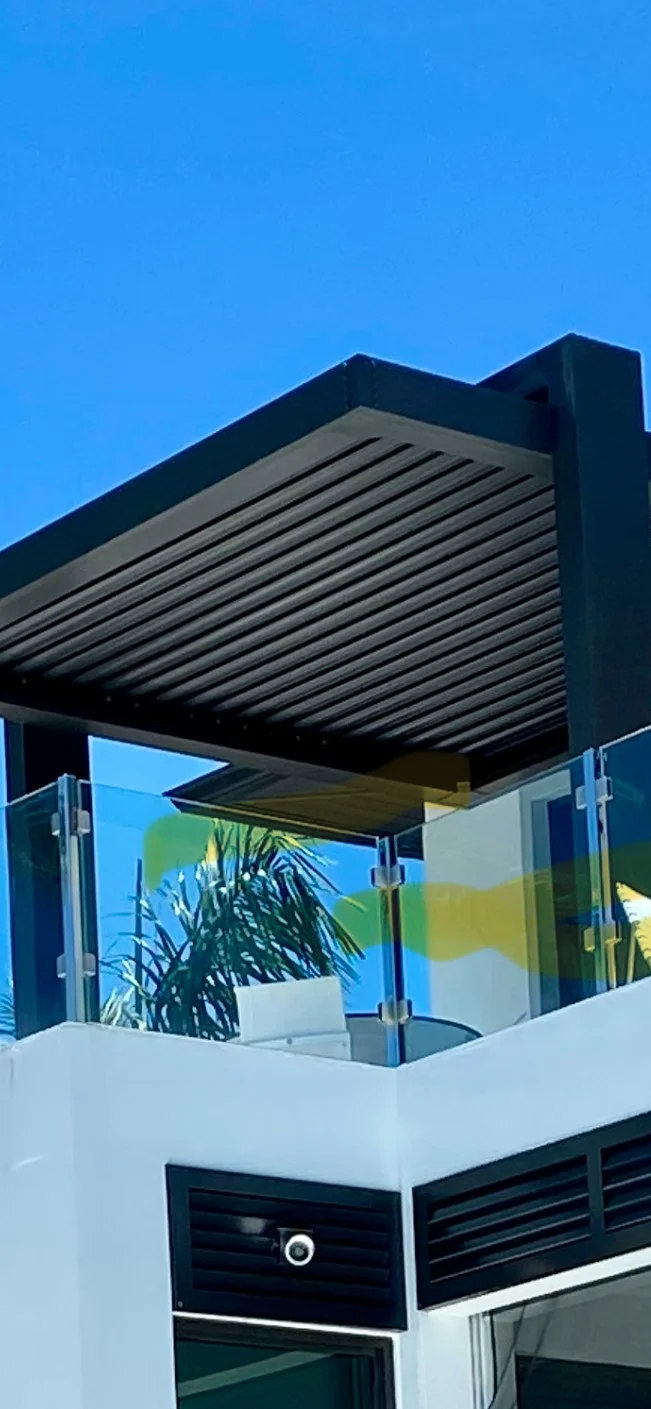
Adjustable louvers help here too, because you can open them to let filtered light through and close them when rain arrives. See adjustable louvered roof systems for how that works in practice.
Mitigation, replacement trees and what they cost you
Where removal is approved, most ordinances require mitigation. Typically that means planting replacement trees, sometimes at a ratio driven by the diameter of the tree you remove, or paying into a tree fund where the site cannot accommodate the replacements.
Mitigation lands on the homeowner, not the contractor, and it rarely appears in a pergola quote. Ask about it early so the number does not arrive after you have signed. Ask too whether replacements must be a particular species or size, because that varies significantly between jurisdictions.
What to do before the footings are laid out
Run four checks before anyone breaks ground. Confirm which trees on your lot are protected under your local ordinance. Have a professional measure the trunk diameters rather than estimate them. Overlay the proposed footings against each tree’s root zone. And confirm whether your property even qualifies as single-family detached residential for the purposes of the statute above.
Those four checks take a morning. Discovering the answers during construction costs considerably more, and it is the sort of thing a properly licensed contractor should raise unprompted, as our guide on vetting a pergola contractor explains. The same discipline applies to what is under the ground, which our piece on underground utilities and septic drainfields covers.
Frequently asked questions
Do I need a pergola tree removal permit for a palm?
It depends entirely on your ordinance. Many Florida jurisdictions treat palms differently from canopy trees, and some exclude common species while protecting natives. Check the specific list rather than assuming.
Can I trim roots to fit a footing?
Sometimes, within limits, and usually only with an arborist specifying how much and where. Cutting major structural roots destabilises a tree, which creates a hazard and can expose you to liability later.
What counts as a specimen tree?
Ordinances define it locally, generally by species combined with a large trunk diameter. Specimen designation typically brings stricter review and heavier mitigation, so identify it before designing.
Does a pergola tree removal permit apply to HOA property?
Trees in common areas belong to the association, so you would need association approval as well as any municipal permit. The statutory exemption above applies only to single-family detached residential property.
Who pays if the tree dies later?
Usually the owner, and some jurisdictions pursue enforcement where construction damage is the evident cause. That is precisely why a tree protection plan during construction is worth insisting on.
If you want a layout that works around the trees you have rather than through them, get in touch and we will site the structure before anyone applies for anything.