
Outdoor Curtains vs Screens for South Florida Patios: Wind, Bugs and Upkeep
Outdoor curtains vs screens is a question that comes up on almost every patio consultation in South Florida, usually once the roof is settled and the sides come up. Curtains photograph beautifully. Screens cost more. Both promise shade, privacy and fewer bugs, and both fail in specific ways that the brochure never mentions.
This is a plain comparison from a company that installs screens and has watched plenty of curtains come and go.
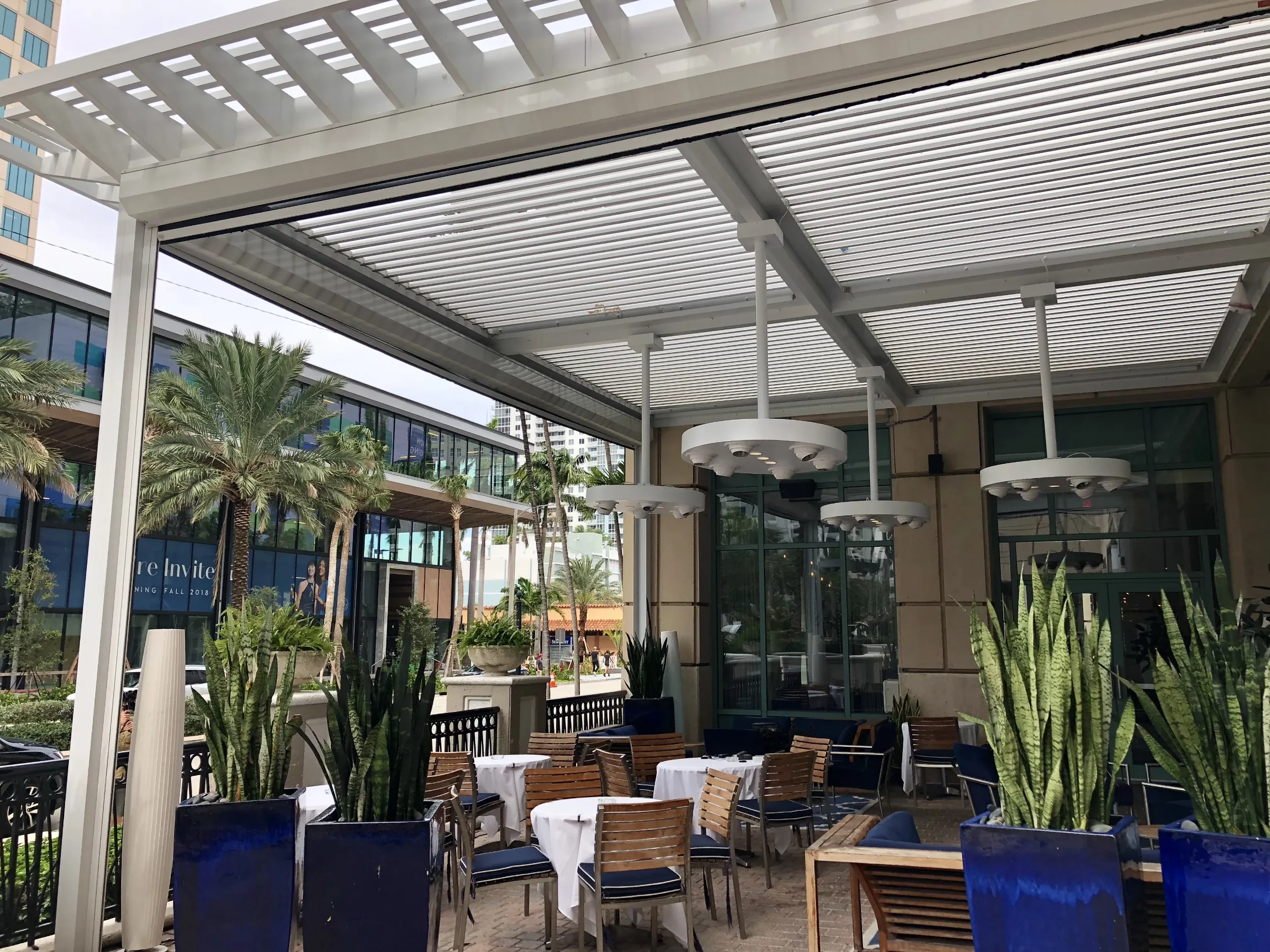
Outdoor curtains vs screens: what each one actually is
Outdoor curtains are fabric panels hung from a rod or cable track, drawn by hand. Good ones use solution-dyed acrylic, which resists fading, and are weighted or tied at the bottom.
Motorised screens are a mesh or solid fabric rolled onto a tube inside a housing at the top of the opening. Guided tracks on each side hold the edges, and a motor drives the screen up and down. The tracks are the whole story: the fabric cannot flap, billow or escape because it is captured on both sides.
That structural difference explains nearly every other difference below.
Wind: the test South Florida runs every afternoon
A sea breeze arrives most afternoons along the coast, and thunderstorms bring gusts far stronger. A curtain in that wind becomes a sail. It wraps around furniture, knocks over glasses and, in a real gust, tears its own grommets out of the fabric.
Tie-backs help until you actually want the curtain closed. Weighted hems help until the wind gets under them.
Wind also shortens a curtain’s life in a quieter way. Every gust rubs the fabric against the rod, the post and the furniture, and the abrasion shows first at the grommets and the leading edge. By the time the panel looks tired, the fibres at those points are already thinned out.
A tracked screen simply does not do this. The edges stay in the guides, the fabric stays flat, and a wind sensor retracts the whole thing automatically above a set threshold. On a gusty patio that difference is the decision.
Insects, privacy and sightlines
Curtains only block insects when fully closed, overlapped and pinned at the bottom, at which point you have also blocked the view and most of the breeze. Mosquitoes and no-see-ums find the gaps at the edges within minutes.
Insect mesh on a screen seals into the tracks and along the bottom bar. You keep airflow and most of the view while the bugs stay out. Privacy mesh takes this further: from outside in daylight the patio reads as a dark panel, while from inside you still see the garden.
Sightlines matter for a different reason on a pool patio. Florida requires barriers around residential pools, and a screen or curtain is not one; both need to sit inside or outside the barrier without interfering with it.
Curtains win one point here. For a purely decorative softening of a space, a sheer drape gives a look that no mesh will match.
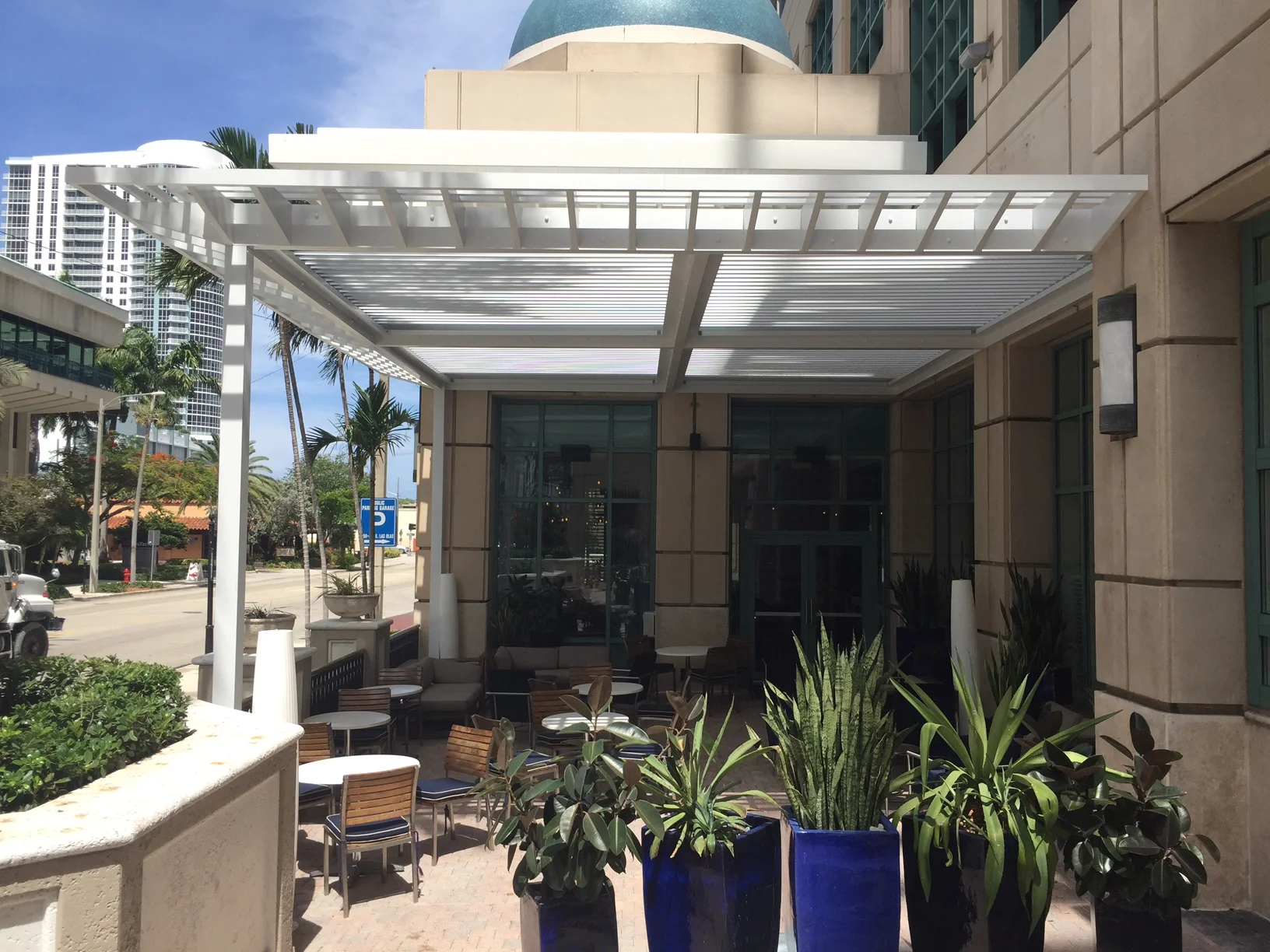
Sun, salt and mildew: how each one ages
South Florida sun degrades fabric faster than almost anywhere in the country, and humidity grows mildew on anything that stays damp. Curtains pool at the bottom, hold water in their folds, and grow black spots along the hem within a season or two. They also need to come down for washing, which most people do once and then stop doing.
Screen fabric rolls into a housing when not in use, so it spends most of its life out of the sun and out of the rain. Tracks collect salt and sand, which a fresh-water rinse clears. Our retractable screens guide covers the maintenance in detail.
Neither product is immune to salt air. Hardware grade matters for both, and it matters more within a few miles of the ocean.
Outdoor curtains vs screens on cost and upkeep
Curtains are far cheaper on the day you buy them. Rods, panels and hardware for a typical patio come in well below the cost of a single motorised screen, and you can hang them yourself.
The comparison shifts over time. Curtains are replaced every few seasons here, and each replacement costs money and a weekend. Screens are installed once, engineered to the opening, and serviced occasionally. If the roof also closes, a screened patio becomes a room you use for rain, bugs and privacy in every month of the year.
Whether that shift pays off depends on how much you use the space. A patio used nightly justifies screens quickly. One used on holidays may not.
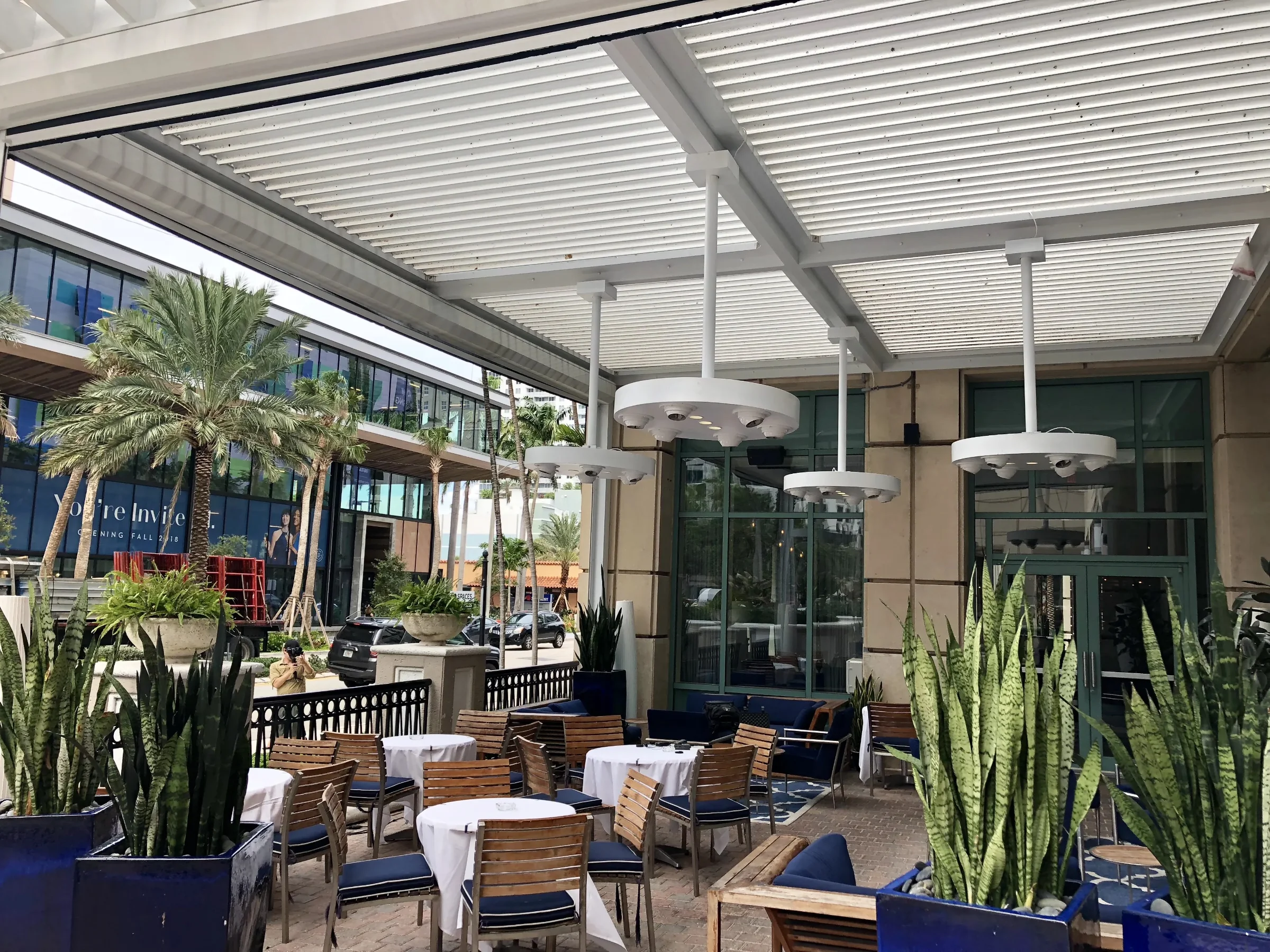
Neither one is hurricane protection
This deserves its own heading because the confusion is common. An insect or privacy screen is not an opening protection product, and neither is a curtain. Neither carries a rating under the Florida Building Code, and both should be retracted or taken down before a storm.
Rated hurricane screens are a different product with a different specification. Our hurricane screens article explains what separates them from the mesh discussed here.
See motorised patio screens and Pergola X for how the roof and sides work together, or contact us to look at your opening.
Frequently asked questions
Outdoor curtains vs screens: can I use both?
Yes, and some clients do. Screens handle wind, bugs and privacy; a decorative drape on an inner track softens the look. Keep the curtain fully inside the screen line so it never takes the wind.
Do motorised screens stop rain?
Solid or tightly woven fabrics reduce wind-driven rain considerably, while open insect mesh does not. Rain protection comes mainly from the roof above, and a louvered roof that closes does most of that work.
Which lasts longer, outdoor curtains vs screens?
Screens, by a wide margin, because the fabric spends most of its life rolled inside a housing away from sun and rain. Curtains hang exposed continuously and are usually replaced every few seasons in this climate.
Do curtains or screens help with cooling?
Both block some solar gain, and the U.S. Department of Energy’s guidance on energy-efficient window coverings explains the principle. Screens do it while keeping the breeze, which is the part that actually makes a Florida patio comfortable.