
Polycarbonate Pergola Roof vs Louvered Aluminum in South Florida: Heat, Hail, Yellowing and Wind
A polycarbonate pergola roof looks like a simple upgrade: clear or tinted panels over a frame, rain kept off, light let through. In South Florida the panels meet a climate they were not designed around, and the results show within a few summers. This guide compares polycarbonate panels with a motorized louvered aluminum roof on the things that matter here: heat under the roof, yellowing and haze, wind and debris, noise, drainage and total cost of ownership.
What a polycarbonate pergola roof actually is
Polycarbonate is a plastic sheet, sold either as solid panels or as multiwall (twin- or triple-wall) panels with internal air channels. Compared with glass, it is light, impact-resistant and easy to cut, which is why it shows up in kit pergolas and carport covers. Panels also come clear, bronze, opal or with a reflective coating, and most carry a UV-protective layer on the top face.
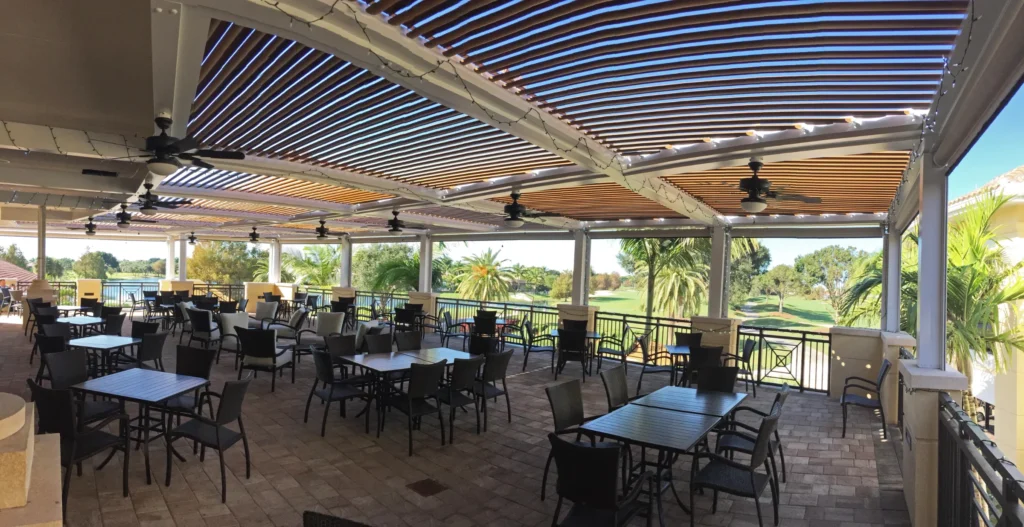
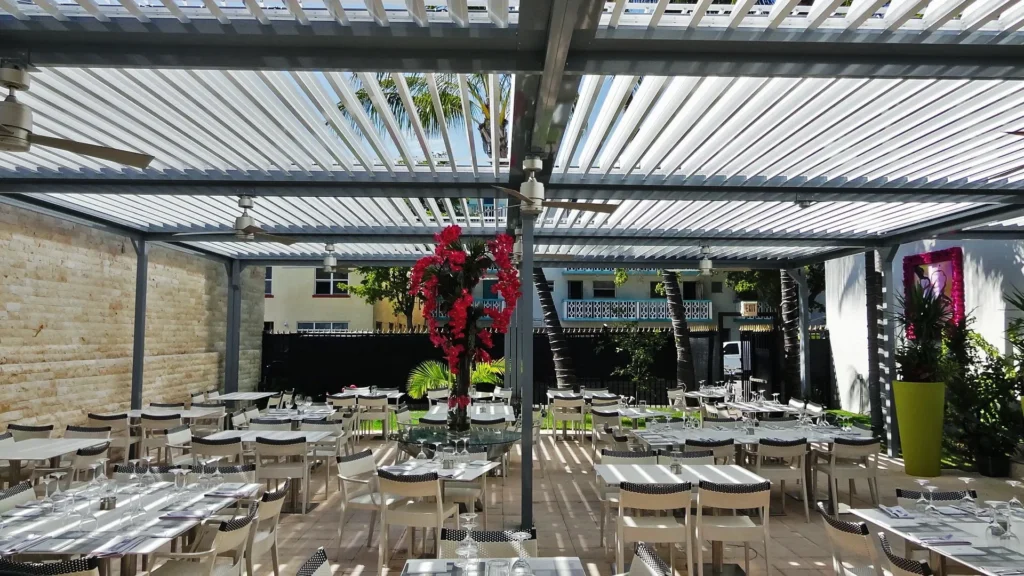
A louvered aluminum roof is different in kind. Extruded aluminum louvers rotate to open, tilt or close, and when closed they interlock to shed rain into an integrated gutter. There is no membrane and no plastic. Our explainer on adjustable louvered roof systems covers the mechanics.
Heat: the greenhouse problem under a polycarbonate pergola roof
Clear and lightly tinted polycarbonate transmits a large share of solar energy. Under a fixed clear panel on an August afternoon, the patio becomes a greenhouse: the sun comes in, the heat cannot leave and the air under the roof runs hotter than the open yard. Tinted and reflective panels certainly help, but they trade light for heat and still cannot vent.
A louvered roof solves heat by moving. Tilt the louvers to block direct sun while leaving gaps for hot air to rise out; open them fully in the evening. The U.S. Department of Energy’s guidance on cool roofs explains why a light-colored, reflective roof surface stays cooler in the sun. A white or light powder-coated louver reflects; a clear plastic panel transmits. Our article on why aluminum pergolas tick in the heat covers what dark finishes do.
Yellowing, haze and the UV layer
The UV coating on polycarbonate is thin and one-sided. For example, install a panel upside down, scratch it while cleaning or let it age past its rated life and the sheet yellows, hazes and turns brittle. South Florida’s UV index accelerates all of it. Multiwall panels add a second failure: the channels collect dust, algae and condensation that cannot be cleaned out.
Powder-coated aluminum louvers do not yellow. They can chalk slowly in extreme exposure, which a rinse and a good coastal finish spec manage. There is no clear surface to cloud, so the roof looks the same in year ten as in year one.
Wind, debris and the hurricane season question
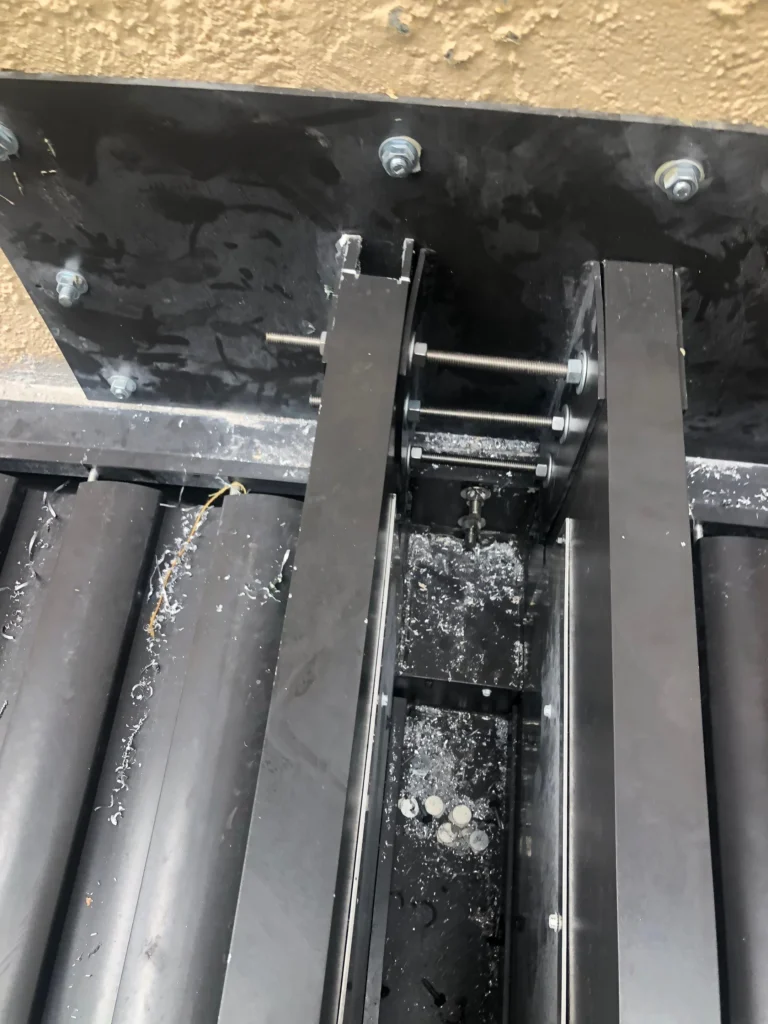
A fixed plastic roof is a sail. Uplift on a solid panel in a design wind event is significant, moreover, and the fastening of panel to purlin is often the weak link on kit systems. Falling coconuts and palm fronds crack solid sheets and puncture multiwall ones. After a storm, the common sight is a frame standing with panels missing.
StruXure engineers each louvered roof as a system for the site’s wind exposure, per address rather than from a generic table. Open louvers relieve pressure instead of catching it. That does not make the structure storm-proof, and it does not make side screens hurricane protection, but it removes the single largest failure mode of a panel roof. Our guide to pergola insurance and wind mitigation explains why insurers care about the difference.
Rain, noise and drainage
Rain on a polycarbonate pergola roof is loud. The panel is a thin drum, and a South Florida downpour makes conversation difficult underneath it. Water runs off the low edge in a sheet unless a separate gutter is added, and standing water on a low-slope panel breeds algae.
Closed aluminum louvers direct water into an integrated gutter and down the posts. Rain noise is present but lower and duller, and there is no ponding because each louver sheds to the channel. In other words, the structure includes its drainage rather than bolting it on afterward.
Cost: purchase price vs cost of ownership
Polycarbonate wins on the first invoice. A kit with panels costs a fraction of an engineered louvered system, and that gap is real. The real question, however, is what the roof costs over ten years. Panel replacement, gutter add-ons, cleaning, storm repairs and the summer afternoons you cannot use the space all land on the polycarbonate side of the ledger.
A louvered roof comes as one complete, permitted price: engineering, footings, motor, controls and installation. It is a larger number once, followed by rinsing and an occasional service visit. For a side-by-side of the other fixed options, read our pergola vs awning vs patio cover guide.
When a polycarbonate pergola roof still makes sense
There are honest uses. A shed-style cover over a side-yard storage area, a temporary cover on a rental you do not own or a budget carport in a sheltered location can all justify panels. If the space is for living, dining or entertaining and it faces the afternoon sun, the greenhouse effect alone rules polycarbonate out for most South Florida homeowners.
Replacing a polycarbonate pergola roof with louvers
Many of our calls come from owners of a wood or aluminum frame topped with failed panels. Occasionally the frame can carry a new louvered roof; more often the posts and footings were never sized for a permitted structure and the right move is a new engineered system on the same footprint. Our article on replacing a wood pergola with aluminum walks through the assessment.
Frequently asked questions
How long does a polycarbonate pergola roof last in Florida?
Generally, manufacturers quote warranties of roughly a decade against yellowing under normal conditions. South Florida UV, salt and heat are not normal conditions, and installation errors shorten it further. Plan on cosmetic decline well before the warranty ends.
Can I put polycarbonate panels on top of a louvered roof?
No. The louvers are the roof. Adding panels defeats the ventilation and adds uplift the structure was not engineered for.
Are louvers watertight?
Closed louvers shed rain into the gutter and keep the patio dry in normal rain. Wind-driven rain at the edges can still enter, which is what side screens and smart placement address.
Which is cooler underneath?
The louvered roof, because it reflects rather than transmits and because it vents. A tinted panel is cooler than a clear one but still traps heat.
Tired of a hot, hazy panel roof? Book a consultation and we will assess the existing frame and quote a Pergola X on the same footprint.