
Tiki Hut vs Pergola in South Florida: Chickee Rules, Thatch Upkeep, Fire and Wind
The tiki hut vs pergola question comes up constantly in South Florida. Both structures promise shade, and both look at home beside a pool. However, they behave very differently once the first summer passes. This guide compares a thatched tiki hut with a motorized louvered pergola. It covers cost over time, the chickee rules, fire and insurance, wind, bugs and permits, so you can choose with your eyes open.
Tiki hut vs pergola: what each structure really is
A tiki hut, in the Florida sense, is an open-sided shelter. It has a pitched roof of palm or palmetto thatch over a timber frame. The classic version is a chickee, the traditional Seminole and Miccosukee dwelling. A well-built one is beautiful, and the smell of fresh thatch is part of the appeal.
A louvered pergola is an engineered aluminum structure with motorized louvers. The roof opens for sun, closes for rain and tilts for shade at any angle in between. Because it is aluminum, it does not rot, burn or feed insects. Consequently, the two structures age on completely different curves, and that difference drives most of the comparison below.
The chickee exemption and what it actually covers
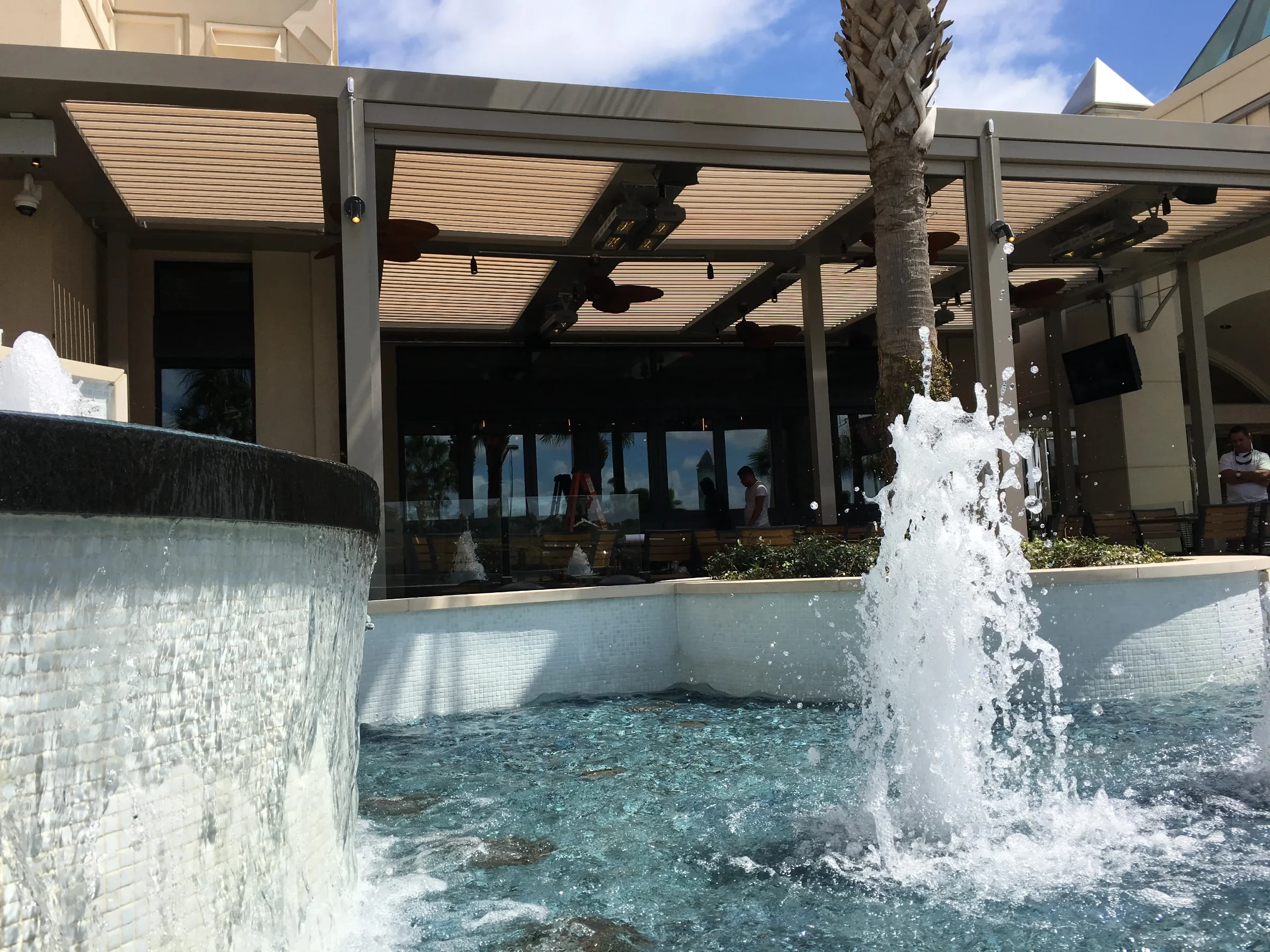
Florida law carves out a specific exemption. Section 553.73 of the Florida Statutes exempts chickees that the Miccosukee Tribe of Indians of Florida or the Seminole Tribe of Florida construct from the Florida Building Code. The statute defines a chickee as an open-sided wooden hut with a thatched roof of palm, palmetto or other traditional materials. It must have no electrical, plumbing or other non-wood features.
Read that definition carefully. Add a ceiling fan, a light, a sink or a bar with power, and the structure stops matching the definition. At that point, most South Florida building departments treat it as an ordinary accessory structure. That means a permit and engineering. In practice, many homeowners learn this only when they try to sell the house or file an insurance claim.
Tiki hut vs pergola: cost over ten years, not on day one
A tribal-built chickee can carry a lower upfront price than an engineered louvered roof. Still, the thatch is a consumable. South Florida sun, rain and humidity break it down, and the roof needs re-thatching on a recurring cycle. Each cycle costs money, produces debris and leaves you with a dull, thinning roof for the months before it happens.
A louvered pergola carries one price. The number from StruXure South Florida includes the engineering, the permit and the footings. It also includes the motor, the controls and the licensed installation. Afterwards, the maintenance is a rinse with a hose. Our StruXure pergola cost guide walks through what drives that single number.
Thatch, fire and your insurance policy
Thatch is dry plant material stacked on a wooden frame. It burns readily, which is why fire officials and insurers pay attention to it. Some carriers ask questions about a thatched structure near the house. Some add conditions, and some decline to cover it at all. Therefore, ask your agent before you build, not after. Aluminum louvers do not burn. Our pergola insurance guide explains how an engineered structure usually fits into a homeowner policy.
Wind, rain and hurricane season
A pitched thatch roof catches wind. In a tropical storm, loose thatch becomes debris, and a poorly anchored frame can move. Because the chickee exemption removes the structure from the building code, nobody has calculated its wind load for your lot.
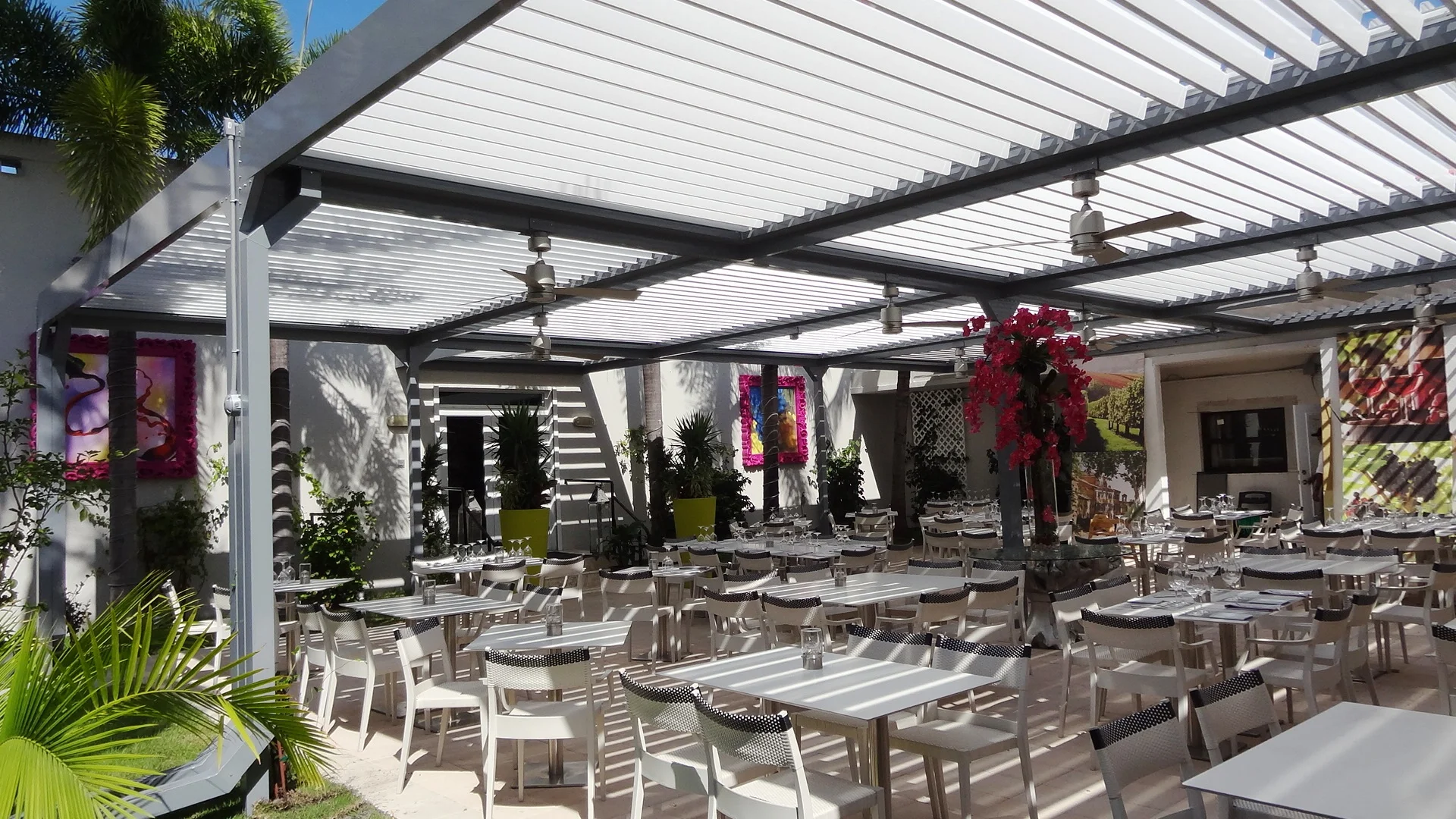
StruXure engineers every louvered pergola per address for the wind exposure of your county. The louvers open to let a storm pass through the roof plane, and the frame anchors to engineered footings. Read our article on whether pergolas are hurricane-proof for the honest version of what “hurricane-rated” means. Rain is the other half of the story. Closed louvers shed water into an integrated gutter. Thatch, by contrast, drips for hours after a storm and stays damp underneath.
Tiki hut vs pergola for shade and everyday comfort
Thatch gives deep, fixed shade. That is pleasant at noon and gloomy at five o’clock, when you would rather have the low sun. It also traps warm, humid air under the roof because the shape has no way to vent.
Louvers move. Tilt them to block the afternoon sun, open them for the evening breeze, or close them when a shower rolls through. Add a ceiling fan under the pergola and the space stays usable through August. Similarly, lighting and speakers mount cleanly to the aluminum beams without touching a fire-prone material.
Bugs, birds and what lives inside thatch
Thatch is habitat. Palmetto bugs, wasps, rodents and nesting birds all treat a thatched roof as shelter. Their droppings land on your furniture. Aluminum offers nothing to eat and nowhere to nest. Our guide to wasps, birds and iguanas in a louvered pergola covers the few spots that still need attention.
Permits for a tiki hut vs pergola in South Florida
If a tribal crew builds a true chickee with no electrical or plumbing, the state exemption applies to it. Otherwise, the structure needs a permit like any other. Either way, setbacks, lot coverage and HOA rules still apply to where it sits on your lot. Our setback and lot coverage guide explains those limits.
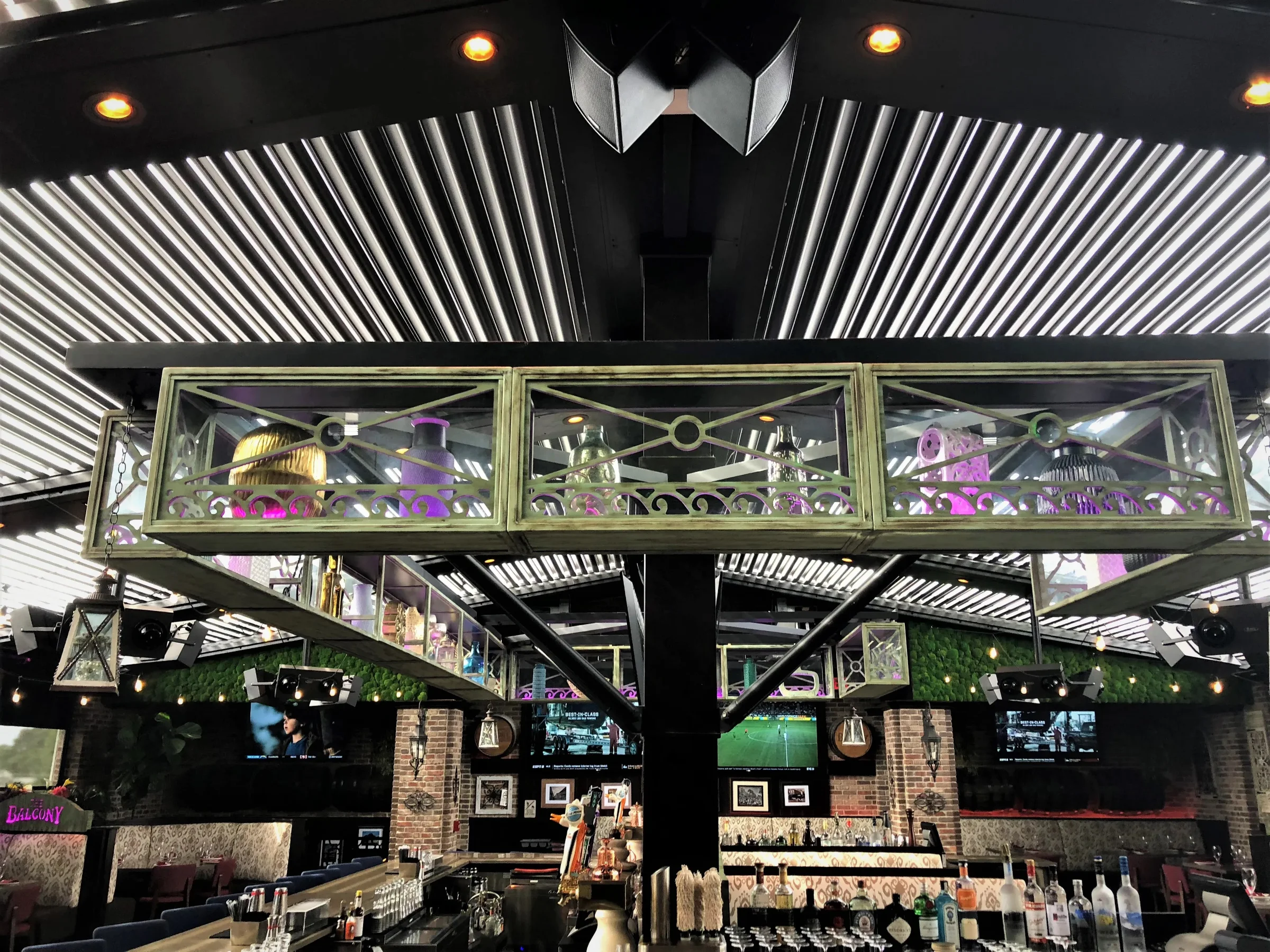
A louvered pergola goes through the normal accessory-structure path. StruXure South Florida prepares the engineered drawings, pulls the permit and schedules the inspections. As a result, the structure shows up cleanly in county records when you sell.
Frequently asked questions
Is a tiki hut vs pergola decision mostly about looks?
Looks matter, but upkeep decides it for most families. Thatch needs replacing on a cycle and attracts pests; aluminum louvers need a rinse. If you love the island look, StruXure offers wood-grain finishes that keep the warmth without the maintenance.
Can I add motorized screens to a tiki hut?
Not in a meaningful way. Screens need a rigid, square frame to track on, and a thatched roof provides neither. A louvered pergola accepts motorized retractable screens on any side.
Does a chickee add value to my home?
Buyers and appraisers tend to treat an unpermitted, non-electrified hut as a temporary feature. A permitted, engineered pergola records as an improvement.
Which handles a coastal lot better?
The pergola. Salt air and wind-driven rain shorten thatch life, while powder-coated aluminum and stainless hardware shrug them off.
Still weighing tiki hut vs pergola for your yard? Book a design consultation and we will walk the site and check your setbacks. Then we will give you one all-inclusive number for a louvered roof that never needs re-thatching.