
Retrofit Motorized Screens Onto an Existing Florida Patio: What Fits and What Doesn’t
Homeowners across South Florida want to retrofit motorized screens onto a patio, lanai or pergola they already own, and the question they ask first is almost always the wrong one. They ask what the screens cost. The better question is what the existing structure can actually carry. Because a motorized screen is not a curtain, it is a tensioned assembly that transfers wind load into whatever carries it, and that is where most retrofit projects succeed or quietly fail.
Can you retrofit motorized screens onto a structure you already have?
Often, yes. A screened opening needs four things: a rigid header to hang the tube from, two vertical edges that can take side retention, a level sill condition, and power within reach. If your covered patio has all four, a retrofit is straightforward. Where it has three, an installer can usually add the fourth. However, on a lightweight aluminium awning or an older wood frame, the honest answer is often no.
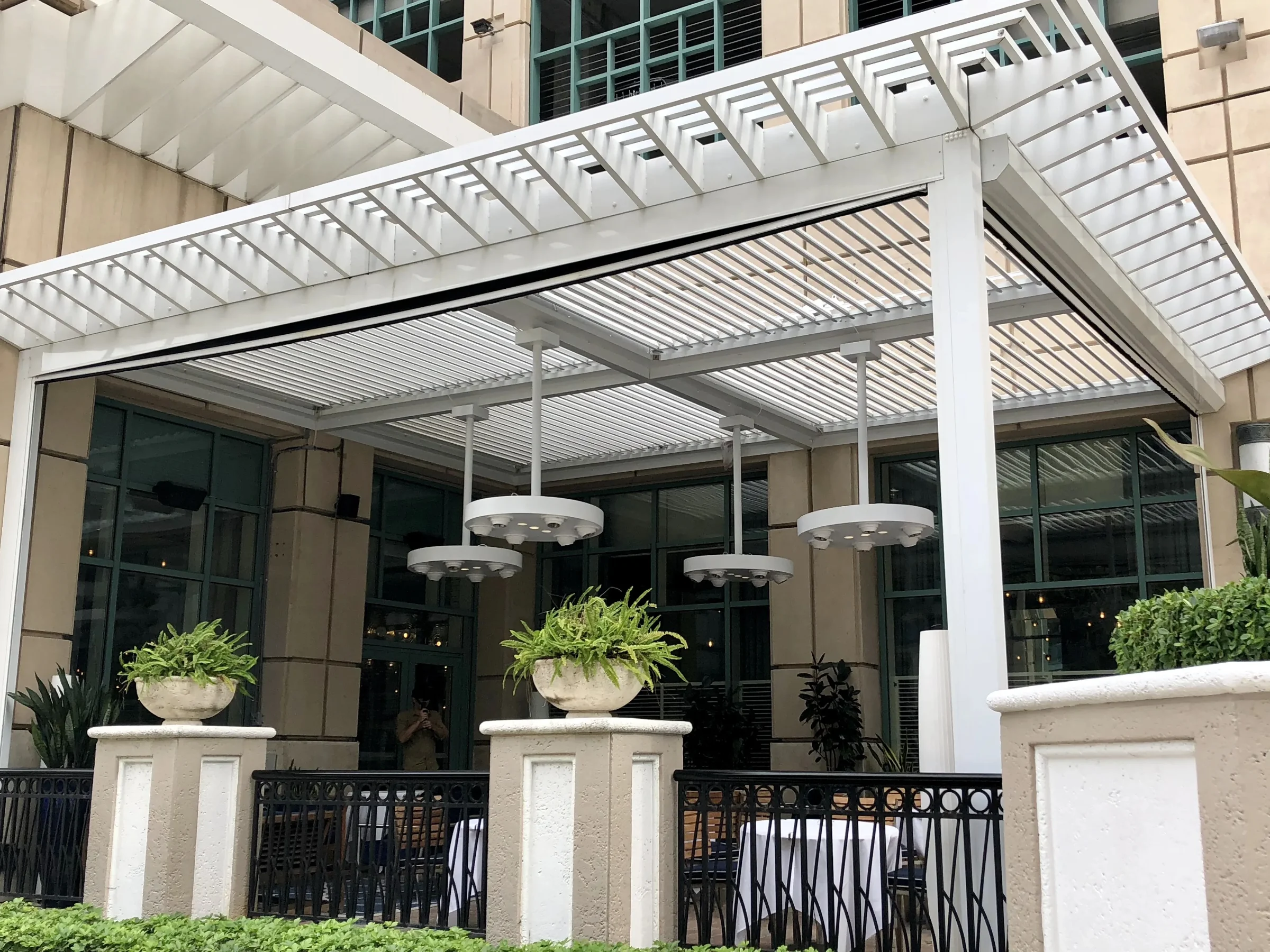
Screens are also the single most useful upgrade most South Florida patios can receive, because they solve three problems at once: low afternoon sun, insects, and blowing rain. Our overview of motorized retractable screens covers what the product does. This article covers whether your existing structure can host one.
The four openings that decide the job
Walk your patio and measure every opening you might want to close. Then note the width of each. Width drives everything, because a screen tube spans unsupported and deflects under load. Narrow openings are easy. By contrast, very wide openings usually need an intermediate post, a heavier tube, or a split into two screens.
Next, look up. You need a continuous, solid header across the full width of the opening. A structural beam works. A fascia board does not. Many Florida patios have a decorative fascia hiding a truss tail, and installers frequently discover this only after the trim comes off.
Retrofit motorized screens need a solid header, not a fascia board
This is the most common reason a retrofit stalls. The screen housing carries the motor, the tube and the fabric roll, and it must anchor into structure rather than sheathing. On a concrete beam, anchors go into concrete and the detail is simple. On a wood-framed patio, the installer has to find or add a header capable of taking the load.
Adding a header is normal work, but it changes the scope. In practice you are no longer running a two-day screen install. Instead you are modifying structure, which usually pulls the job into permit territory. Our guide to pergola permits in Florida explains how that review works.
Side retention is where wind ratings are won or lost
A screen fixed only at the top and bottom will blow out of its channel in a gust. Side retention solves that. There are two common approaches. Zipper systems weld a bead onto the fabric edge and hold it inside a closed track, so the fabric cannot pull free until the track itself fails. Cable systems run tensioned cables through fabric pockets, which costs less but tolerates less pressure.
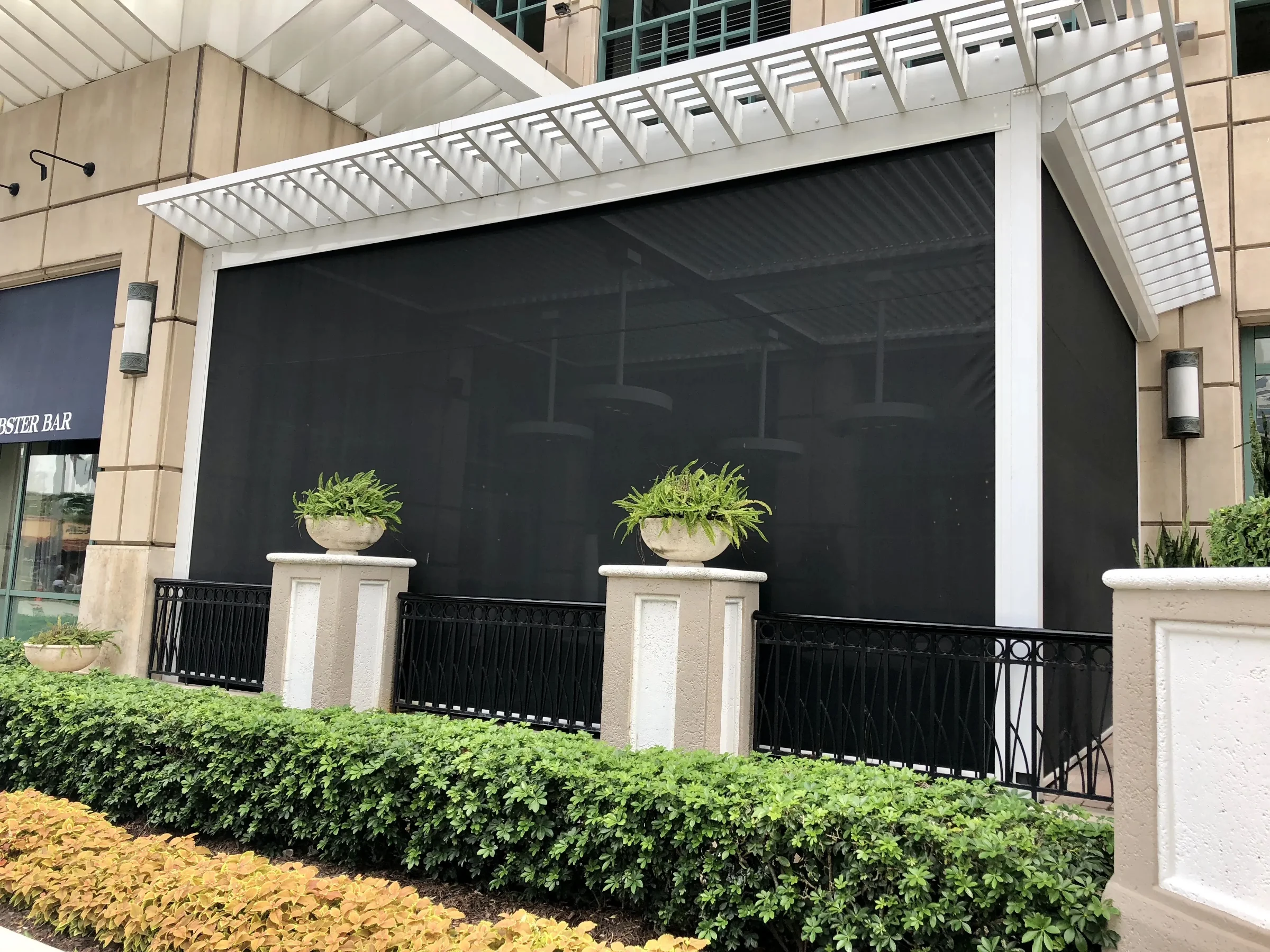
Whichever system you choose, the tracks need vertical surfaces to attach to. Square columns are ideal. For example, round columns, screen-cage uprights and stucco returns all need adapters. Consequently each adapter becomes another connection that someone must detail for your specific opening.
Salt air matters here too. Tracks, fasteners and the fabric bead sit in the weather permanently, so mixed metals will corrode. Our article on fasteners and galvanic corrosion in coastal Florida covers what to specify.
Power, controls and where the tube actually goes
Every motorized screen needs power at the head, and running that circuit through an existing structure is frequently the fiddliest part of the job. Surface-mounted conduit is cheap but visible. Concealed wiring, meanwhile, is tidier and slower. Therefore decide early, because the choice affects where the housing sits.
Think about the housing itself. It can mount face-on below the beam, recessed into a soffit, or inside a purpose-built pocket. Recessed looks best and costs most. Also plan for outages, since a screen left down in a storm is worse than no screen at all. We cover manual override and backup options in our piece on motorized pergola power outages.
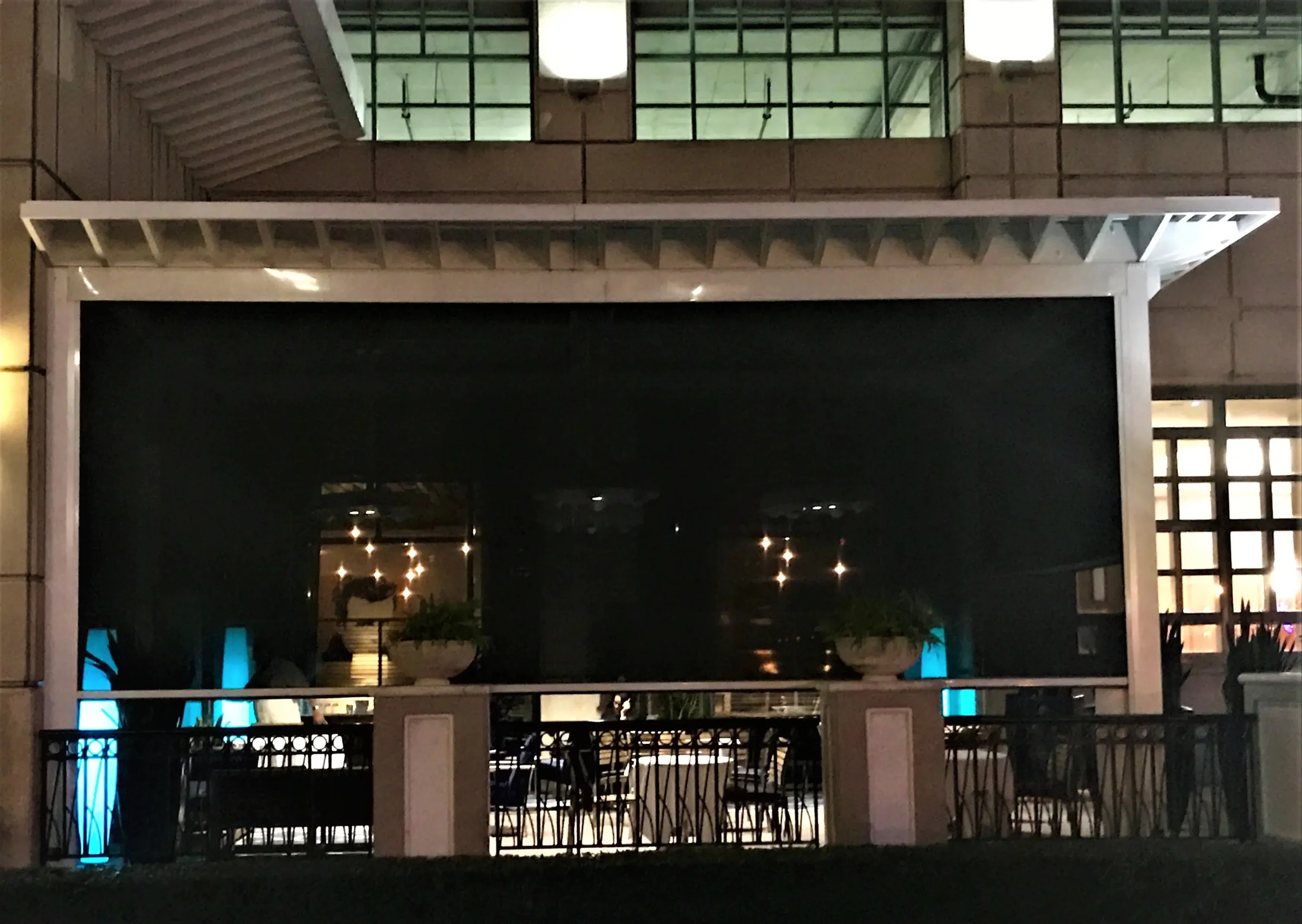
What retrofit motorized screens cost against a full rebuild
A screen retrofit onto a sound structure is usually the cheapest meaningful upgrade to an outdoor room. Once the structure needs a new header, new posts or a new footing, though, the economics shift quickly. At that point you are paying for structural work and still living under the old roof.
Many homeowners in that position choose to replace the structure instead and specify screens as part of the new build, which produces a cleaner result for a smaller premium than they expect. Our guide to replacing a wood pergola with aluminium works through that comparison. If you are weighing structure types generally, the pergola versus awning versus patio cover comparison is the place to start.
When a retrofit is the wrong answer
Walk away from a retrofit when the host structure is already failing. Rot at a ledger, rust bleeding through a painted post, or a roof that is due for replacement inside five years all argue for waiting. Adding screens to a structure you will demolish shortly is money spent twice.
Be equally cautious when nobody will engineer the connection. Screens are tested products, and a product approval confirms that an assembly met a standard within the sizes and pressures the tester applied. It is not an approval of your patio. The connection into your specific structure has to be designed for your specific conditions, which is why we engineer every installation to the address rather than to a catalogue.
You can confirm that any product proposed to you carries a current listing through the Florida Building Code product approval search, and in Miami-Dade through the county’s own Product Control search. Ask which listing applies, then ask who is signing the attachment detail.
Frequently asked questions
Do retrofit motorized screens count as hurricane protection?
No. A motorized screen is not storm protection, and it must be retracted before a storm arrives. Screens handle sun, insects and wind-driven rain during ordinary weather. For an honest treatment of what a shade structure survives, read are pergolas hurricane-proof.
Will screens work on a wood patio cover?
Sometimes. Sound, properly sized framing can host a screen, but the installer must verify the header and the post connections first. Older wood covers in South Florida frequently fail that check.
How long does a retrofit take?
A clean retrofit onto a ready structure is quick. Once headers, electrical routing or permits enter the picture, the timeline stretches, and the honest answer depends entirely on what the site survey finds.
Can retrofit motorized screens be added to a pergola later?
Yes, and modern louvered systems anticipate it. If you are building now and think you may want screens eventually, ask for the screen pockets and the conduit to be built in from the start. Retrofitting into a structure designed to accept screens is far simpler than cutting into one that was not. See motorized pergola screens for how the two products integrate.
Do I need a permit?
Usually yes, and always when structural work is involved. Requirements vary by jurisdiction, so confirm with your building department before ordering. Choosing a properly licensed installer matters here; our guide on how to vet a pergola contractor in Florida explains what to check.
If you would like a site survey that tells you honestly whether your structure can host screens, get in touch and we will look at the openings before anyone quotes a number.