
Motorized Hurricane Screens in South Florida: Protect Your Patio Year-Round
Storm season in South Florida runs from June 1 through November 30, and every year homeowners scramble to protect their outdoor spaces before the next system spins up. Motorized hurricane screens in South Florida are the smartest way to shield a patio, pergola, or lanai — they stay hidden inside a discreet housing until you need them, then deploy at the push of a button to defend against wind-driven rain and flying debris. Below is how they work, what they cost, how they pair with a motorized louvered pergola, and why they have become one of the most requested upgrades from Miami to Palm Beach.
What are motorized hurricane screens?
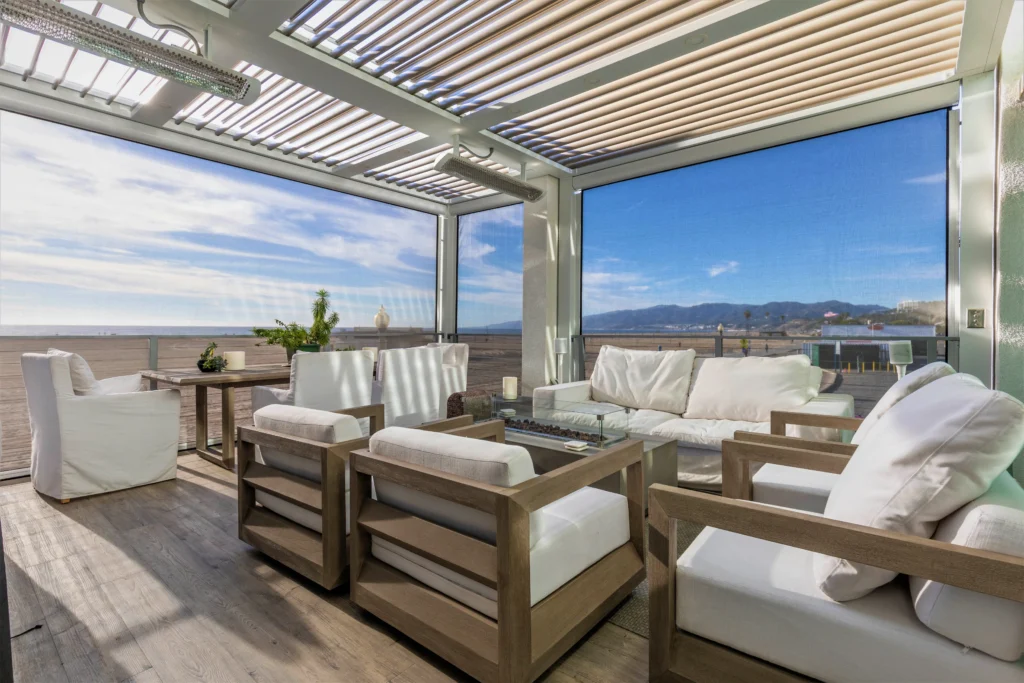
Motorized hurricane screens are heavy-duty retractable screens that roll down from a concealed overhead housing to enclose an outdoor space. Built from impact-rated mesh and locked into a track on both sides, they block driving rain, reduce wind load on the structure, and stop debris — while still letting you see out and keep airflow moving. When the weather clears, the screens retract completely out of sight. Unlike bulky aluminum storm panels you have to dig out of the garage and bolt up by hand, motorized screens are always installed, always ready, and operate from a remote or a smartphone app.
How motorized hurricane screens work
A sealed tubular motor inside the housing winds the screen fabric up or down along two side tracks. Those tracks are the key to storm performance: they hold the screen taut and prevent it from blowing out of the channel under pressure. Most systems are wired into the same smart-home setup that runs your pergola louvers and lighting, so you can drop every screen on the patio from one app, set them to close automatically on a wind or rain sensor, and raise them again when the front passes. Because the motor and fabric live in an aluminum cassette, there is nothing exposed to corrode — an important detail in a salt-air coastal climate.
Why South Florida homeowners choose them
South Florida’s combination of intense sun, sideways rain, salt air, and hurricane season makes an unprotected patio a part-time space. Motorized screens turn it into a year-round one. The same screens that shed a summer thunderstorm also block low-angle afternoon sun, knock down glare, keep no-see-ums and mosquitoes out at dusk, and add instant privacy from neighbors. Homeowners in Miami and Fort Lauderdale routinely tell us the screens get used far more for everyday comfort than for storms — the hurricane protection is the reason they buy, but the daily livability is what they love.
Hurricane screens + louvered pergolas: the ideal combo
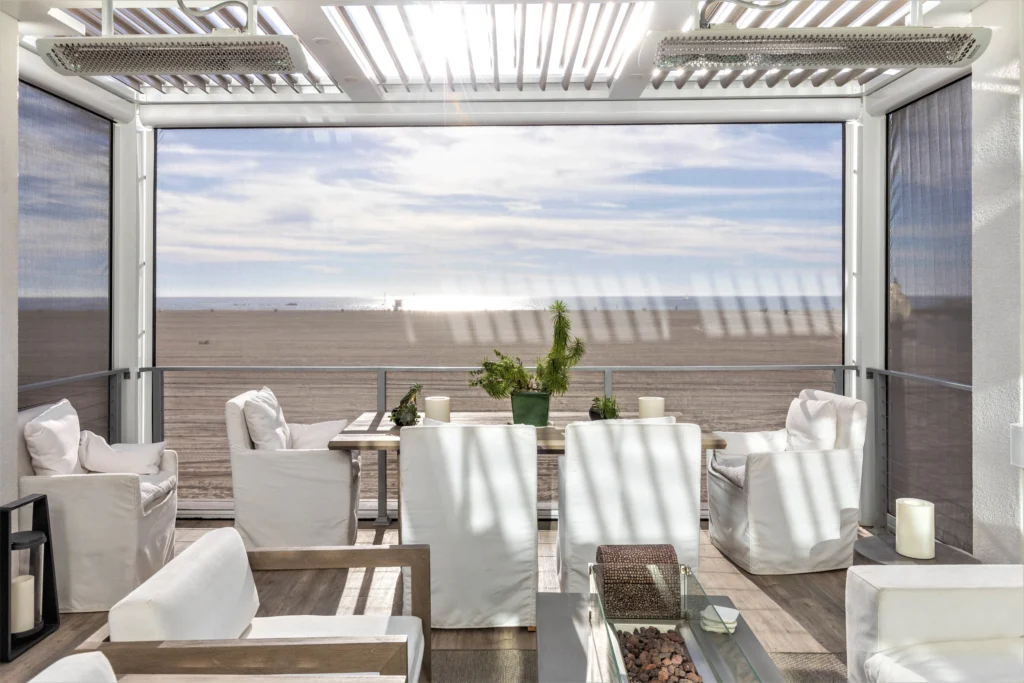
A louvered pergola controls what comes from above; motorized screens control what comes from the sides. Together they create a fully adjustable outdoor room. Open the louvers and raise the screens for a breezy, sun-dappled patio; close the louvers and drop the screens and you have a dry, shaded, wind-protected space in seconds. Integrating both during a single installation is cleaner and more cost-effective than retrofitting later, because the screen housings can be built into the pergola beams and share the same power and controls. The same approach works beautifully over a poolside cabana or, for hotels and restaurants, across a commercial pergola installation.
Are motorized hurricane screens hurricane-rated?
It depends on the product and how it is installed — and in South Florida that distinction matters more than almost anywhere in the country. Miami-Dade and Broward counties sit inside the High-Velocity Hurricane Zone (HVHZ), the strictest wind-code region in the Florida Building Code. Screens engineered and tested for storm protection carry a Miami-Dade Notice of Acceptance (NOA) and are rated to specific design wind pressures. Standard insect or shade screens are not the same thing. When we spec a system for storm duty, we confirm the product’s rating, engineer the attachment for the wind loads at your address, and pull the permit so the install is documented and code-compliant. If you want the full picture on how outdoor structures hold up in a storm, our guide on whether pergolas are hurricane-proof breaks it down.
What motorized hurricane screens cost in South Florida
Pricing depends on the size of the opening, the number of screens, the fabric and rating you choose, and whether the screens are integrated with a new pergola or retrofitted to an existing structure. The number that matters is the all-inclusive one. A real StruXure quote includes the screens, the motors and controls, structural engineering, the permit, and licensed installation — not just the hardware with the labor and paperwork stripped out. That is the same philosophy we apply to pergolas, and you can see how it works in our louvered pergola cost guide. Comparing an all-in number to a hardware-only number is the most common way homeowners get surprised later.
Motorized screens vs. shutters and storm panels
Traditional accordion shutters and bolt-on aluminum panels protect windows and doors, but they are not designed to enclose a living space, and putting them up means manual labor right before a storm. Motorized hurricane screens deploy in seconds without leaving the house, retract invisibly when not in use, and double as everyday sun, bug, and privacy screens. For a covered patio, lanai, or summer kitchen, screens give you protection plus daily usability that panels simply cannot.
Where they work best: lanais, summer kitchens, and pool decks
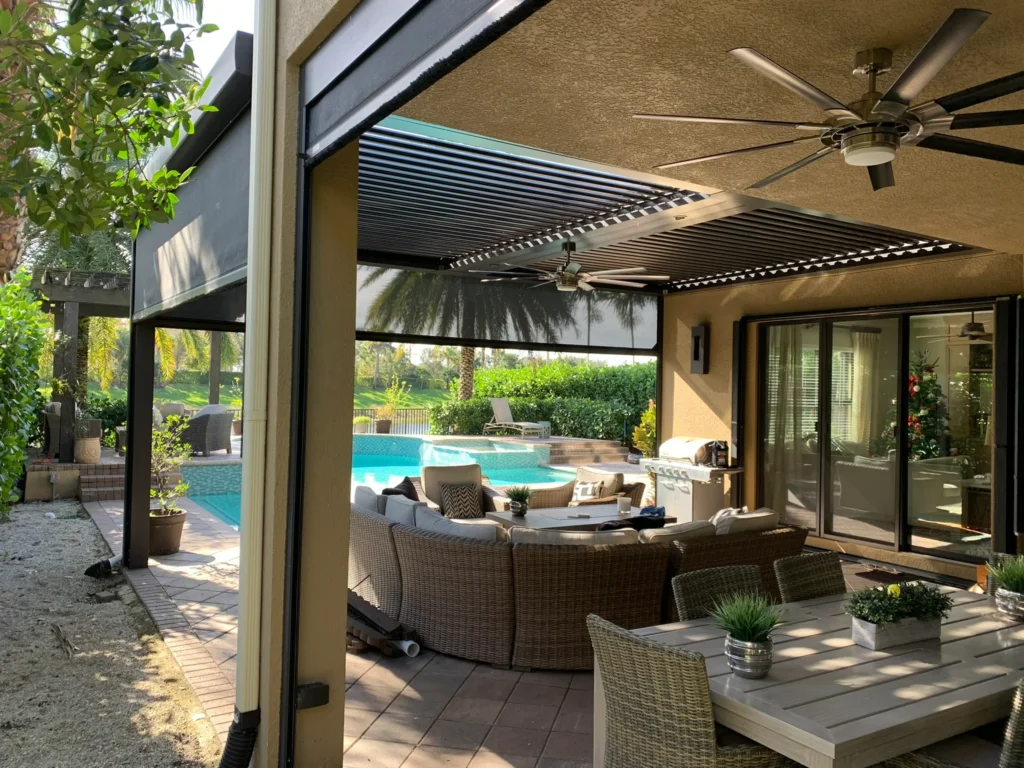
The highest-value places to add motorized screens are the spaces you have already invested in. A summer kitchen under a pergola stays usable in a downpour and protected during a storm. A pool deck becomes a screened-in retreat at dusk without the permanent cage of a traditional pool enclosure. A lanai gains a fourth season. Because the screens disappear when raised, none of these spaces lose the open, indoor-outdoor feel that South Florida living is built around.
When to install — before the season, not during it
The worst time to start a screen project is the week a storm is named. Engineering, permitting, and HVHZ-compliant installation take time, and demand spikes every June. The smart move is to plan the project in the off-season — winter and early spring — so the system is installed, inspected, and tested long before you need it. If you are reading this in the middle of the season, it is still worth starting now so you are protected for the next one.
Frequently asked questions
Do motorized hurricane screens really protect against storms?
Storm-rated screens with a Miami-Dade NOA, properly engineered and installed, are designed to withstand specific hurricane-force wind pressures and to block wind-driven rain and debris. The protection is only as good as the product rating and the installation, which is why code-compliant engineering and permitting matter.
Can I add hurricane screens to an existing pergola?
Often, yes. We assess the existing structure to confirm it can carry the screen housings and handle the wind loads, then integrate the screens and controls. New installations that combine the pergola and screens together are usually cleaner and more cost-effective, but retrofits are common.
How are motorized hurricane screens operated?
By remote, wall switch, or smartphone app. They can be tied into a smart-home system and set to deploy automatically based on wind or rain sensors, then retract when conditions clear.
Do they block the view?
The mesh is designed to preserve outward visibility and airflow while cutting sun, rain, and debris. When you want a fully open patio, the screens retract completely into their housing and disappear.
Do motorized screens hold up to salt air?
Quality systems use powder-coated aluminum housings and corrosion-resistant components specifically because of coastal salt exposure. Keeping the screens and tracks rinsed and clean extends their life in a beachfront environment.
What areas do you serve?
We install motorized hurricane screens and louvered pergolas across South Florida, including Miami, Fort Lauderdale, Boca Raton, Palm Beach, Jupiter, Wellington, and Pinecrest.
Protect your outdoor space this storm season
Motorized hurricane screens give South Florida homeowners year-round comfort and real peace of mind when a storm is on the way — especially when paired with a motorized louvered pergola. Contact StruXure South Florida for a consultation and an all-inclusive quote, and we will design a screen and pergola system engineered for your home and your wind zone.