
Do You Need a Permit for a Pergola in Florida? (2026 Guide)
Short answer: yes. In Florida, a permanently installed pergola is a structure under the Florida Building Code, and virtually every city and county — including all of South Florida — requires a building permit before you install one. Here’s exactly how the process works, what it costs, how long it takes, and why the permit is actually one of the most valuable parts of your project.
Why Florida Requires Permits for Pergolas
Florida’s permitting rules exist for one reason: wind. The Florida Building Code (FBC) sets minimum design wind speeds for every county, and any structure attached to your home or anchored to the ground must be engineered to resist them. In Miami-Dade and Broward counties — the High-Velocity Hurricane Zone (HVHZ) — design wind speeds reach 170–175 mph, the strictest standard in the United States. A permit is the county’s way of verifying that your pergola was engineered, anchored, and inspected to survive those forces instead of becoming debris in the next storm. Learn more in our guide: Are pergolas hurricane-proof?
What the Pergola Permit Process Involves
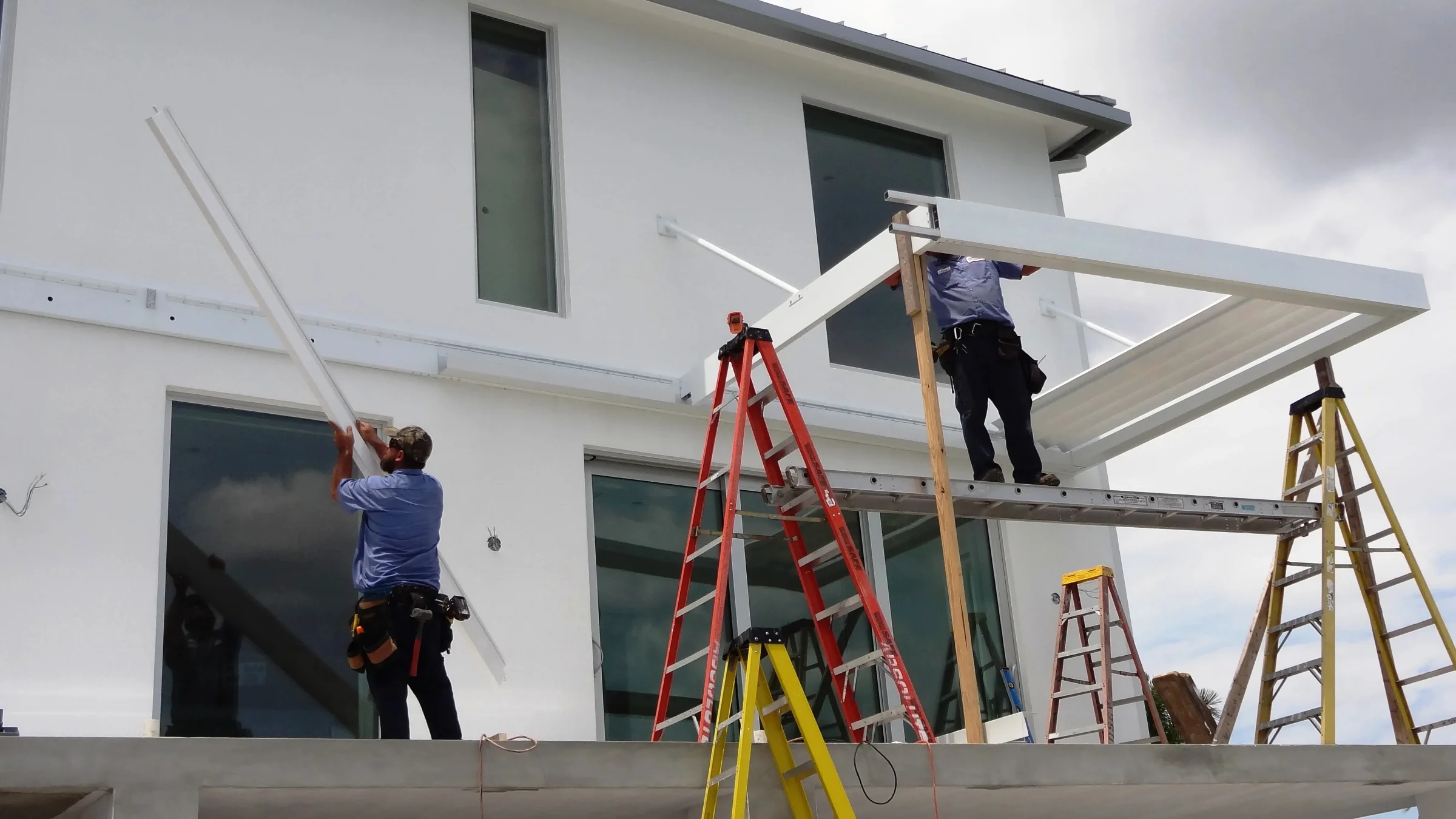
A complete pergola permit package in South Florida typically includes:
- Site plan showing the pergola’s location, setbacks, and dimensions on your property.
- Sealed engineering drawings — structural calculations signed by a Florida professional engineer covering wind loads, connections, and footings.
- Product approvals — in the HVHZ, a Miami-Dade Notice of Acceptance (NOA) or Florida Product Approval documenting that the system itself passed wind testing.
- Permit application filed with your city or county building department, usually by a licensed contractor.
- Inspections — typically footing/anchor inspection and a final inspection after installation.
Homeowners associations add a second layer in many communities: an architectural review board (ARB) approval covering style, color, and placement. We prepare those submittals too.
How Long Does a Pergola Permit Take in Florida?
Plan on 2–8 weeks for permit approval depending on the municipality, time of year, and whether the reviewer issues comments. Miami-Dade HVHZ reviews tend to run longer than inland counties because the structural review is more rigorous. At StruXure South Florida we submit complete, engineer-sealed packages with current NOAs, which is the single biggest factor in avoiding rejection-and-resubmit cycles that can add a month or more.
What Does a Pergola Permit Cost?
Permit fees themselves usually run $200–$1,500+ based on project value and municipality. The bigger line items are the sealed engineering drawings and the contractor’s time managing submittals and inspections — often $1,500–$4,000 combined when purchased separately. This is where quotes get misleading: many pergola companies quote the structure alone and treat engineering and permitting as “extras.” StruXure South Florida’s all-inclusive pricing bundles engineering, the permit, footings, and licensed installation into one number, so the price you sign is the price you pay.
What Happens If You Skip the Permit?
Unpermitted structures in Florida carry real consequences: stop-work orders and fines, mandatory removal or retroactive permitting (at double fees in many counties), denied insurance claims after a storm, and title problems when you sell — buyers’ inspectors flag unpermitted structures, and lenders can require removal before closing. After a hurricane, an unpermitted pergola that damages your home or a neighbor’s property can also void portions of your coverage. The permit isn’t red tape; it’s what makes the structure an asset instead of a liability.
Do Any Pergolas Avoid Permits?
A few narrow exceptions exist — some jurisdictions exempt small, freestanding, temporary shade structures under a size threshold (often 100 sq ft) — but they vary city by city, and nothing anchored, attached, electrified, or in the HVHZ realistically qualifies. If a salesperson tells you a permanent motorized louvered pergola “doesn’t need a permit,” that’s a red flag about how the rest of the project will go.
How StruXure South Florida Handles Permits for You
Every project we build — from residential pergolas in Miami and Fort Lauderdale to commercial installations for hotels and restaurants — includes the complete permit package: engineering, NOAs, submittals, inspections, and HOA documentation. You sign one contract; we handle city hall.
Permit Expectations by Area in South Florida
Every building department moves at its own pace, but here’s what we typically see across our service area:
- Miami-Dade County cities (Miami, Miami Beach, Sunny Isles Beach, Pinecrest, Coral Gables): full HVHZ review with NOA verification — usually 3–8 weeks. Design-review or historic districts can add a board cycle.
- Broward County cities (Fort Lauderdale, Plantation, Davie, Hollywood): HVHZ engineering required; reviews commonly run 2–6 weeks.
- Palm Beach County (Jupiter, Wellington, Palm Beach Gardens, Boca Raton): outside the HVHZ but still high design wind speeds (≈160–170 mph); reviews tend to be faster, 2–4 weeks, with HOA/ARB approvals the more common bottleneck in gated communities.
One practical tip: schedule design and engineering during summer if you want the pergola standing by holiday season — submittal queues lengthen noticeably in fall as everyone races the dry season.
Frequently Asked Questions
Do I need a permit for a pergola in Florida?
Yes — permanently installed pergolas require a building permit in virtually every Florida jurisdiction, with sealed engineering required in the HVHZ (Miami-Dade and Broward counties).
Can I pull a pergola permit myself as an owner-builder?
Florida allows owner-builder permits, but you take on the contractor’s legal responsibility, the engineering still must be sealed by a Florida PE, and HVHZ reviews are unforgiving. Most homeowners let the licensed installer pull the permit.
How long does a pergola permit take in Miami-Dade County?
Typically 3–8 weeks for a complete HVHZ package. Incomplete packages without current NOAs are the most common cause of delays.
Does a permitted pergola increase property taxes?
It can modestly increase assessed value, as can any permanent improvement — but it also adds appraisable resale value and keeps your insurance valid, which far outweighs the assessment for most owners.
Planning a pergola this year? Talk to our team — we’ll handle the engineering and permits, and you’ll know the full price before you commit.