
Community Amenity Shade Structures for HOAs & Condos in South Florida (2026)
For HOAs, condo associations, and master-planned communities in South Florida, the amenity deck is the brochure. Pools, summer kitchens, and clubhouse terraces sell homes and justify dues — but only if residents can actually use them in July. Community amenity shade structures are how associations turn sun-blasted concrete into the most-used real estate on the property. This guide covers the options, the engineering and approval realities boards need to plan for, and why motorized louvered systems have become the standard for new amenity projects.
Why amenity shade is a board-level decision
Shade is infrastructure, not décor. It determines whether the pool deck is usable from 11 a.m. to 4 p.m., whether the summer kitchen hosts events or sits empty, and how the community photographs for prospective buyers. It also carries real liability and engineering weight: anything fixed to a common area in Miami-Dade, Broward, or Palm Beach County requires permits, sealed engineering, and — in coastal zones — High-Velocity Hurricane Zone compliance. The right partner brings all of that to the board meeting, not just renderings.
The shade options boards actually compare
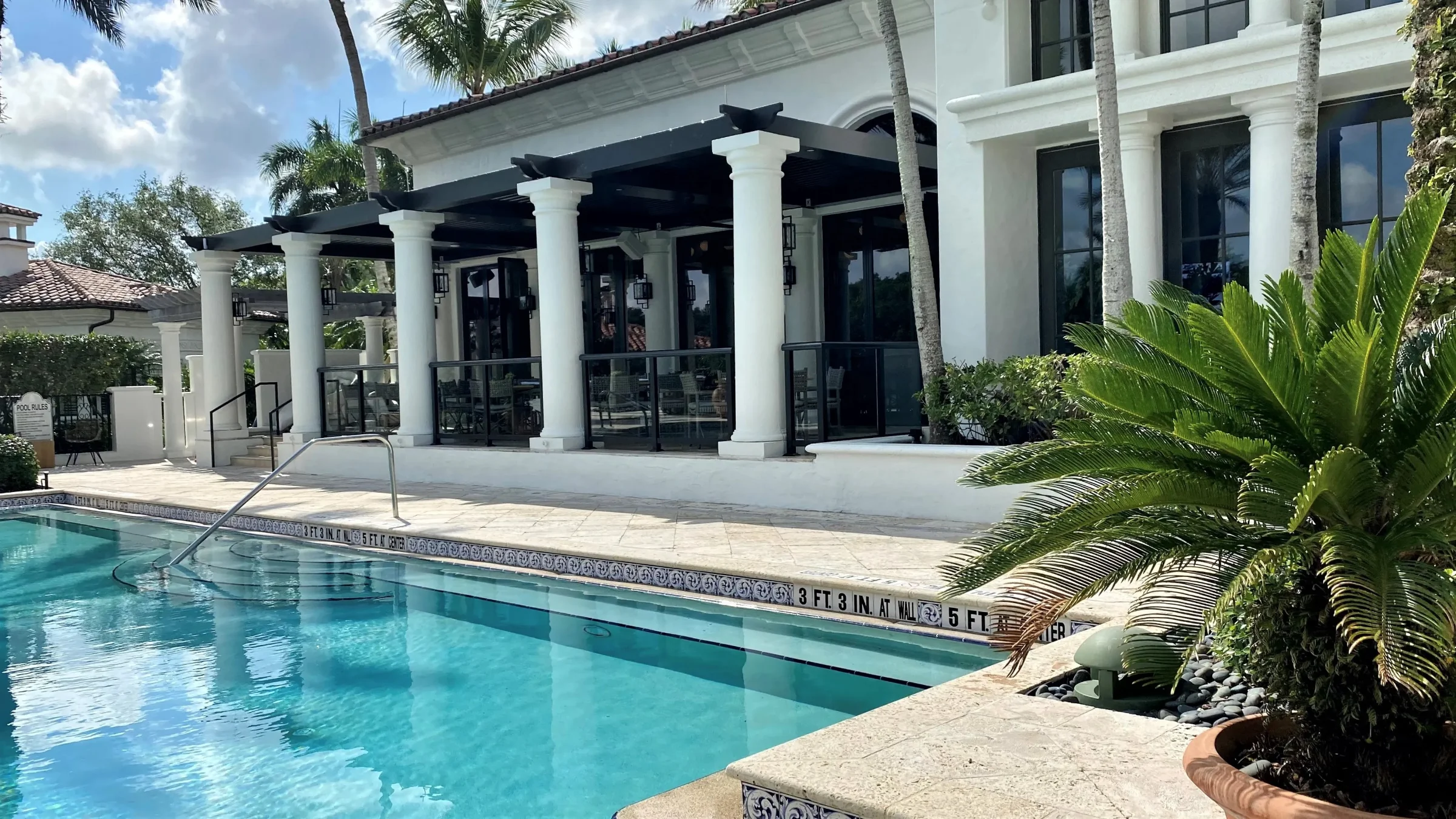
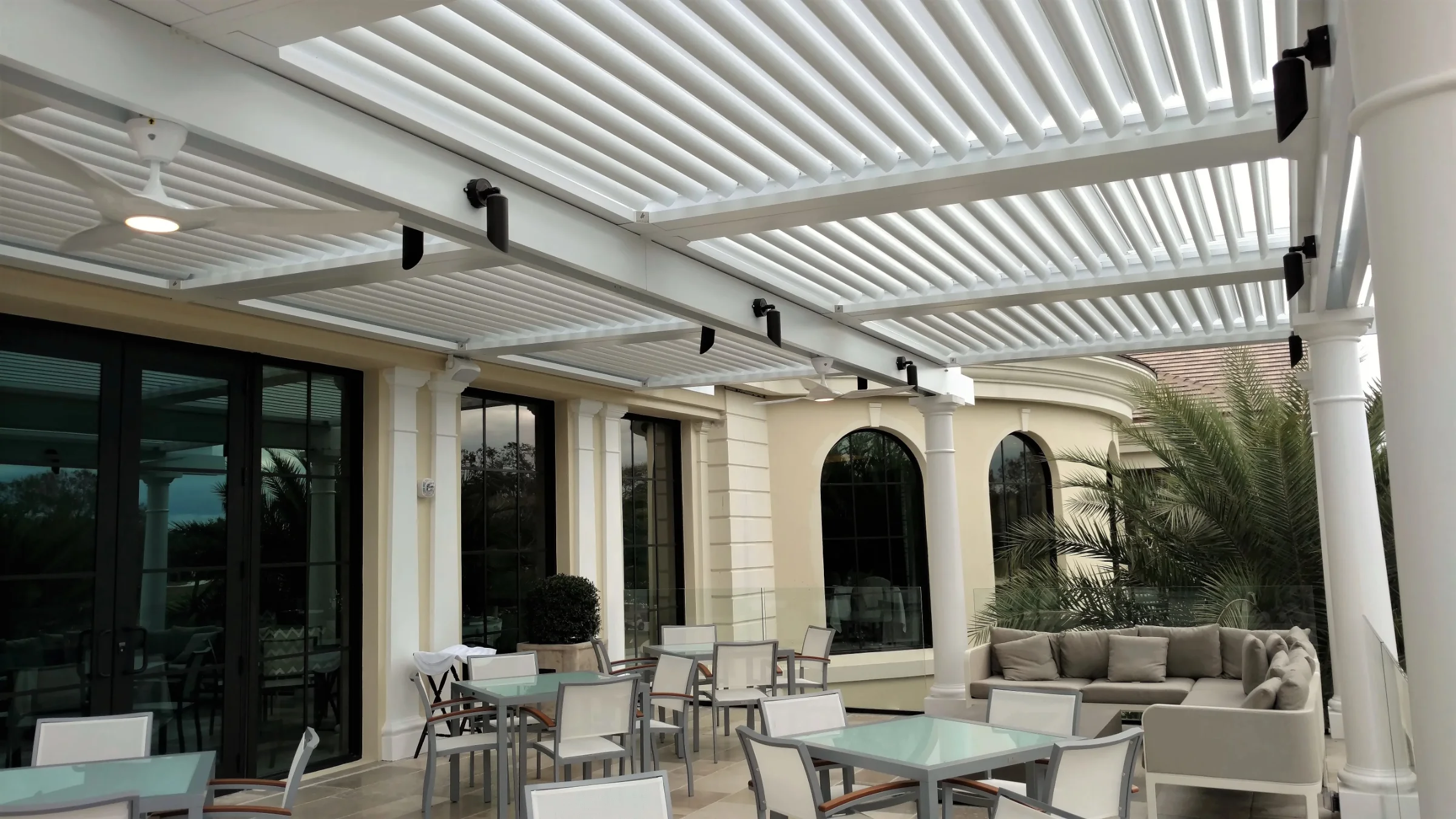
Fabric sails and umbrellas are cheap to buy and expensive to own — they fray in salt air, must come down for every storm, and rarely survive three seasons. Fixed pavilions are durable but static: dark underneath, hot in still air, and unable to adapt to weather or events. Motorized louvered pergolas cost more up front and then outwork everything else: louvers open for morning sun, angle for afternoon shade, and close into a rain-shedding roof for events, while integrated lighting and fans extend amenity hours into the evening. Our commercial pergola page covers the product line; for cabana-style poolside structures, see Cabana X and our work on commercial pergolas across South Florida.
Engineering, permits, and HVHZ compliance
Common-area structures are commercial projects: sealed structural drawings, wind-load calculations to Florida Building Code, county permits, and insurance certificates the property manager can file. In HVHZ jurisdictions the calculations are stricter and the inspections more thorough. Associations should expect — and demand — an all-inclusive proposal covering engineering, permitting, footings, electrical, and licensed installation, with one contract and one warranty holder. Boards comparing bids should compare that finished number, not the structure-only sticker. For storm-season planning, motorized hurricane screens can be engineered into amenity structures to protect summer kitchens and outdoor furniture, and our hurricane-rating guide explains the standards in plain language.
Designing for how communities actually use amenities
The best amenity shade is programmable space. Louvered roofs over the summer kitchen keep grills running through afternoon rain. Shade banks along the pool’s west edge fill first every afternoon — residents follow the shade. Lighting and fan integration turns the same structure into evening event space for association functions. And because the systems are modular, communities phase them: pool deck this fiscal year, clubhouse terrace next. We’ve built amenity projects for country clubs, resorts, and HOAs from Palm Beach to Miami, including phased multi-structure installations.
The approval path: getting shade through the board
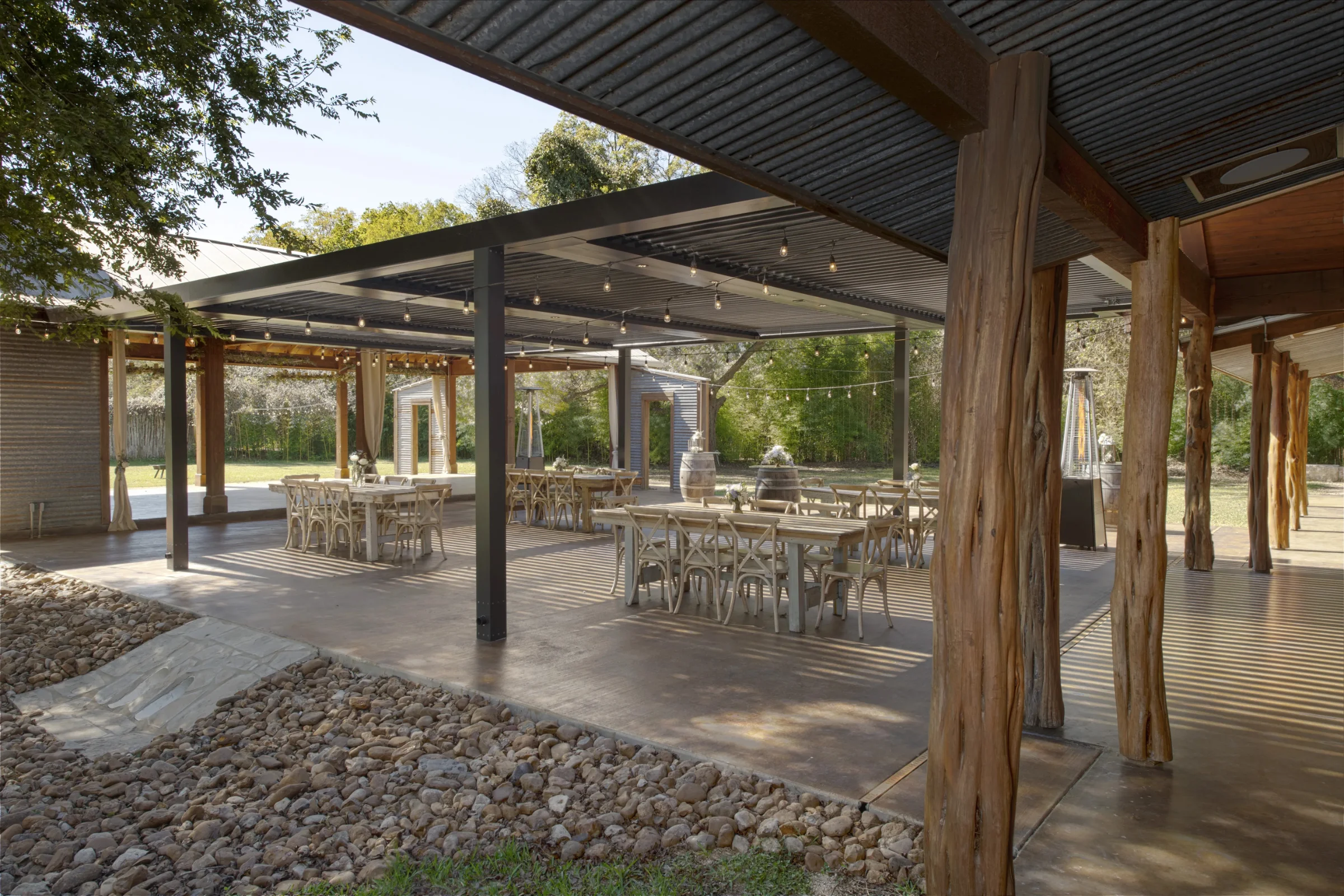
Most amenity shade projects stall not on budget but on process. The path that works: start with a site walk and a needs list from the property manager (where do residents cluster, what events get rained out, where does furniture fade fastest). Bring the board one all-inclusive proposal with engineering, permitting, and installation in a single number, plus renderings over photos of the actual deck. Budget committees respond to per-usable-hour math; architectural review committees respond to color samples and sightline studies. Where a community association manager runs multiple properties, phased master agreements keep pricing consistent across sites. We routinely present at board meetings and prepare the documentation associations need for reserve-study updates and membership votes.
Case in point: country-club amenity decks
Country clubs were the early adopters, and their experience translates directly to HOA boards. Clubs found that shaded, rain-protected outdoor dining doesn’t just keep members comfortable — it adds bookable event capacity without building walls. The same logic applies to a community clubhouse terrace: a louvered roof with lighting and fans turns dead afternoon space into the venue for board meetings, fitness classes, and private-party rentals that offset dues. The structures photograph beautifully for community marketing, and unlike enclosed additions they typically avoid the longer approval cycle of conditioned-space construction.
Budgeting and the reserve-study conversation
Quality aluminum shade structures are capital improvements with service lives measured in decades — they belong in the reserve study alongside roofs and paving, not in the annual landscaping line. Powder-coated aluminum needs no painting, sealing, or termite treatment, and motorized systems carry manufacturer warranties on structure and finish. When amortized over a 20-year life, a louvered amenity structure typically costs a community less per usable hour than the fabric shade it replaces every third season.
One more line item boards often miss: electrical capacity. Fans, LED lighting, outdoor TVs, and motorized screens all draw from the amenity panel, and adding circuits after the deck is poured costs multiples of planning them up front. A complete proposal includes the electrical scope; if a bid is silent on it, the change order is coming. The same applies to data conduit for poolside Wi-Fi access points — cheap during construction, disruptive afterward.
Frequently asked questions
Do HOA shade structures require permits?
Yes. Common-area structures require county permits with sealed engineering in every South Florida jurisdiction, and HVHZ rules apply in Miami-Dade and Broward.
How disruptive is installation to residents?
Typical amenity installations run days, not months — footings and electrical first, then structure assembly. We schedule around amenity hours and phase work so the pool stays open.
What maintenance do louvered amenity structures need?
Occasional rinsing and an annual motor check. There’s no painting, staining, or fabric replacement — which is exactly why they fit reserve planning better than sails and umbrellas.
Can the structures match our community’s architecture?
Yes — frames and louvers come in standard and custom powder-coat colors, and structures are sized to your site. Contact us to arrange a board presentation or site walk-through.