
Motorized Pergolas in Florida: How They Work, Costs & Wind Codes (2026)
A motorized pergola solves the oldest problem in Florida outdoor living: the weather changes faster than your plans. Fixed roofs trap heat and block light; open pergolas surrender to every afternoon thunderstorm. A motorized louvered pergola does both jobs — louvers rotate up to 170 degrees to follow the sun, then close into a watertight roof at the first drop of rain. This guide covers how motorized pergolas work, what they cost in Florida, how they handle our wind codes, and how to decide whether one fits your home or business.
How a motorized pergola works
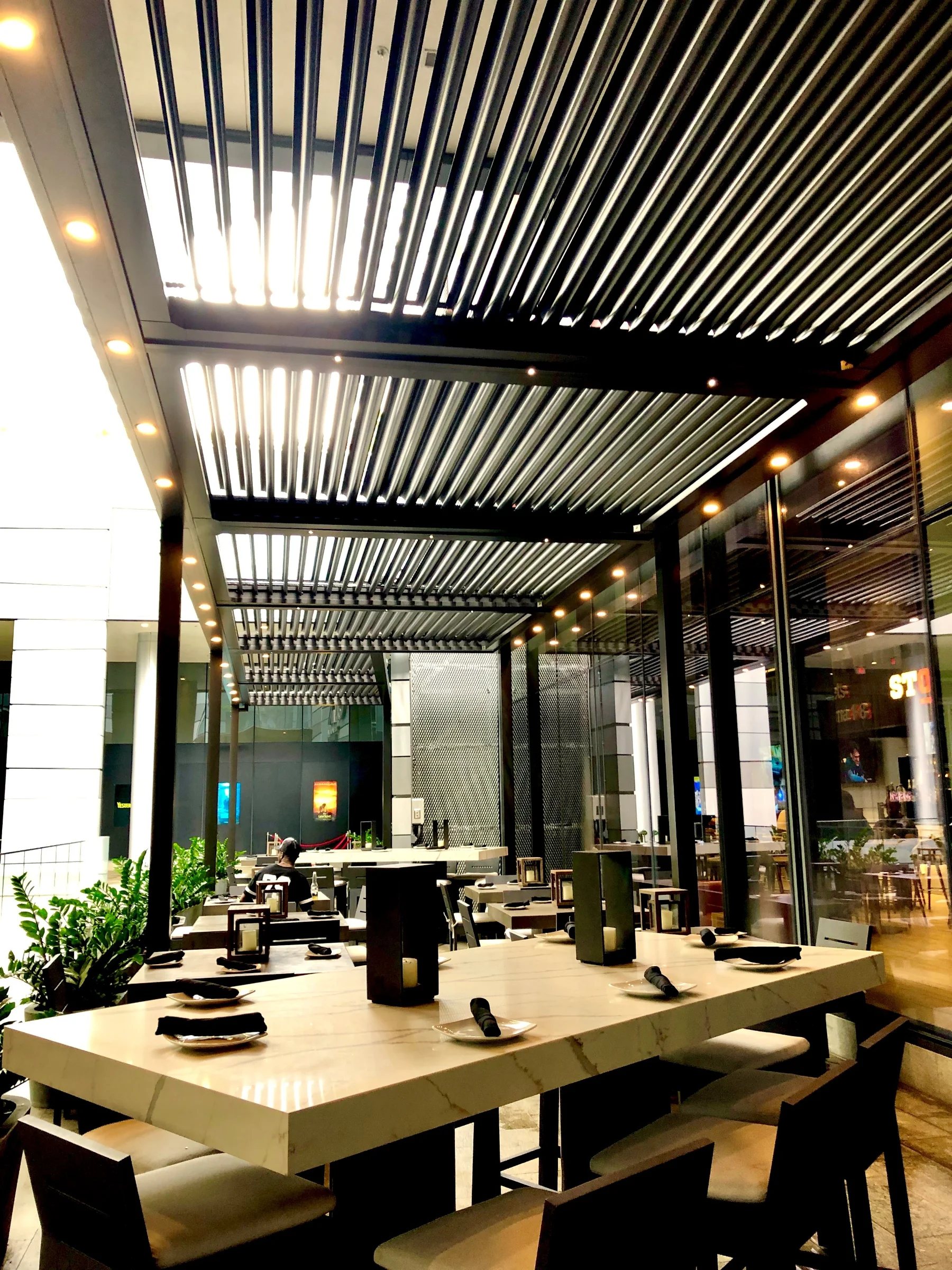
The system is built from extruded, powder-coated aluminum: posts, beams, and a field of interlocking louvers driven by a sealed tubular motor. Touch a button — or a smart-home app — and the louvers pivot from fully open to fully closed. In the closed position they overlap and channel rainwater into an integrated gutter system that carries it down the posts and away from your slab. Add a rain sensor and the roof closes itself when a storm rolls in while you’re out. The StruXure Pergola X platform also integrates LED lighting, fans, heaters, and motorized screens on the same controls.
Motorized vs. fixed-roof vs. manual pergolas
A fixed roof gives shade but takes the sky — your patio is darker and hotter underneath, permanently. A manual-crank louvered system costs less up front, but in practice nobody cranks 40 louvers ahead of every passing shower, so it lives in one position. Motorization is what makes the louvered concept actually work day to day: shade at noon, stars at night, a sealed roof in the rain, all without leaving your chair. If you’re comparing categories, our guide to louvered pergola costs in South Florida shows where motorization sits in the budget.
Built for Florida sun, rain, and salt air
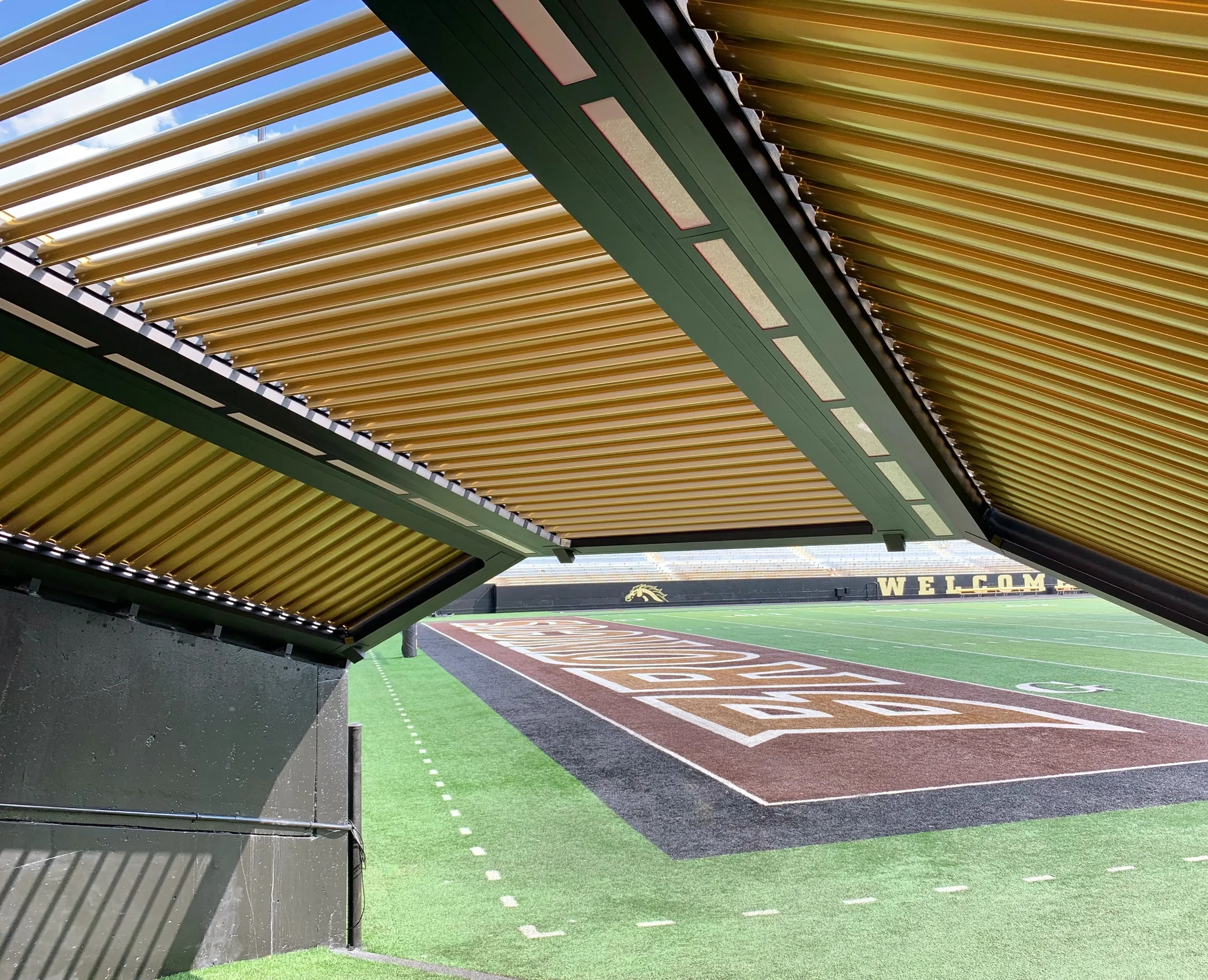
Florida is the stress test. Marine-grade aluminum doesn’t rot, warp, or feed termites the way wood does, and the powder-coat finish is engineered for UV and coastal salt exposure. Closed louvers shed tropical downpours; open louvers vent heat instead of trapping it. And because the structure is engineered rather than assembled from a kit, it’s designed to meet Florida Building Code wind loads — including the High-Velocity Hurricane Zone in Miami-Dade and Broward. For the storm-season details, read Are pergolas hurricane-proof?
What a motorized pergola costs in Florida
Professionally engineered and permitted motorized pergolas in Florida typically land in the mid five figures, driven by footprint, freestanding versus attached design, and options like screens, lighting, and fans. The number that matters is the all-inclusive one: structural engineering, the permit, concrete footings, the motor and controls, and licensed installation. Quotes that look dramatically cheaper almost always exclude several of those — and they reappear later as change orders.
Where motorized pergolas work best
Pool decks that need afternoon shade without losing the open-sky feeling. Outdoor kitchens and summer kitchens that have to stay dry. Courtyard and rooftop terraces where a fixed roof would violate setbacks or sightlines. And commercial spaces — restaurant patios, hotel pool decks, country-club dining — where every rained-out hour is lost revenue; see our commercial pergola page for that side of the business. We design and install across Miami, Fort Lauderdale, Wellington, and the rest of the tri-county area.
Smart-home integration
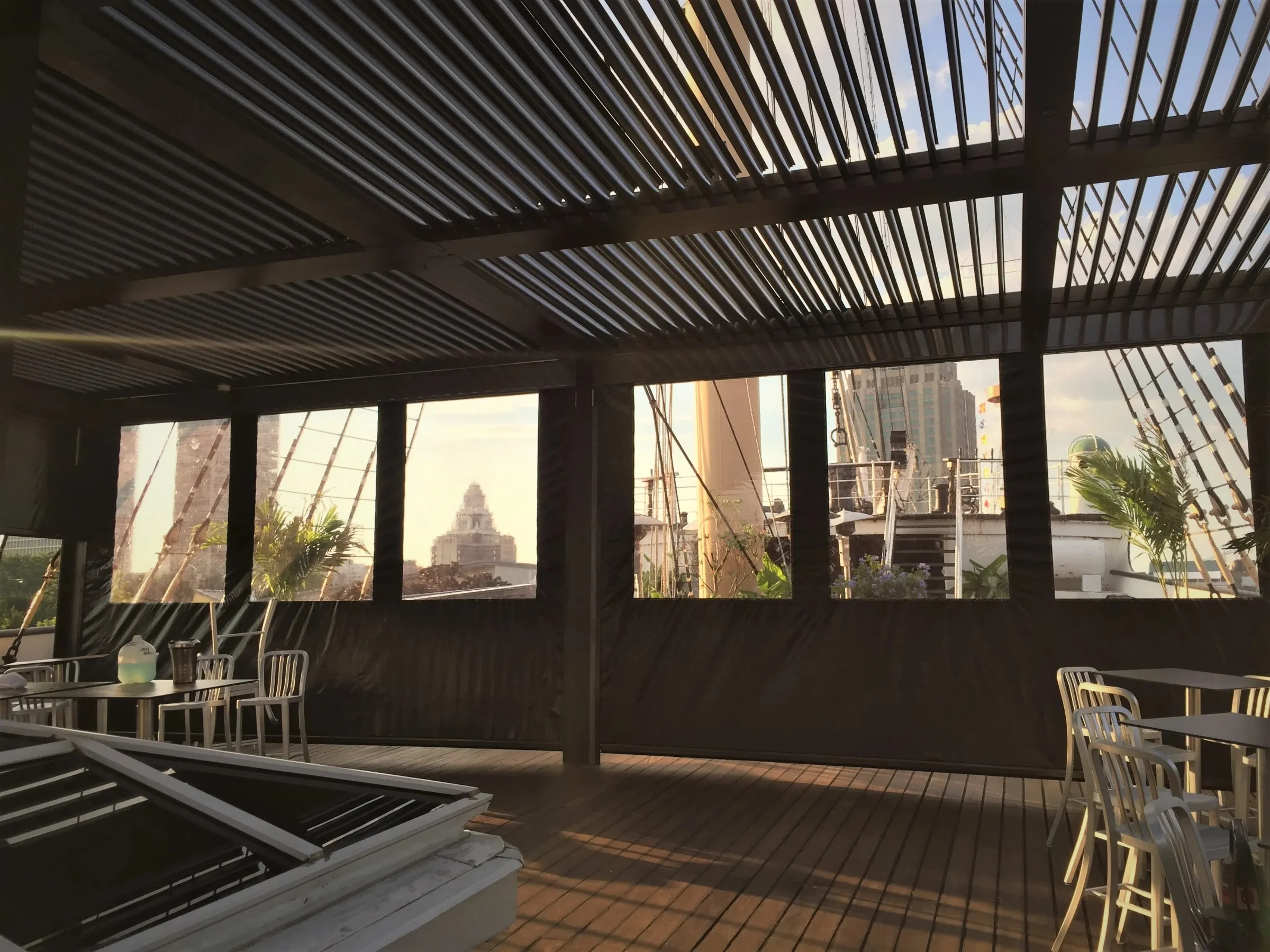
Modern systems speak the same language as the rest of your house. Open or close the roof from a wall switch, remote, or phone app; schedule positions by time of day; tie the rain sensor to auto-close; and group the louvers, screens, lights, and fans into scenes. “Dinner” can mean louvers at 45 degrees, screens down, lights at 30 percent — one tap.
Design choices that matter in the Florida heat
Two decisions shape how a motorized pergola performs here more than any option on the order sheet. The first is louver orientation: louvers that pivot against the western sun give you usable shade through the brutal 3–6 p.m. window, while a roof oriented the other way leaves you squinting exactly when you want to be outside. The second is color and finish: lighter louvers reflect heat over pool decks, while dark bronze and charcoal frames disappear elegantly against modern architecture — both arrive in the same marine-grade powder coat. A good designer will also size post placement around your views and traffic flow rather than defaulting to a square, and will plan electrical runs for fans, lighting, and future screens before the first footing is poured.
Freestanding or attached: which is right for your home?
Attached systems tie into the house structure and extend your living room outward — ideal for covered kitchens and dining just off the slider. They require careful flashing and load analysis where the pergola meets the structure, which is where experienced installers earn their keep. Freestanding systems can go anywhere on the property — beside the pool, at the dock, over a fire-pit lounge — and give the architecture a destination feel. Wind engineering differs between the two, and in HVHZ counties the calculations are not interchangeable, so the decision should be made with your dealer at design time rather than after the quote.
Why professional installation decides the outcome
The same hardware can produce a flawless roof or a leaky one. Footing depth, anchor selection, dead-level beam alignment, louver tensioning, gutter slope, and motor wiring are all installation-side variables — and they’re where leaks, pooling, and premature wear are born. Factory-trained, licensed crews install these systems weekly and warranty the workmanship along with the product. It’s the part of the project you can’t see in a photo, and it’s the part that determines whether the system still glides shut in year fifteen.
Frequently asked questions
Do motorized pergolas need a permit in Florida?
Yes — they’re fixed structures, and every Florida county requires a permit with engineered drawings. Your installer should handle the entire process; if they suggest skipping it, walk away.
What happens to a motorized pergola in a power outage?
The sealed motor holds its position, and the system can be cycled once power returns. Many owners close the louvers ahead of major storms as part of normal prep.
How much maintenance does a motorized pergola need?
Very little: occasional rinsing of the louvers and gutters, and a periodic motor check by the installing dealer. Aluminum needs no painting, sealing, or termite treatment.
Can screens be added to a motorized pergola later?
Often yes, but it’s better engineered in from the start — tracks and wiring integrate cleanly at design time. Talk to our design team about combining louvers and screens in one system.