
Motorized Pergola Screens: Shade, Privacy & Storm Protection (2026)
Motorized pergola screens are the upgrade that turns a louvered pergola from a roof into a room. At the touch of a button, retractable screens glide down the sides of the structure — blocking sun glare, insects, wind-blown rain, and prying eyes, then disappearing into slim housings when you want the open-air feeling back. In South Florida, where afternoon storms, mosquito season, and close-set properties are all facts of life, screens are the most requested addition to every pergola we design. Here’s how the systems work, what they solve, and what to know before adding them.
How motorized pergola screens work
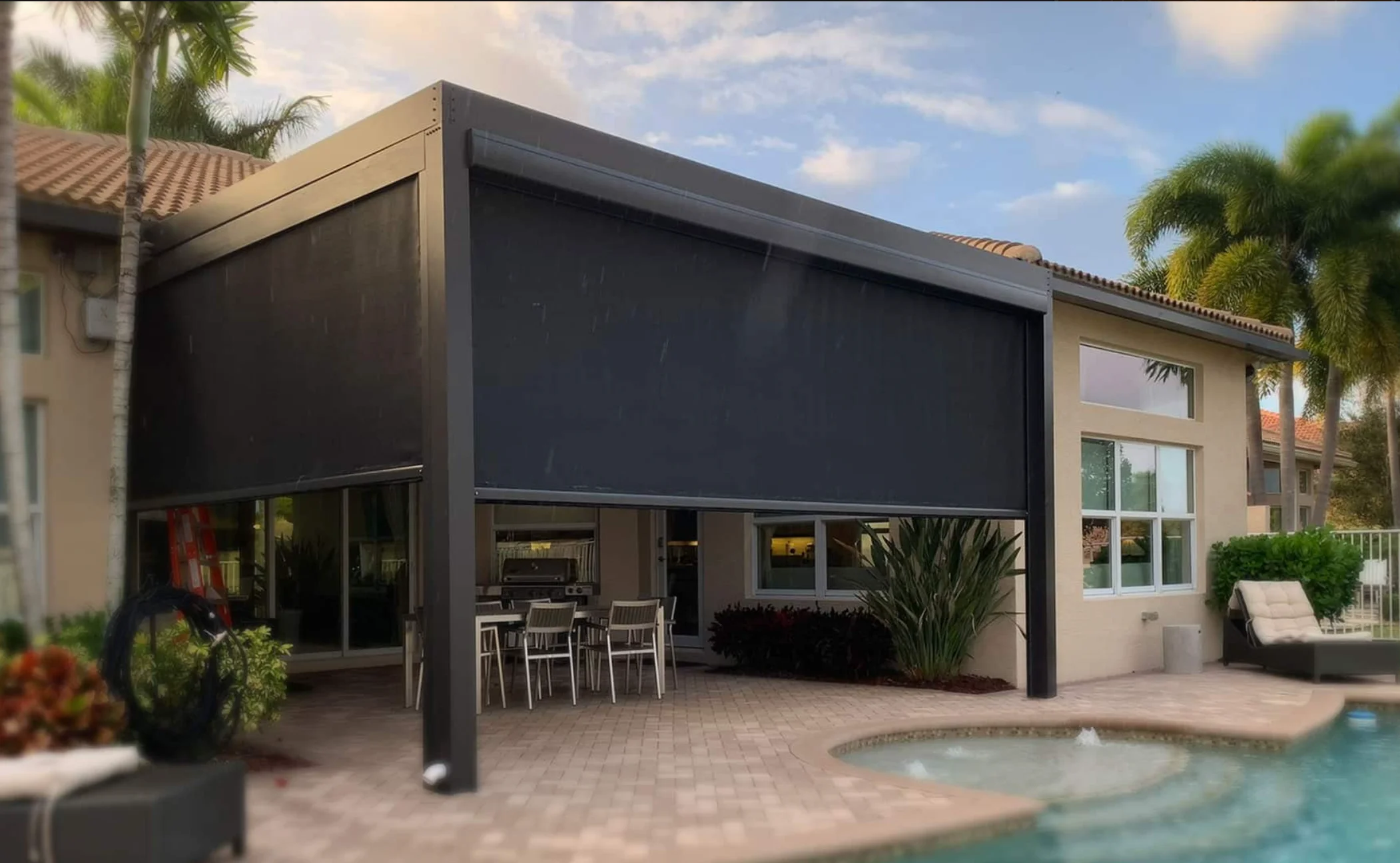
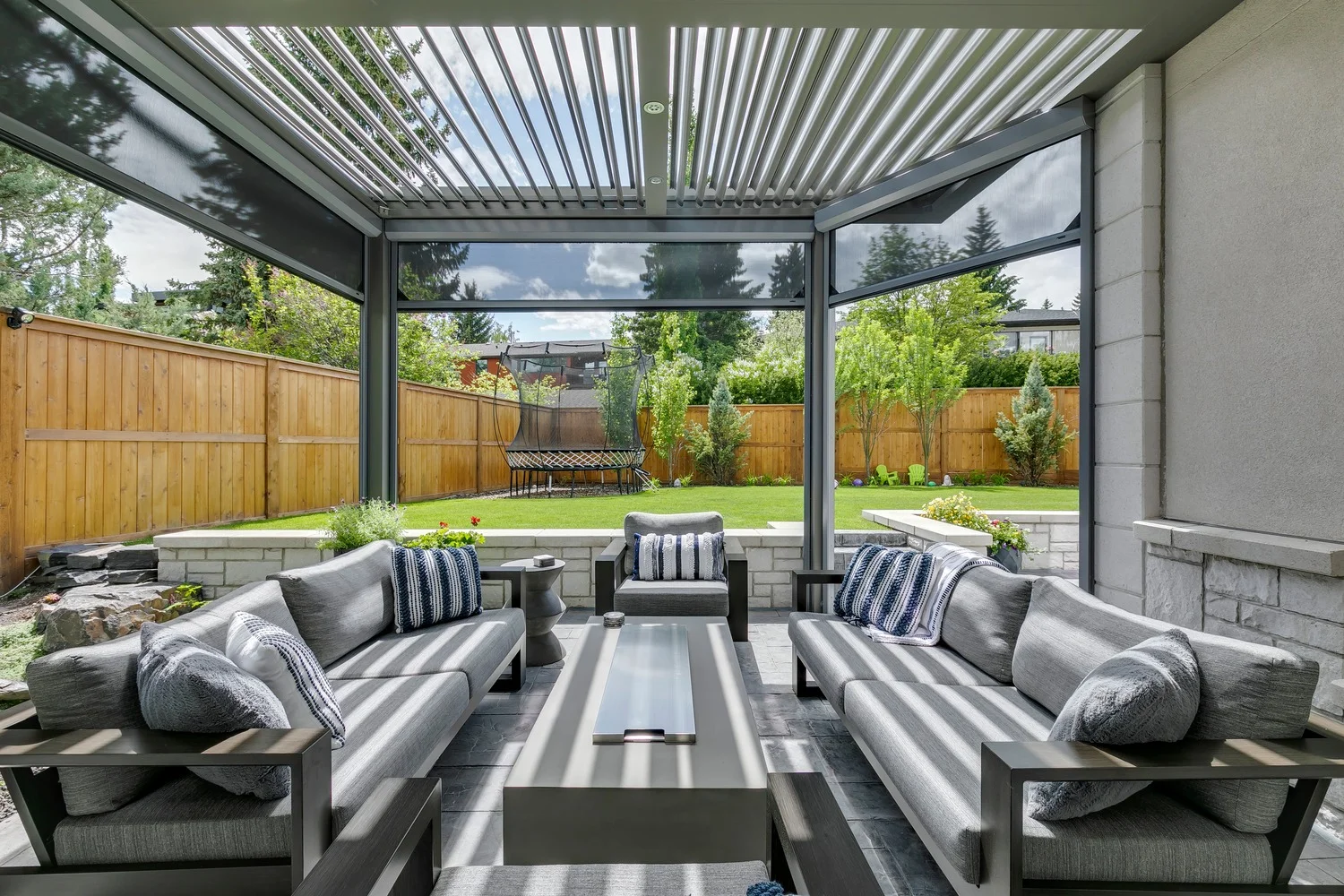
Each screen is a continuous fabric panel on a motorized roller tube, housed in a powder-coated aluminum cassette mounted to the pergola’s beam. Side tracks — or wind-rated zipper tracks — guide the panel down and lock the edges so the fabric stays taut instead of flapping. Touch a wall switch, remote, or app and the panels deploy in seconds; group them with the Pergola X louvers so “movie night” or “storm prep” is a single command. Fabric choices range from open-weave solar mesh that preserves the view to blackout and vinyl panels that seal the space completely.
Five problems screens solve in South Florida
Western sun: solar mesh cuts glare and heat through the 3–6 p.m. window without blacking out the view. Insects: tight-woven screens make dusk on the patio livable in mosquito season. Privacy: on close-set lots in neighborhoods from Victoria Park to Pinecrest, a deployed screen turns an exposed patio into a private room. Wind-blown rain: closed louvers handle the vertical rain; screens handle the sideways kind. Evening comfort: screens knock down breeze and contain heat from patio heaters on the few cool nights we get.
Privacy screens vs. hurricane screens: know the difference
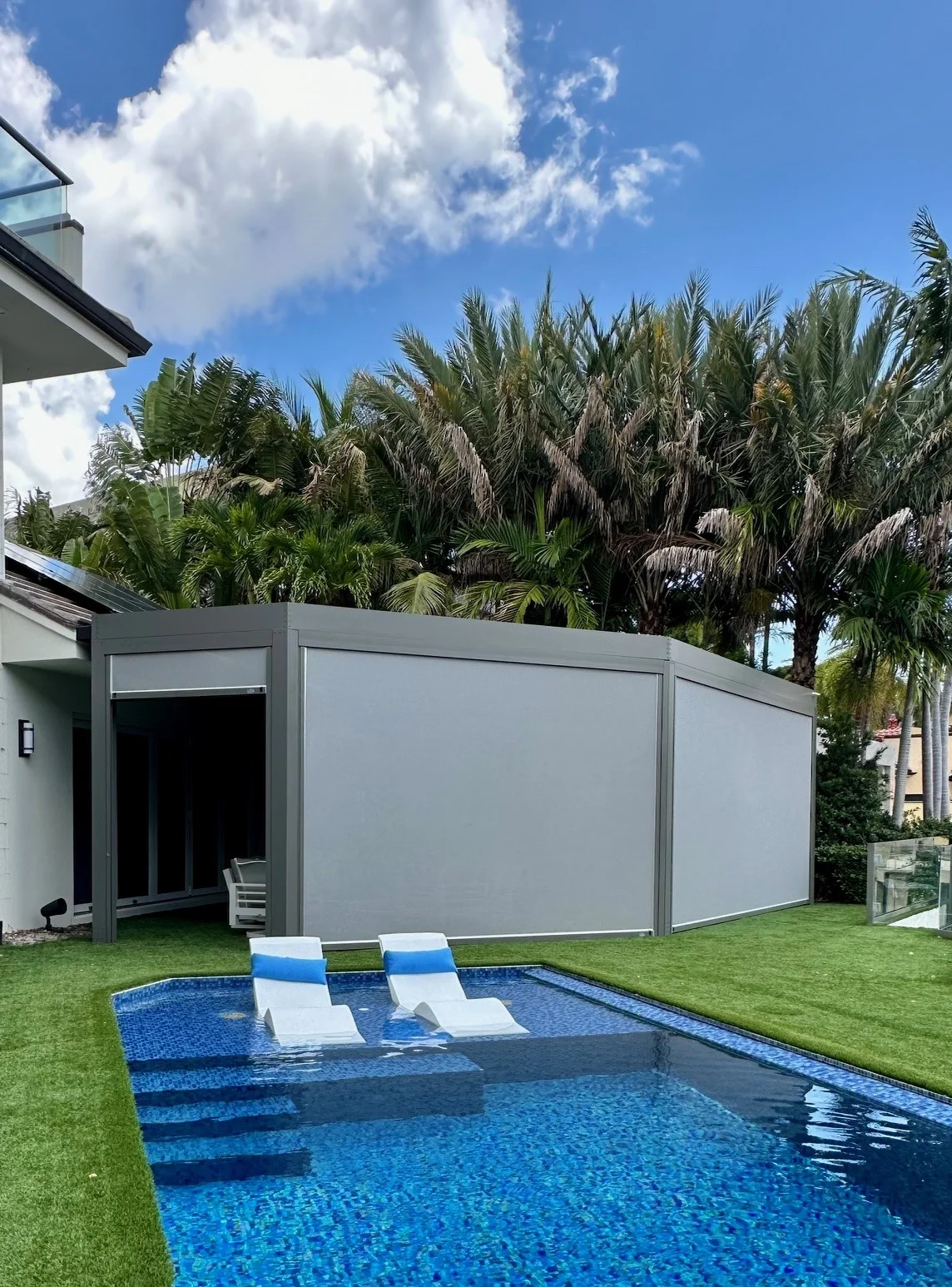
Standard motorized screens are comfort equipment — sun, bugs, privacy, light wind. Hurricane-rated screens are a different product class: engineered fabric and reinforced tracks tested to Florida Building Code wind pressures, capable of protecting the openings of a structure during a named storm. Some of our clients run both on the same pergola — solar mesh for daily living, with motorized hurricane screens engineered in for storm season. If a salesperson calls a comfort screen “hurricane-proof,” ask for the test report; our guide to hurricane-rated pergolas explains what the ratings actually mean.
Designing screens into the structure
Screens can be retrofitted to an existing louvered pergola, but the best results come when they’re engineered in from day one: cassettes concealed inside the beam line, tracks integrated into the posts, and wiring run before the slab is finished. At design time we also size the screens to the realities of your site — wind exposure on a Miami rooftop differs from a courtyard in Wellington — and match fabric openness to the direction each side faces. The result looks factory-built because it is, not like an awning bolted to a pergola.
What motorized pergola screens cost
Pricing scales with the number of sides, panel width, fabric class, and whether tracks are standard or wind-rated. As a rule of thumb, screening one side of a typical residential pergola is a four-figure addition; wrapping a large structure on three or four sides with wind-rated zipper tracks is a five-figure one. As with the pergola itself, insist on an all-inclusive number — cassettes, tracks, motors, controls, electrical, and installation. Our cost guide covers how screens fit into a total project budget.
Choosing the right fabric for each side
Screen fabric is specified by “openness factor” — the percentage of the weave that lets light and air through. A 10% open solar mesh keeps a pool-facing side breezy and view-friendly while taming glare. A 3–5% mesh on the western exposure blocks the worst of the heat. A 1% or vinyl panel on the property-line side delivers true privacy and turns the space into an evening media room. Mixing fabrics by side is normal — the cassettes look identical from outside, and the controls don’t care. Color matters too: darker meshes are easier to see through from inside (better views), while lighter meshes reflect more heat. A good designer walks the site at the hottest part of the day before specifying anything.
Maintenance and longevity in salt air
Screen systems are low-maintenance, not no-maintenance. A freshwater rinse of tracks and fabric every month or two keeps salt crystals from abrading the weave, and the roller motors are sealed against humidity the same way the louver motors are. Fabrics carry multi-year warranties against UV degradation — ask for the spec sheet, because no-name fabrics chalk and crack here in three summers. Retract screens during named storms unless they’re specifically hurricane-rated; comfort mesh left deployed in 90-mph gusts becomes a sail. With basic care, a quality system runs for well over a decade of daily cycling.
Commercial applications
Restaurants and hotels use motorized screens to keep patios bookable through wind, bugs, and shoulder-season weather — and to create private-event spaces on demand. Combined with louvered roofs, screens are why commercial pergola patios in South Florida can promise outdoor seating year-round.
For hotels and HOAs, screens also extend the life of furnishings — cushions, fixtures, and outdoor TVs last visibly longer when they’re not taking direct salt spray and UV every afternoon. Several of our hospitality clients recovered the cost of their screen systems in reduced furniture replacement alone, before counting a single extra covered seating.
Frequently asked questions
Can motorized screens be added to any pergola?
They integrate best with structural aluminum systems like StruXure, which are engineered for the cassette and track loads. Wood structures usually can’t support wind-rated tracks properly.
Do the screens block the view?
Solar mesh fabrics preserve most of the view while cutting glare and heat — think high-end sunglasses for your patio. Privacy and blackout fabrics trade view for seclusion.
How do screens handle wind?
Zipper-track systems hold fabric taut in strong breezes and are rated for specific wind speeds; for named storms, only hurricane-rated screen systems should be considered protection.
Who installs and services them?
Our factory-trained crews install screens as part of the pergola build and service the motors afterward. Book a design consultation to see fabric samples and live demos.