
When the Motor Reaches End of Life: Pergola Motor Replacement, Parts Availability and Serviceability in Fifteen Years
Aluminum framing outlasts almost everything else in a South Florida backyard. The motor that rotates the louvers does not. That mismatch is the single most under-discussed fact in the louvered pergola market, and it becomes real around year twelve when a homeowner starts pricing a pergola motor replacement and discovers the original part left production years ago.
This article covers what actually wears out, how long the moving parts genuinely last, and the specific questions that separate a system you can service in 2041 from one you cannot. None of it argues against buying a motorized roof. It argues for buying one you can keep running.
What wears out and what does not
Separate the structure from the machinery, because they age on completely different timelines. Extruded aluminum posts, beams and louver blades have no moving parts and no consumables. Given a decent architectural finish and coastal-appropriate hardware, they routinely pass twenty-five years looking presentable.
The machinery is another matter. A motorized louvered roof carries a drive motor, a gearbox, linkage arms and pivot bushings, a control board, wiring, and usually a wireless remote or wall keypad. Each of those runs on a service life that manufacturers count in cycles or in years of electronic component life, not in decades of weathering.
In practice, the electronics fail before the mechanics. Control boards sit outdoors in Florida humidity and heat, and capacitors degrade. Meanwhile, the motor itself often keeps turning long after the board that commands it has stopped responding, which is why a dead pergola frequently turns out to be a fifty-dollar problem that somebody mistook for a two-thousand-dollar one.
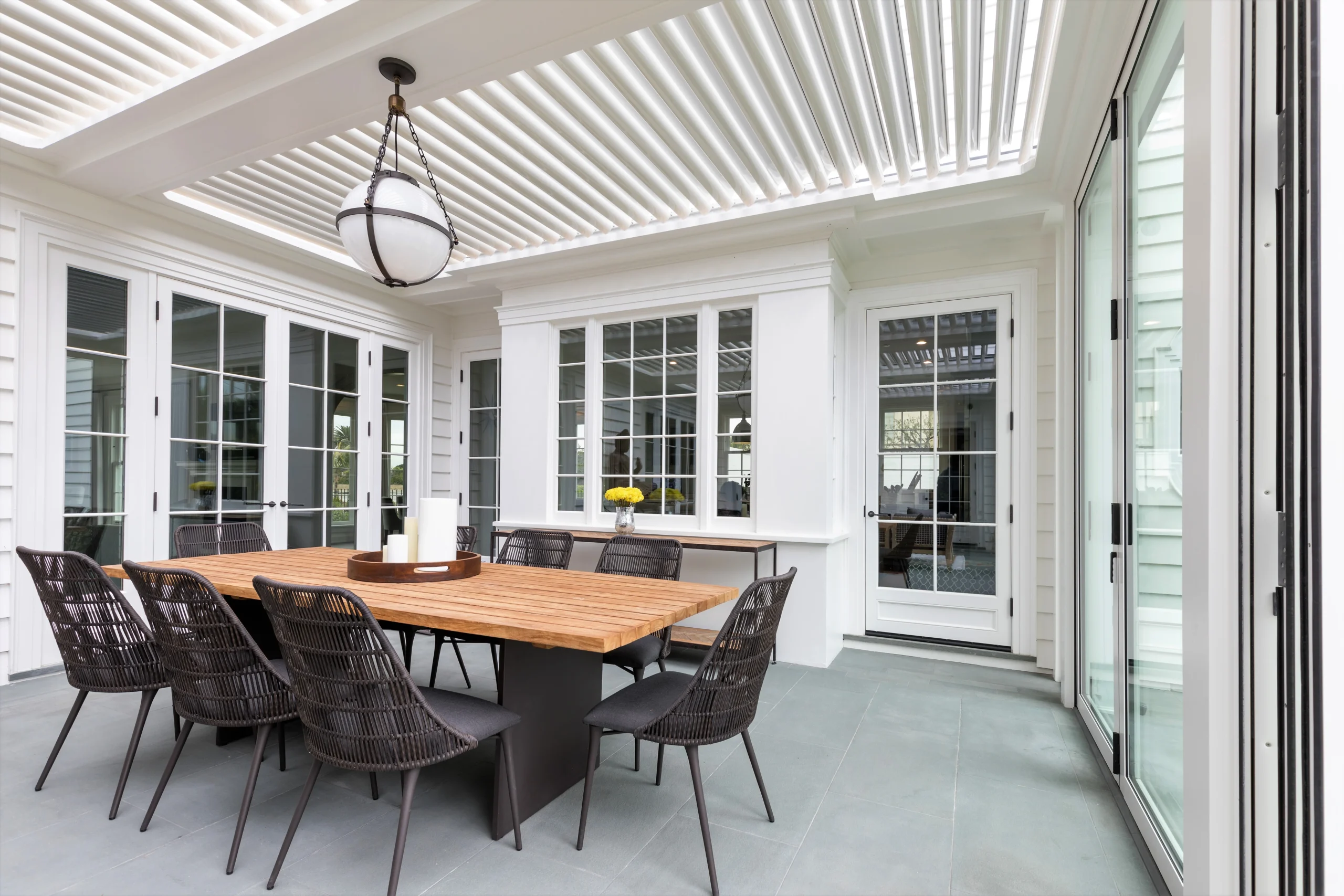
Realistic service life before a pergola motor replacement
Ask any manufacturer for numbers and you will get ranges rather than guarantees, which is fair. Still, the ranges cluster.
Quality systems typically carry drive motors rated for tens of thousands of cycles. Most residential owners operate a roof a handful of times a day at most, so the motor is rarely the limiting factor. Control boards and receivers commonly run eight to fifteen years outdoors in this climate. Remotes and keypads fail sooner, often at five to ten years, and they are the cheapest thing on the list to replace.
Bushings and pivot points wear gradually rather than failing suddenly. You notice them as increasing noise or a blade that no longer closes flush. Rain sensors and wind sensors, where fitted, sit exposed and tend toward the shorter end of the electronics range.
Consequently, a twenty-five-year ownership period realistically includes at least one control board, probably two remotes, and possibly one motor. That is a maintenance budget rather than a catastrophe, provided the parts still exist.
Why parts availability decides every pergola motor replacement
Here is the uncomfortable part of the market. Outdoor structure companies come and go, and product lines get discontinued far faster than aluminum wears out. A homeowner with a fifteen-year-old system from a defunct brand owns a beautiful frame and an unserviceable mechanism, and retrofitting a different motor into proprietary linkage is often impractical.
Before you buy, therefore, ask about the drive system’s origins. Systems built around widely used, standards-compliant tubular motors from established motion manufacturers give you options later, because those motors remain available and largely interchangeable. Systems built around a fully proprietary drive give you exactly one supplier, forever.
The relevant safety standard here is worth knowing by name. ANSI/CAN/UL 325 covers electric operators for doors, draperies, gates, louvers, windows and exterior awnings, addressing fire, shock and entrapment hazards. A drive system certified to it sits inside a recognized standards framework rather than outside one, and that framework tends to outlive individual product lines.
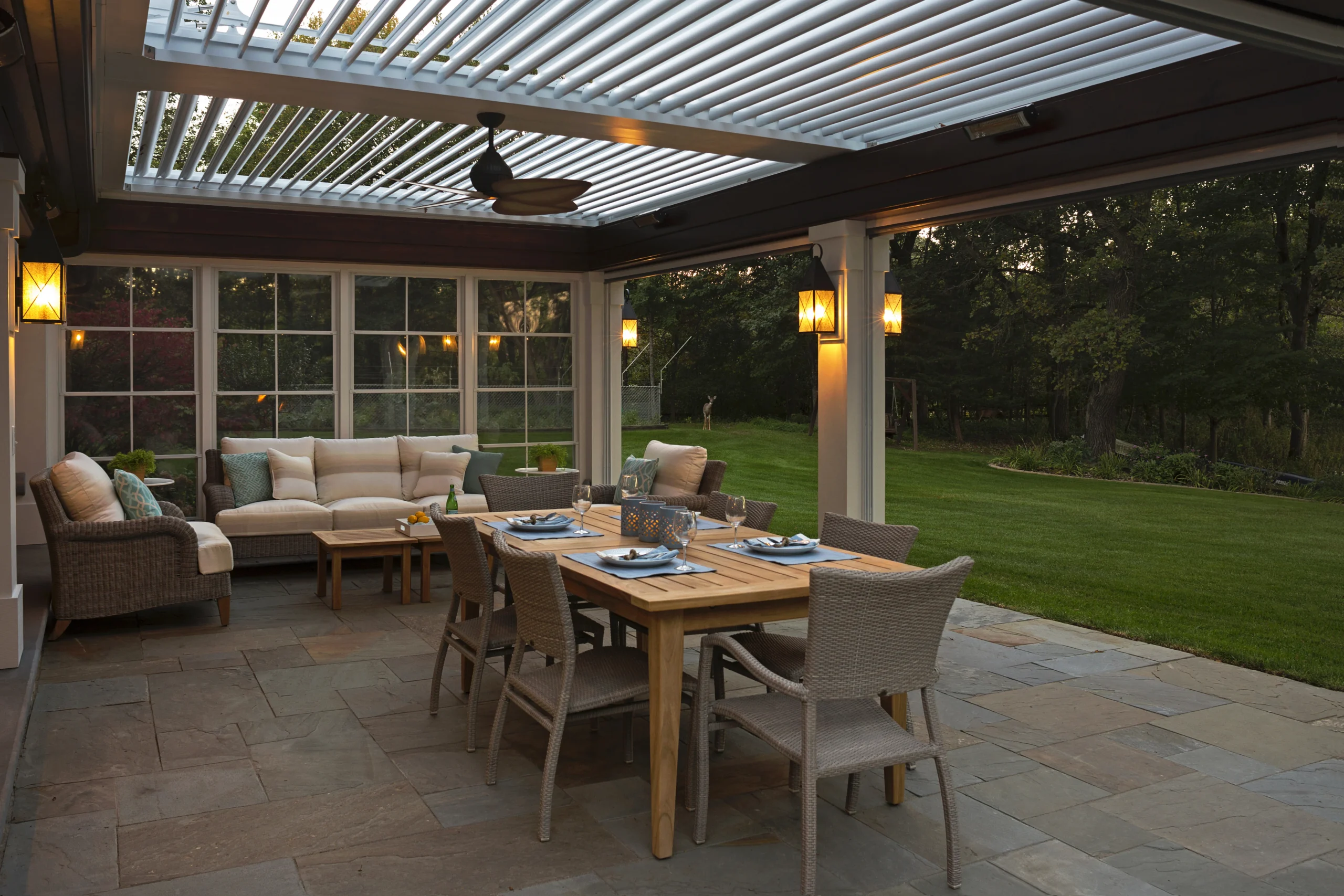
Pergola motor replacement questions to ask before you sign
Write these down and put them to every bidder. The answers vary far more than the brochures suggest.
First, who manufactures the drive motor, and is it a standard tubular motor or a proprietary unit? Second, how long does the company commit to stocking replacement control boards and motors after a product line ends? Third, can the roof be operated manually if the motor fails, and what does manual operation actually involve? Next, is the control board accessible without dismantling the frame, or is it buried inside a sealed beam?
That fourth question deserves emphasis. Serviceability reflects a design decision somebody took years before your repair. A board mounted in an accessible enclosure turns a fifteen-minute swap into exactly that. A board sealed inside a structural beam turns the same swap into a partial disassembly with a labor bill attached.
Ask about the warranty separately for structure, finish and motor, because they are almost never the same length. Our guide to choosing a pergola contractor in Florida covers how to read those documents, and our overview of pergola automation and smart home integration explains how the controls tie into the rest of the house.
What you can do to extend the machinery’s life
Small habits matter more than service contracts. Rinse the louver ends and linkage with fresh water a few times a year, particularly within a mile or two of the ocean, because salt accelerates everything. Keep the control enclosure closed and its gasket intact. Replace remote batteries on a schedule rather than waiting for failure, since a weak battery makes a healthy system look broken.
Also, avoid unnecessary cycling. Automated rain sensors are convenient, but a sensor that triggers the roof twenty times during a squall line adds cycles nobody needed. Meanwhile, our article on motorized pergolas in Florida covers day-to-day operation, and the motorized retractable screens guide addresses the same maintenance logic for screen motors.
Diagnosing a dead roof before you pay for a pergola motor replacement
A stationary louvered roof looks like an expensive problem, yet the cause is usually cheap. Work through the possibilities in order of cost before anyone quotes you a drive unit.
Start at the remote, because a weak or dead battery mimics total failure convincingly. Next, check the breaker and any local disconnect, since landscape work and pressure washing knock these more often than you would guess. After that, look for a tripped GFCI, which frequently sits in a garage or exterior receptacle nowhere near the pergola itself.
Should power reach the unit and nothing happen, the control board becomes the likely culprit. A board that has failed often gives itself away with a status light that stays dark or blinks a fault pattern the manual decodes. Only after all of that does the motor itself become the probable answer, and a technician can confirm it in minutes by bypassing the board.
Insist on that diagnostic sequence in writing before authorizing parts. Anyone who quotes a pergola motor replacement without testing the board is guessing, and that guess is the most common way owners overpay on this equipment.
Budgeting the machinery across an ownership period
Treat the moving parts as a planned expense rather than an emergency. Set aside a modest annual amount from the first year, roughly what you would budget for pool equipment, and the eventual board or motor arrives as a scheduled item instead of a surprise.
Keep a folder as well. Record the model numbers of the motor, board and receiver at handover, photograph the labels, and store the installer’s contact details alongside the permit paperwork. Fifteen years later, that folder is what turns a difficult sourcing exercise into a phone call. Our guide to whether pergolas add home value explains why that documentation also matters at resale.
Common questions about pergola motor replacement
How long does a pergola motor actually last?
Quality drive motors handle tens of thousands of cycles and rarely limit the system. Control boards and remotes fail first, typically somewhere between eight and fifteen years in Florida conditions.
Can I operate a louvered roof if the motor dies?
It depends entirely on the system. Some allow manual override at the drive; others do not. Ask before purchase, because the answer determines whether a failed motor means an inconvenience or a fixed-open roof until parts arrive.
Is a proprietary motor always a bad thing?
Not necessarily, provided the manufacturer is established and commits in writing to long-term parts availability. The risk is not proprietary engineering itself. The risk is a single supplier who may not be selling that line in fifteen years.
Does replacing a motor affect my permit or approval?
A like-for-like motor swap generally does not, since nothing about the structure changes. Substituting a different drive system can raise questions, so keep documentation of what was installed and what replaced it.
The honest summary
Buy the frame for twenty-five years and budget the machinery for roughly half that. Ask who makes the motor, whether the board is reachable, and how long parts will exist. Those three answers matter more at year twelve than any feature on the sales sheet does today.
If you want to know exactly which components sit inside a system you are considering, ask us and we will tell you plainly, including what we would replace first.