
Pool House Pergola in South Florida: Code, Pool Barriers and What Counts as an ADU
A pool house pergola solves a problem most South Florida homeowners discover about two summers after the pool goes in: the deck is beautiful and completely unusable between eleven and four. Adding covered structure near the water changes how the whole backyard works. It also drags in a set of code questions that a plain patio cover never touches, because the moment a covered space gains a wall, a bathroom or a kitchenette, the building department starts treating it differently.
This guide covers what the code actually allows, where the line sits between a shade structure and a dwelling unit, and how to plan the project so the permit does not stall.
Pool house pergola versus a full guest house: where the line sits
Three things separate a covered outdoor room from an accessory dwelling unit in most South Florida jurisdictions: sleeping space, a full kitchen, and a separate entrance intended for independent occupancy. Add all three and you have built an ADU, which triggers zoning review, impact fees, sometimes a separate utility connection, and often a hard limit on how many the lot may hold.
A louvered pergola with a bar, a half bath and an outdoor kitchen usually stays on the friendly side of that line. Nevertheless, “usually” is doing real work in that sentence. Every municipality in Miami-Dade, Broward and Palm Beach counties draws it slightly differently, so confirm the classification in writing before design starts. Our overview of setbacks and lot coverage in Florida covers the zoning side of the same question.
Pool barriers, safety code and the covered space
Florida’s Residential Swimming Pool Safety Act governs barriers around a residential pool, and a new structure can accidentally break an existing barrier. If your pool house pergola includes a wall that forms part of the enclosure, or a door that opens toward the water, that door usually needs an approved alarm or self-closing hardware.
Similarly, a bathroom door opening directly onto the pool deck can change the barrier analysis. Bring this up at the first design meeting rather than at inspection. The state’s requirements are summarised in the safety act itself, and the U.S. Consumer Product Safety Commission’s Pool Safely materials explain the layered-protection logic behind them.
Electrical clearance around water is the other early conversation. Fans, heaters, speakers and lighting near a pool follow bonding and clearance rules that a general contractor cannot improvise. We worked through the same constraints for spas in covering a hot tub in Florida.
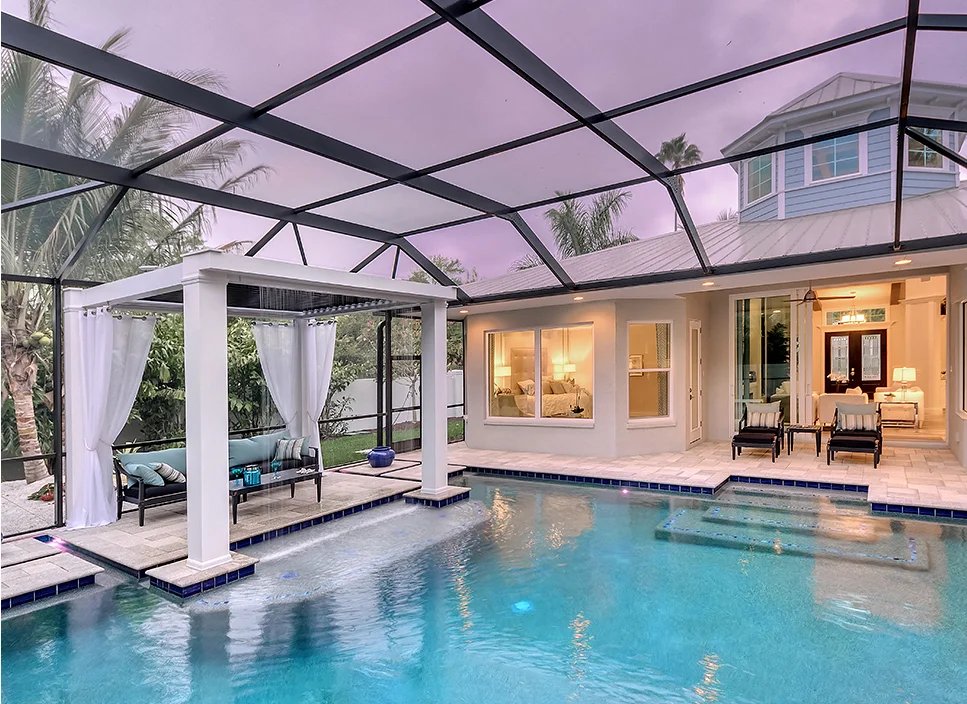
Attached, detached or somewhere in between
Most South Florida pool structures fall into three patterns, and each carries a different cost profile.
An attached structure ties into the house wall. It is the cheapest per square foot because the house carries part of the load, and it keeps the covered space close to the kitchen. However, it puts a new load path into an existing wall, so the engineer will want to see how that wall was built.
A freestanding structure across the deck reads as a genuine pool pavilion. It needs its own columns and footings, which costs more, but it gives you shade where the pool actually is rather than where the house happens to be.
A riser-wall approach sits between them, using a short structural wall to raise the roof above the existing eave line. That detail solves a very common South Florida problem: a low single-storey roof that would otherwise force the new structure down to an uncomfortable height. We explain it in riser walls for South Florida pergolas.
Pool house pergola drainage and the water nobody plans for
A covered structure beside a pool collects rain and has to put it somewhere other than the deck. Integrated gutters inside the beams handle the volume, but the downspout still needs a destination — a drywell, a French drain or an existing site drain.
Dumping it at the pool edge causes two problems. Sheet water carries debris and grass clippings straight into the water, and repeated saturation at the deck edge undermines pavers. Solve it on paper during design, because retrofitting site drainage after the concrete cures is expensive.
Splash and chlorine matter too. Aluminium near a chlorinated pool needs a finish specified for it and fasteners that will not set up a galvanic cell. Our note on fasteners and galvanic corrosion in coastal Florida applies directly here.
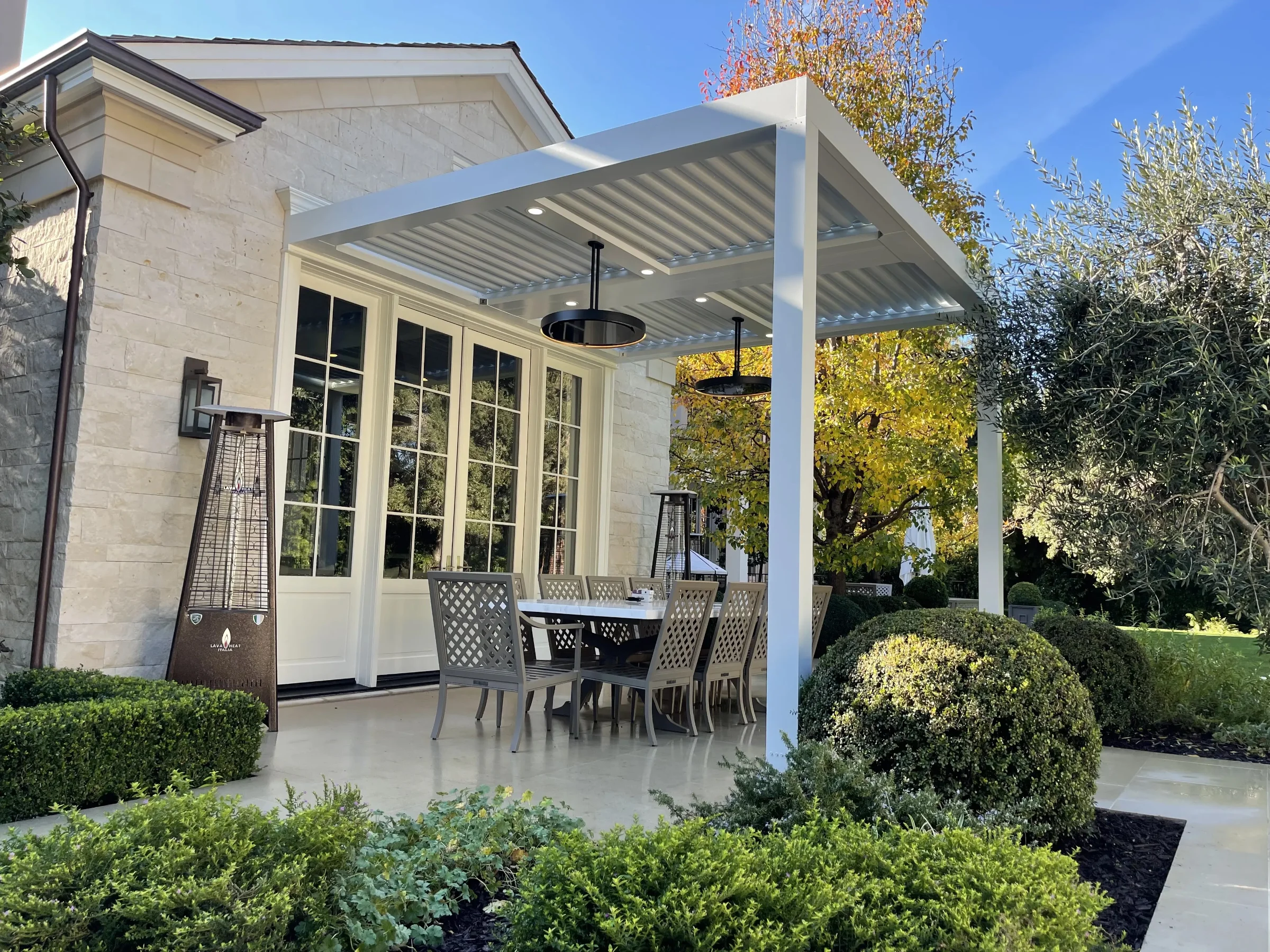
Wind engineering for a structure on open deck
A freestanding structure in the middle of a pool deck sits in a more exposed position than one tucked against a house. Consequently the engineering gets more demanding: deeper footings, larger columns and more attention to uplift.
South Florida design wind speeds run from roughly 170 mph upward, and Miami-Dade adds the High-Velocity Hurricane Zone product-approval process on top. Every structure is engineered for its own address, exposure and soil, and the sealed drawings for that address are what the plans examiner reviews. Ask any contractor to show you a set from a comparable job. The code text lives at floridabuilding.org, and our piece on how these structures perform in storms explains what the rating means in practice.
Pool house pergola features worth budgeting early
Some things are cheap while the structure is open and painful afterwards. Plan them now.
Run conduit for lighting, fans, speakers and a television before the columns close up. Add motorised screens if you want the space usable at dusk — mosquitoes decide how often a pool pavilion actually gets used in South Florida, and privacy and insect screens are far easier to integrate at build time. Size the outdoor kitchen’s gas and water lines while the trenches are open.
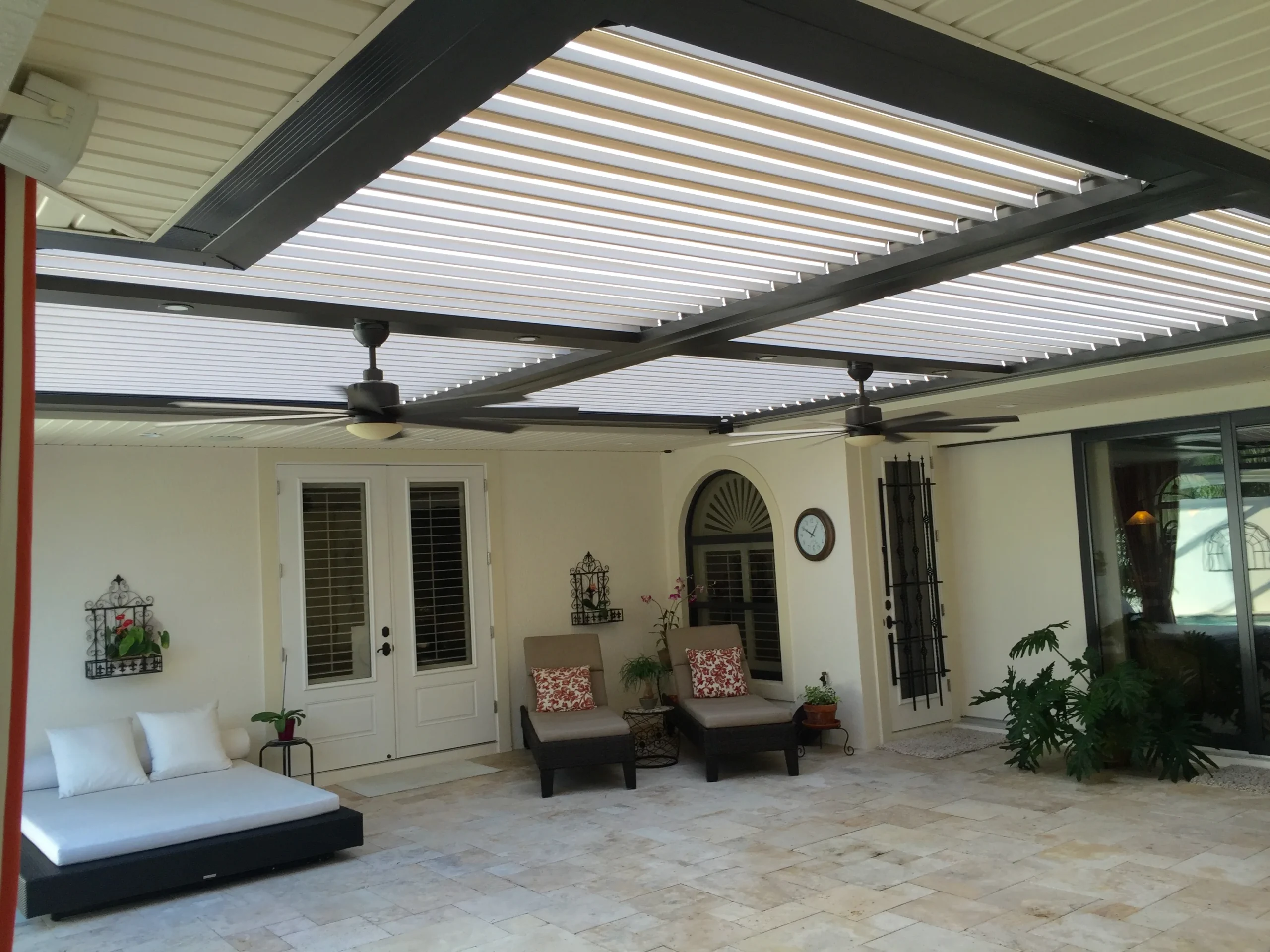
Fans deserve their own thought, because a covered space near water traps humidity. We covered sizing and mounting in ceiling fans under a louvered pergola.
What it does to the property
Permitted, engineered outdoor structure generally reads well on an appraisal, and it reads badly when it is unpermitted. An open permit or an undocumented structure surfaces during a sale and can hold up closing. We wrote about that specific trap in permit history and the home sale, and about the value question more generally in do pergolas add home value.
Pool house pergola questions South Florida homeowners ask
Does a pool house pergola need a permit in Florida?
Yes. Any permanently anchored structure requires a permit and sealed engineering, and work near a pool adds barrier and electrical review. Plan for a longer cycle than a simple patio cover.
Can a pool house pergola include a bathroom?
Frequently yes, provided the plumbing connects properly and the door does not compromise the pool barrier. A half bath rarely reclassifies the structure. A full bath plus a kitchen plus sleeping space usually does.
How close to the pool can the columns go?
Setbacks, deck width and the pool’s own structural edge all constrain it. Columns should not bear on the pool shell or its bond beam. An engineer will locate them once the as-built pool dimensions are known.
Will it work as an ADU later?
Converting a covered outdoor room into a legal accessory dwelling unit means meeting habitable-space requirements: insulation, egress, energy code and often a separate address. It is possible, but design for it from the start rather than assuming it can be added.
Planning your project
The homeowners who get this right start with two conversations — one with the building department about classification, one with an engineer about where the columns can land. Everything else follows from those answers. StruXure South Florida designs and engineers covered pool structures for homes across Miami-Dade, Broward and Palm Beach counties, each one engineered for its specific address. If you are still comparing systems, our guide to adjustable louvered roof systems is the place to start.