
Pergola Condensation in South Florida: Why Louvers Drip at Dawn and How to Stop It
Pergola condensation is the drip that worries new owners most, and it is almost never a leak. On a still, humid South Florida morning the underside of a closed louvered roof can bead with water. Then a few drops land on the table below. This guide explains why aluminum does that and how to tell condensation from a real leak. In addition, it covers the louver settings, fans and habits that keep the roof dry.
What pergola condensation actually is
Air holds water vapour, and the amount it can hold falls as the air cools. In other words, the temperature at which the vapour starts turning back into liquid is the dew point. The National Weather Service explains that a higher dew point means more moisture in the air. Indeed, South Florida runs some of the highest dew points in the country from May through October.
Now add a metal roof. Aluminum sheds heat quickly to a clear night sky. As a result, by the early hours the louvers can sit a few degrees cooler than the air around them. Air touching that cool surface drops below its dew point. Then water forms on the metal exactly as it forms on a cold glass of tea. Therefore, the drops you see at dawn came out of the air, not through the roof.
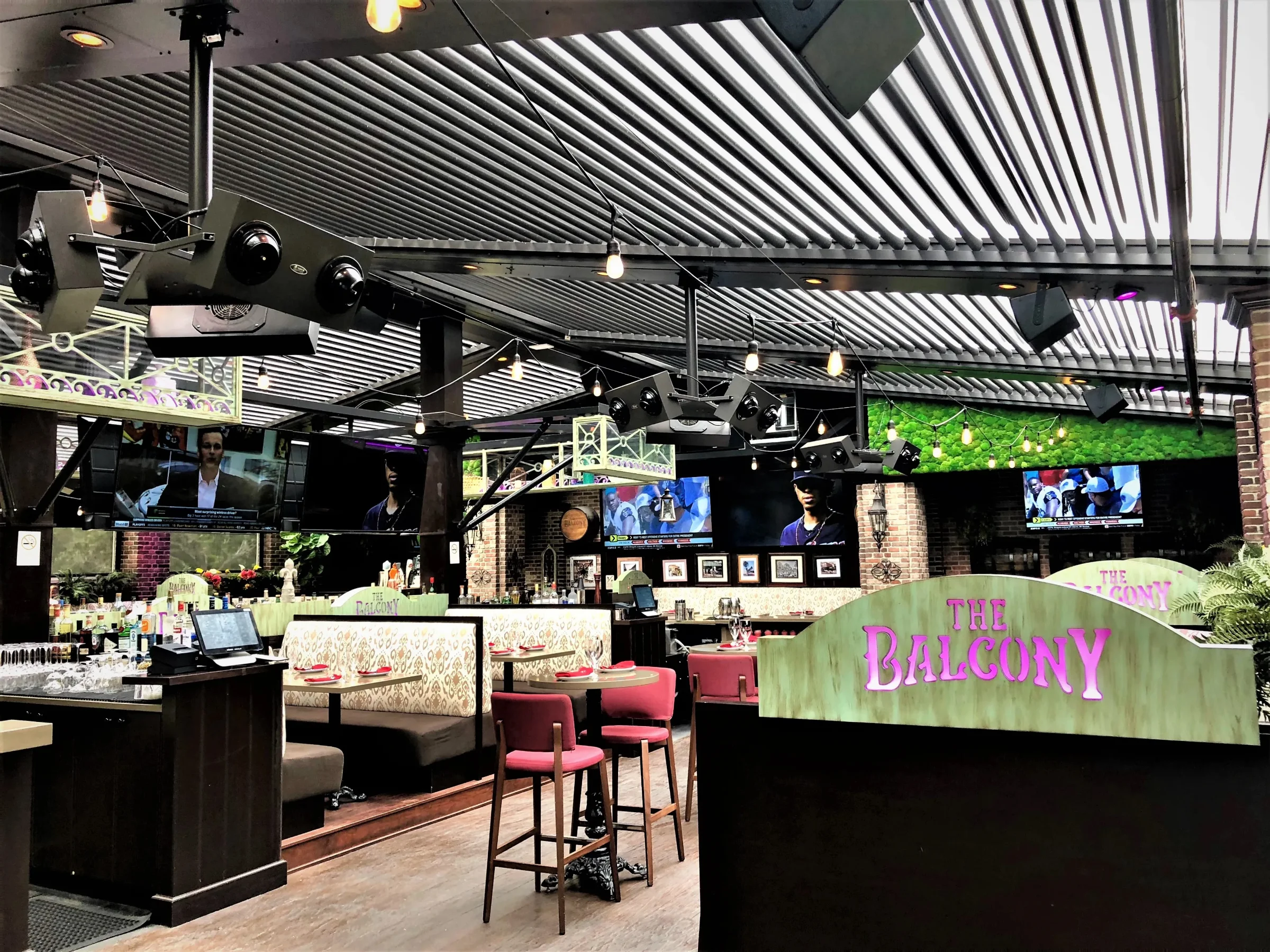
Why pergola condensation shows up on some mornings and not others
The pattern is predictable once you know the ingredients. Clear skies let the louvers radiate heat and cool fastest. Similarly, calm air lets the cooled layer sit against the metal instead of mixing away. High humidity puts the dew point close to the air temperature, so only a small drop does it. Consequently, a still, clear, humid night after a rainy afternoon is the classic condensation morning. By contrast, a breezy or cloudy night usually stays dry.
Closed louvers make it worse. A closed roof traps a pocket of moist air underneath. In addition, the flat underside gives the water a large surface to collect on. Open louvers, even at a slight tilt, let that pocket ventilate.
Condensation or leak: how to tell in two minutes
Condensation is even. Fine droplets cover a wide area of the louver underside. Also, they appear around dawn, and they vanish once the sun warms the metal. A leak, by contrast, is local. Water follows one joint, one louver end or one gutter seam. In addition, it appears during or right after rain, and it leaves a streak or a stain rather than a mist.
If the drip sits at a single point and only happens in rain, check the gutter and the louver seals. Then call for service. Our summer shutdown checklist includes the gutter and drain checks that catch most real leaks before the season.
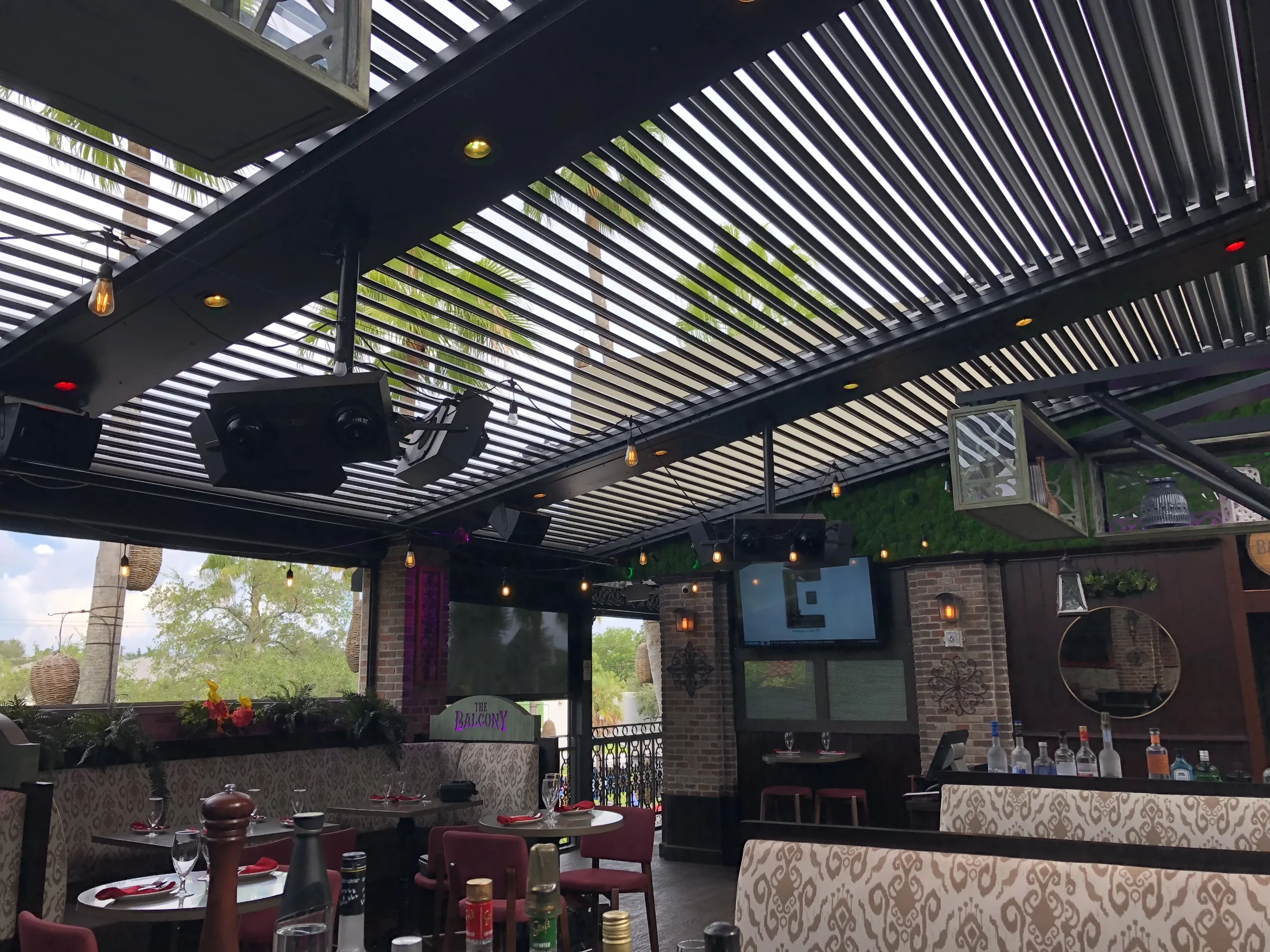
Stopping pergola condensation with louver settings
The simplest fix costs nothing, and it takes thirty seconds in the app. Leave the louvers tilted a few degrees open overnight instead of fully closed. The gap lets the moist pocket under the roof mix with outside air. In addition, it lets the louvers warm and cool with the air instead of below it. Most owners set an evening schedule in the app. As a result, the roof opens slightly at bedtime and closes if the rain sensor fires.
A ceiling fan on a low overnight setting does the rest. In short, moving air keeps the layer against the metal from cooling and stalling. Our guide to ceiling fans under a pergola covers wet-rated motors and where to mount one. Similarly, our automation guide explains schedules and sensor priority.
Screens, humidity and the enclosed evening
Motorized screens dropped on all sides for an evening hold more moisture under the roof. For example, a dinner with a grill running makes it worse. Retract at least one side before bed, or open the louvers wider, so the space breathes. Mesh screens are not storm protection and should already be retracted before any tropical system arrives.
Does pergola condensation harm the structure?
No. Powder-coated aluminum and stainless hardware do not rust or swell from morning dew. In fact, the water evaporates within an hour of sunrise. Condensation can, however, feed mildew on cushions, on pollen sitting on the louvers and in a gutter that never dries. Therefore, a rinse and an occasional wash keep that in check. Our articles on aluminum thermal expansion and fasteners and galvanic corrosion cover the two things that actually matter for the life of the metal.
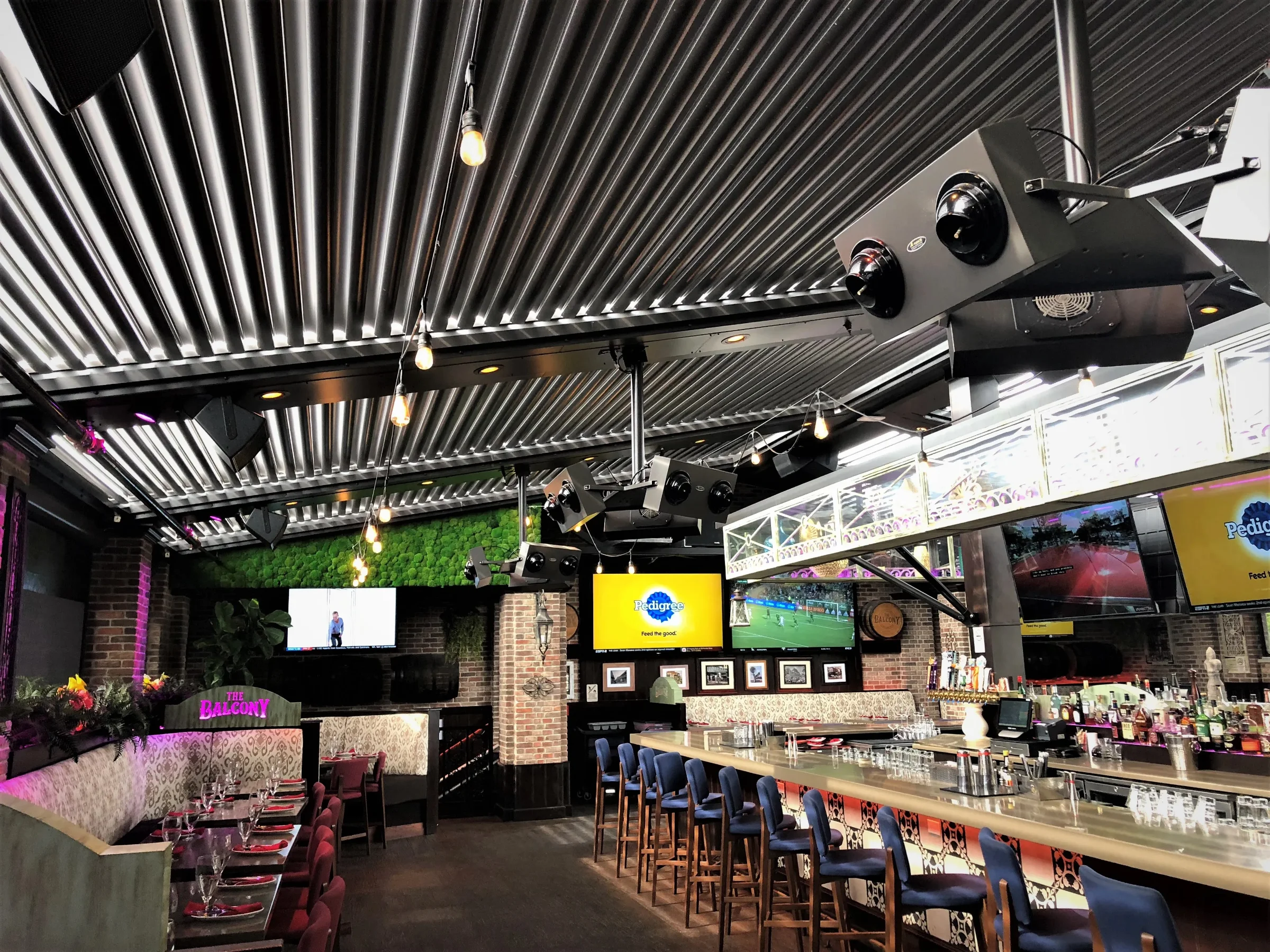
Pergola condensation on a new installation
New owners notice it most in the first humid week. After all, the roof is new, and every drop looks like a defect. In fact, the installation is fine; the weather is doing what South Florida weather does. StruXure South Florida walks every owner through the overnight tilt setting at handover. The Pergola X controls make it a one-time schedule rather than a nightly chore.
Frequently asked questions
Is pergola condensation a sign of a bad seal?
No. Seals stop rain. However, they cannot stop water forming out of the air. Even, dawn-only droplets across the whole underside are condensation, not a seal failure.
Will a darker louver colour make it worse?
Colour affects daytime heat, not night-time radiation to the sky. Therefore, any colour can dew on a still, clear, humid night; the louver tilt matters far more than the finish.
Does closing the louvers keep the patio drier?
In rain, yes, certainly. On a dry, humid night, a slight tilt keeps the underside drier than a fully closed roof.
Can I stop it entirely?
On the worst nights a few drops may still form. Still, the tilt schedule and a fan remove it as a daily annoyance for almost every owner.
One habit closes the loop. Wipe the table when you sit down for coffee, glance up at the underside and note the weather. As a result, after a week you will know your own roof’s condensation mornings, and the tilt schedule will already be handling them.
Seeing drips you cannot explain? Contact StruXure South Florida and we will tell you in one visit whether it is pergola condensation or a service call. Then we will set the overnight schedule while we are there.