
Pergola Permit in Miami-Dade: What the Building Department Expects Before You Build
Getting a pergola permit in Miami is usually the least exciting part of the project, and it is also the part that decides whether your build starts in three weeks or three months. Miami-Dade County sits in the strictest wind zone in Florida, so a louvered roof or attached pergola gets a closer look than the same structure would get in most of the country. This guide covers when you need a pergola permit in Miami, what plan reviewers want to see, and where homeowners lose time. It is general information, so confirm details with your city or the county before you sign anything.
Do you need a pergola permit in Miami?
In most cases, yes. Miami-Dade municipalities treat a roofed or attached structure as something that needs a building permit, and many treat freestanding pergolas the same way once they pass a certain size or sit close to a property line. A pergola bolted to the house changes the load path of your home, so it nearly always requires engineered drawings. A small, lightweight, freestanding trellis may be exempt in some jurisdictions, but a motorized louvered system with posts, beams and a drive mechanism is not in that category.
Rules differ between unincorporated Miami-Dade and the individual cities and villages, including Miami, Coral Gables, Pinecrest and Miami Beach. Each has its own building and zoning staff. Start by calling the department that covers your address, and ask whether staff will review the project as an accessory structure, a patio cover or an addition. The answer changes which forms you file. For the statewide picture, see our guide to pergola permits in Florida.

Why Miami-Dade is stricter: the High-Velocity Hurricane Zone
Miami-Dade and Broward counties make up Florida’s High-Velocity Hurricane Zone, or HVHZ. Inside it, the Florida Building Code adds testing and approval requirements for products that resist wind and wind-driven rain. Practically, that means the roof system, anchors and fasteners on your pergola should carry a Miami-Dade Notice of Acceptance (NOA) or an equivalent Florida Product Approval, and the engineer of record has to design the structure to the wind speed and exposure category for your lot.
Ask every contractor for the approval number of the exact product they plan to install, not a brochure claim. If the answer is vague, treat it as a warning. A reviewer will ask for the same paperwork, and discovering a gap during review is far more expensive than discovering it during the quote. Our louvered pergola systems carry engineering for Florida wind loads, and the engineering package is part of the permit submission.
Documents to gather before you apply for a pergola permit in Miami
Every office has its own checklist, but a typical residential pergola submission includes the following items:
- A current survey showing the house, lot lines and where the pergola will sit.
- Site plan with setbacks measured from property lines, pool edges and easements.
- Signed and sealed structural drawings from a Florida-licensed engineer, including footings, post connections and uplift calculations.
- Product approval documents for the roof system, anchors and any glazing or screens.
- Electrical scope for motors, lighting and fans, since offices often review these under a separate trade permit.
- HOA or condo association approval, where one applies. Many offices will not release a permit without it.
- Contractor license and insurance details, plus the owner-builder affidavit only if the law allows you to pull the permit yourself.
Collect these before you submit. A missing survey or an unsealed drawing is the most common reason offices reject an application on the first pass.
Where pergola permit applications stall in Miami
Most delays come from a short list of avoidable problems. Setbacks measured incorrectly are the first one: a pergola that crowds a side yard or a rear easement comes back for a redesign. The second is attachment details. Reviewers want to see exactly how the beam ties into the house structure, and generic notes do not satisfy them. The third is the pool. A pergola near a pool deck may trigger barrier, bonding and electrical questions that nobody mentioned during the sales conversation.
Associations add their own timeline. A condo board or HOA architectural committee may meet monthly, so a missed meeting adds weeks. Submit the association package in parallel with the permit drawings rather than waiting for one to finish before you start the other.
How plan reviewers treat louvered roofs versus open-slat pergolas
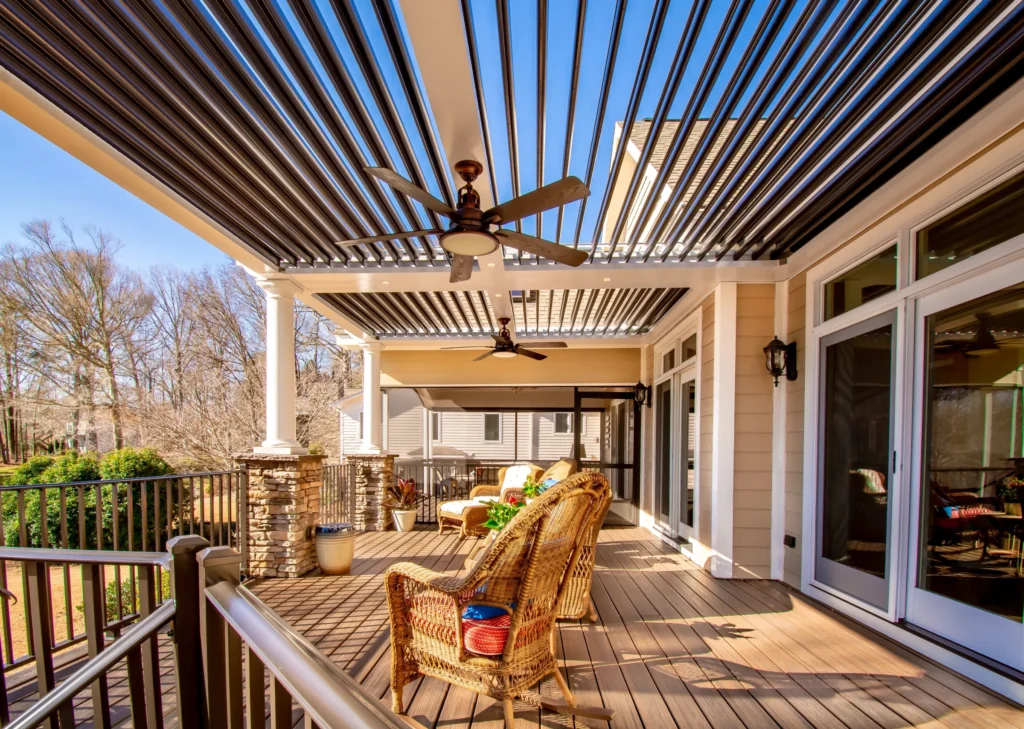
Reviewers judge an open-slat wooden pergola with a lattice top mainly on its frame. A louvered roof is closer to a roof assembly: it sheds water, has moving blades and relies on gutters or integrated drainage. That raises questions about rain loads, blade locking in high wind and how the system behaves if power fails. Good manufacturers publish test data for these points, and your engineer should reference it in the drawings.
If you are weighing designs, our Pergola X page explains how a motorized system is built, and our Miami service area page shows the neighborhoods we build in. Choosing a product that already has HVHZ approval removes the single biggest variable from the process.
Timeline, inspections and who pulls the pergola permit in Miami
Review times swing widely by city and by season, so ask the building department for its current average instead of trusting an old estimate. After approval, expect inspections at set points: footings or anchors, framing and structural connections, electrical rough-in, and a final. Your contractor should schedule each one and keep the approved plans on site. Licensed contractors normally pull the pergola permit in Miami under their license, which also puts responsibility for code compliance on them. If someone suggests skipping the permit to save time, decline. An unpermitted structure can create problems with insurance claims, refinancing and resale. See our note on pergola insurance in Florida for how skipping a permit can affect coverage.
Frequently asked questions
Is a pergola permit the same as an HOA approval?
No. The building department enforces code, while the HOA or condo board enforces community rules. You usually need both, and the permit office may ask for proof of the association’s approval.
Can I pull the permit myself?
Some jurisdictions allow owner-builder permits for residential work, with conditions. For a motorized, engineered roof system, most homeowners let the licensed contractor handle it.
Does a pergola permit cover the electrical work?
Often not. Cities commonly permit motors, lights and fans as a separate electrical item, so ask your contractor to scope both at the start.
How do I start?
Send us your address and a few photos through our contact page, and we will walk through what your city typically asks for before anyone draws plans.