
Pergola Permit in Fort Lauderdale: Broward Wind Rules, Setbacks and Paperwork
A pergola permit in Fort Lauderdale is rarely the hard part of a project, but it often catches homeowners off guard. The city sits in Broward County’s High-Velocity Hurricane Zone. Many lots back onto canals, and a large share of homes have a pool. Each of those facts changes what the building department wants to see. This article covers when you need a permit, what drives the review, and how to arrive at the counter with a complete package. Treat it as orientation, and verify specifics with the City of Fort Lauderdale before you commit to a design.
When a pergola permit is required in Fort Lauderdale
Treat any attached pergola, any roofed pergola and any motorized louvered system as a permit item. Freestanding open-frame structures sometimes fall under different thresholds. Size, height and distance from property lines all matter, and each city sets its own rules. If the structure touches the house, sits near a seawall or shares space with a pool deck, assume you need a permit and plan the schedule around it. Our statewide permit guide covers the basics that apply across Florida, and this article adds the local angle.
Broward and the High-Velocity Hurricane Zone
Broward and Miami-Dade are the two counties Florida designates as the HVHZ. Every product in that zone must carry a Miami-Dade Notice of Acceptance or equivalent state approval. Structural engineers also design to a higher wind speed than in most inland areas. For a louvered roof, ask for the approval number of the roof system, the anchors and any screens that attach to it. If a seller cannot show those documents, the reviewer will not accept the product either. Our louvered pergola systems come with engineering data for South Florida conditions, which keeps the submission simple.
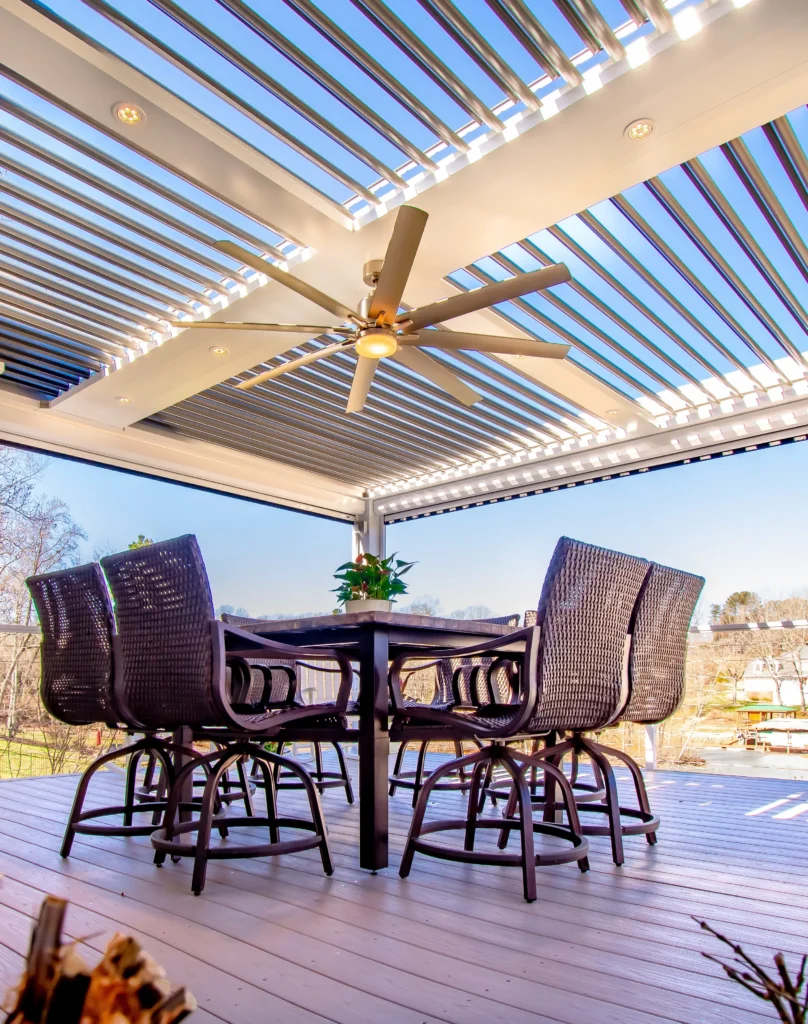
Waterfront lots, setbacks and easements
Fort Lauderdale has more waterfront homes than almost any other city in South Florida, and that shapes permitting. Setbacks from a seawall, canal or rear property line can limit where posts land. Utility easements and drainage swales add further limits. A surveyor’s drawing is the starting point. Your contractor should mark the proposed footprint on it before anyone orders materials.
Salt exposure matters for the engineering too. Aluminum frames with a marine-grade powder coat and stainless hardware are the sensible choice near the water, and the drawings should name them. Reviewers care about the load path, but you care about how the structure looks in ten years, so the two goals line up.
Pergola permit paperwork checklist for Fort Lauderdale
Exact requirements vary, but plan on gathering the following:
- A recent survey with the house, lot lines, easements and any waterfront setback marked.
- A site plan showing the pergola footprint and distances to every boundary.
- Signed and sealed structural drawings from a Florida-licensed engineer.
- Product approval documents for the roof, anchors and any screens.
- A separate electrical scope if you want motors, lighting, fans or heaters.
- HOA or association approval letters for communities that require them.
- Contractor license, workers’ compensation and liability insurance details.
Pool decks and screened patios
Many Fort Lauderdale homeowners want shade over a pool deck or want to replace an aging screen enclosure. Adding a roof near a pool can trigger questions about barriers, electrical bonding and drainage. Raise the pool during the first conversation. If you are weighing a pergola against a screened patio, our post on pergolas for Fort Lauderdale homes shows how the two compare in sun, rain and storm performance.
Fort Lauderdale pergola permit timeline and common delays
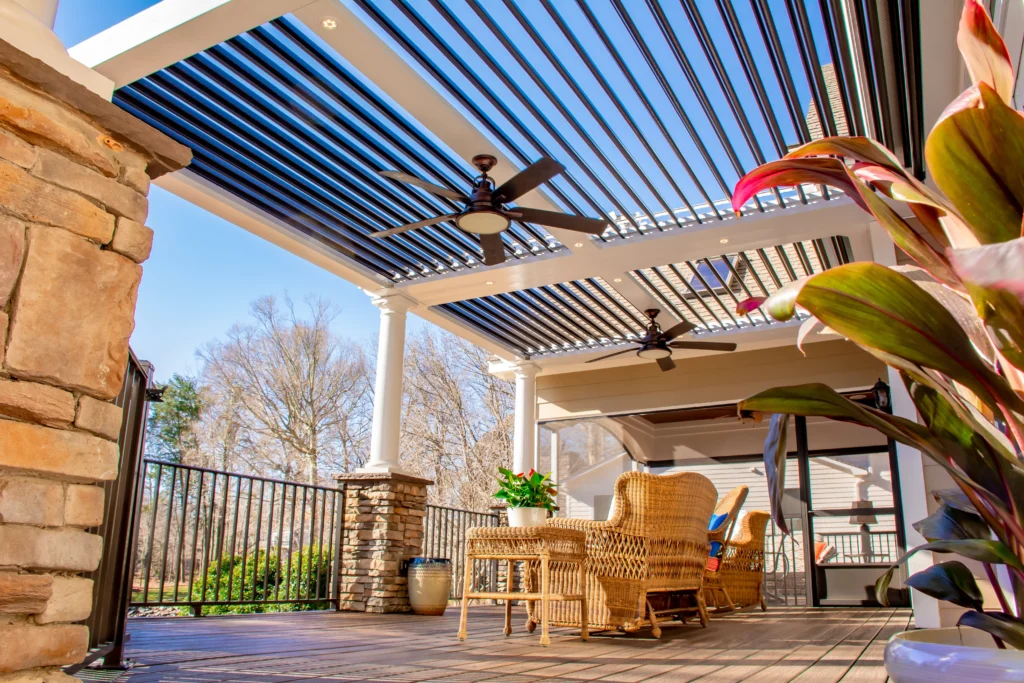
Review times for a pergola permit in Fort Lauderdale change from month to month, so ask the permit office for a current estimate. Delays tend to cluster around three issues: incomplete surveys, unsealed drawings, and late association approvals. A contractor who submits a complete package the first time usually saves more days than any shortcut. After approval, your contractor schedules inspections for footings, structure, electrical and a final.
Skipping the pergola permit in Fort Lauderdale is a poor trade. Unpermitted work can complicate an insurance claim after a storm, and it can surface when you sell. Our note on pergola insurance in Florida explains why paperwork matters when something goes wrong.
Questions to ask a contractor before you sign
A permit is only as good as the team preparing it, so use the quoting stage to test their process. Start with who prepares and seals the structural drawings, and whether the engineer holds a Florida license. Request the product approval number for the roof system and every anchor. Then ask how they handle the electrical permit. A motorized roof needs power run to it, and lights and fans add more load to a circuit. Also find out what happens if the city issues a comment letter during review, and who pays for revisions.
Request a realistic schedule in stages: survey, drawings, association approval, permit review, fabrication and installation. A contractor who gives you one number for the whole thing is guessing. One who lists the stages and names the approvals each stage depends on has done this before. Finally, ask to see a recently permitted project nearby. A finished job with a closed permit is the best reference you can get. It proves the crew passed final inspection rather than skipping it.
Fort Lauderdale homeowners also tend to ask about financing and timing around hurricane season. If a payment plan matters, read our overview on how to finance a pergola in South Florida, then decide on a start date that leaves room for review before the busiest weeks of storm season.
Frequently asked questions
Does a freestanding pergola need a permit in Fort Lauderdale?
Often yes once it has a roof, exceeds certain dimensions or sits near a boundary. Confirm with the city before you design around an exemption.
Who pulls the pergola permit in Fort Lauderdale?
The licensed contractor normally pulls it and takes responsibility for code compliance.
Do louvers count as a roof?
Reviewers generally treat a louvered system as a roof assembly because it sheds water and carries wind and rain loads.
Where do I begin?
Share your address and project photos on our contact page and we will outline what a Fort Lauderdale submission typically needs.