
Marina, Yacht Club & Waterfront Restaurant Pergolas in South Florida (2026 Guide)
Waterfront hospitality is a brutal environment for outdoor structures. A marina restaurant, yacht club terrace or dockside bar gets constant salt spray, unobstructed wind off open water, full sun with no tree cover, and daily afternoon storms — and it has to keep serving through all of it. Canvas awnings fade and tear. Wood greys and rots. Fixed roofs kill the view that the venue is selling in the first place.
Adjustable louvered aluminum structures are built for exactly this. This guide covers what marinas, yacht clubs and waterfront restaurants in South Florida should specify, what it protects, and what it does for revenue.
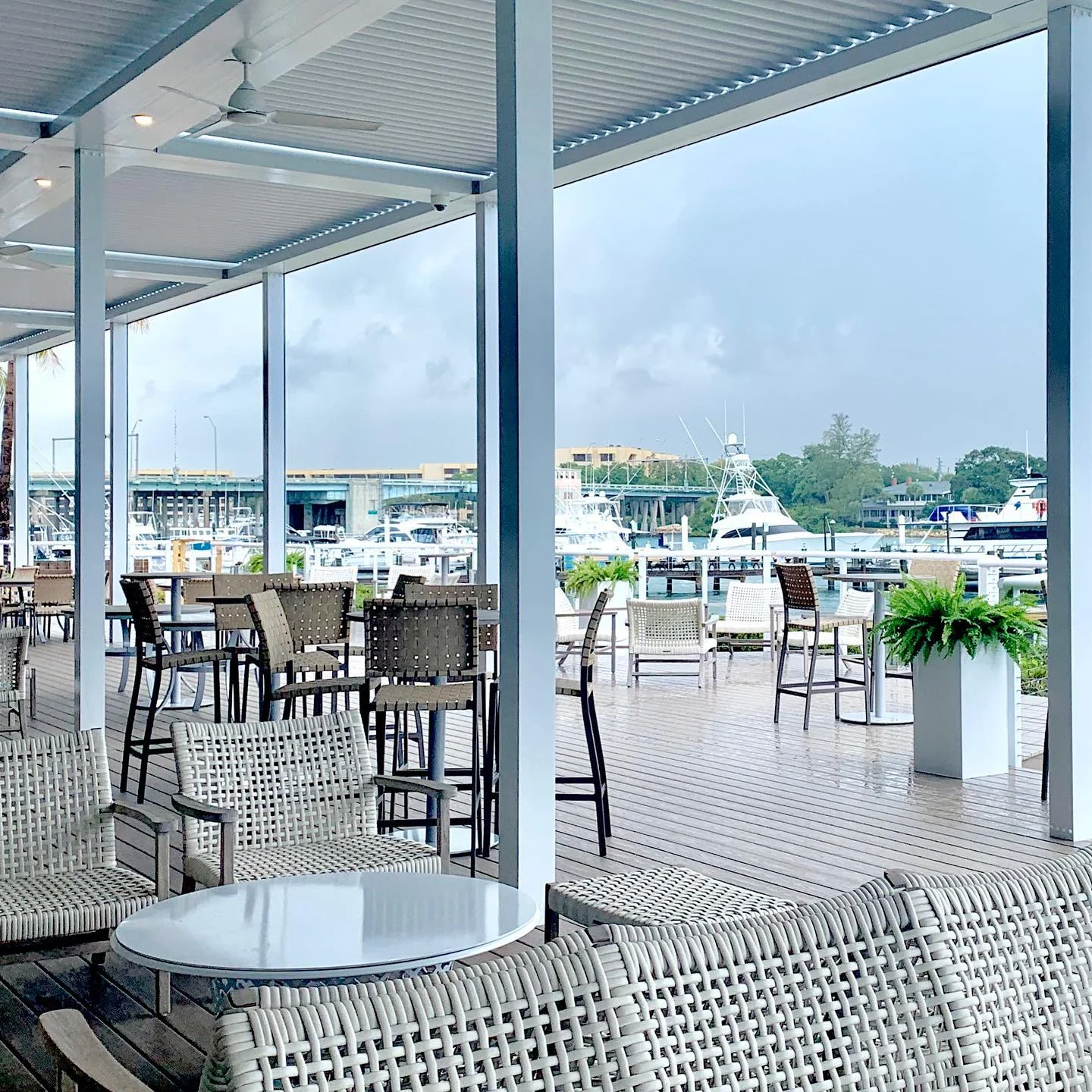
Why waterfront venues lose seats — and what that costs
An uncovered waterfront deck is the highest-value seating in the building and the least reliable. It is unusable in midday July sun, unusable in a 20-minute afternoon downpour, and marginal on a windy evening. In practice a venue loses its best tables for a meaningful share of operating hours.
A louvered roof converts that deck into all-weather seating. Blades open for breeze and sky, tilt to cut afternoon glare off the water, and close into a sealed, gutter-drained roof when a squall comes through — without staff moving a single table. The structure pays for itself in recovered covers, not in aesthetics.
The coastal specification: what to insist on
Marine exposure is the harshest condition in Florida construction. What survives it:
- Extruded aluminum, not steel or wood. Aluminum does not rust. On a dock, that is not a preference — it is the only workable material.
- Marine-grade powder-coat finish and stainless hardware. Ask specifically about the finish system and fastener grade. This is where cheap structures fail first.
- Engineering to open-water exposure. A structure on a dock or seawall sees higher design wind pressures than the same structure two blocks inland. The engineering has to reflect the actual exposure category.
- Documented product approval. A Florida Product Approval or Miami-Dade Notice of Acceptance number, in writing. Commercial permitting will require it anyway.
- Integrated drainage. Concealed gutters and downspouts that route water off the deck rather than onto guests or a walking surface.
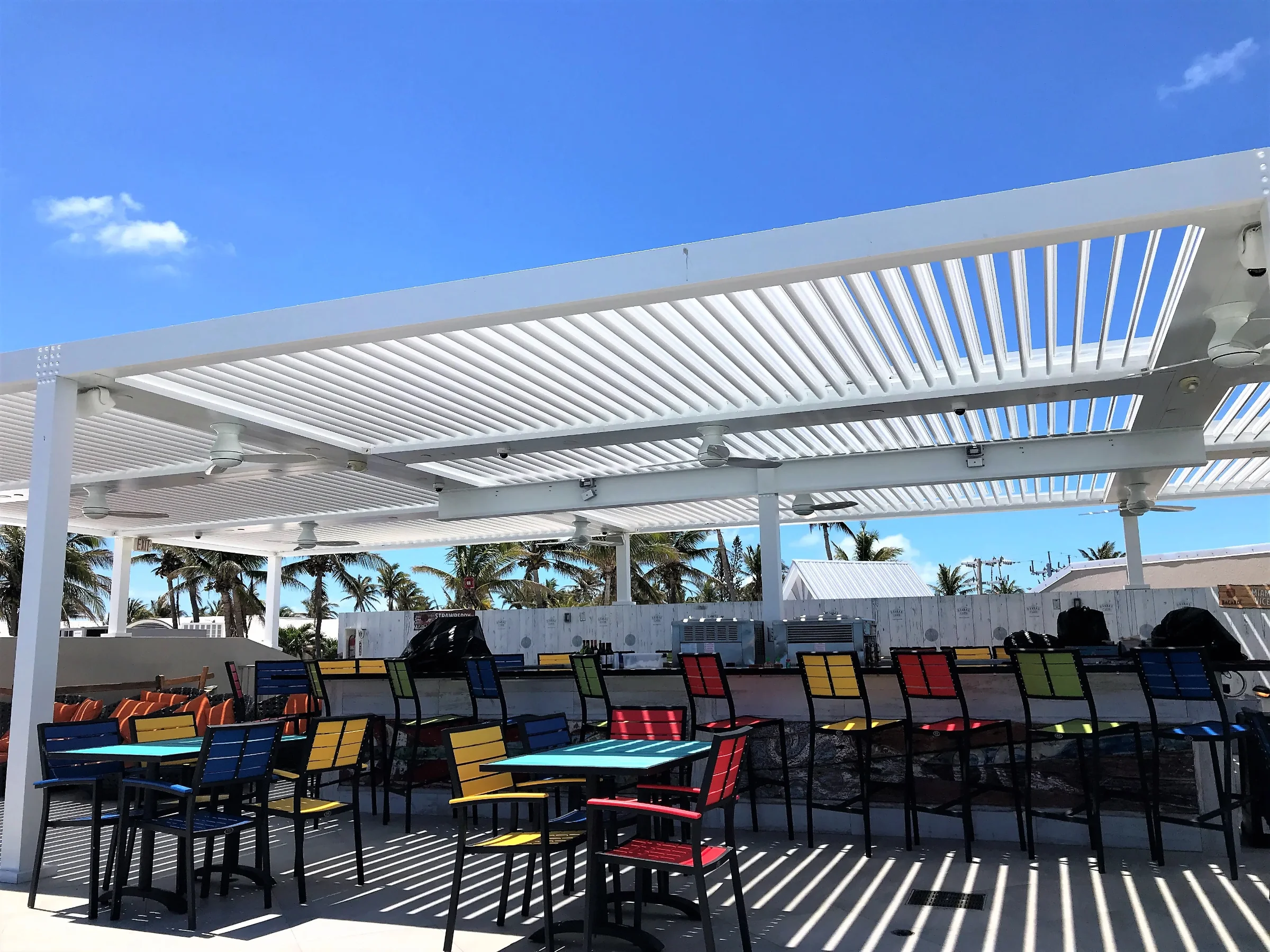
Permitting a commercial structure on the water
Commercial waterfront projects carry more approval layers than a residential backyard:
- Local building permit with signed and sealed structural drawings and, in Miami-Dade and Broward, HVHZ-compliant detailing.
- Occupancy and egress review. A covered structure over guest seating touches occupancy load, exiting and sometimes fire-suppression requirements.
- Coastal and shoreline review. Work at or near a seawall, dock or waterway can trigger additional environmental or coastal construction review depending on the jurisdiction.
- Accessibility. Post placement and any level changes have to stay ADA-compliant in the guest path of travel.
StruXure South Florida handles engineering and permitting in-house on commercial projects. See our commercial pergolas overview and the Florida permit guide.
Where these structures go
Dockside dining and marina bars
The classic application: a long run of louvered roof over waterfront tables, giving guests sky and breeze most of the time and a dry roof when needed. Related reading: restaurant patio pergolas.
Yacht club terraces and event lawns
Clubs need the same space to work for a Tuesday lunch and a Saturday wedding. An adjustable roof plus motorized retractable screens lets one terrace do both — open and airy, or enclosed and climate-buffered for an event.
Pool decks and cabana rows
Marina resorts and clubs use commercial pool cabanas and Cabana X structures to create rentable, branded shade along the pool.
Rooftop and upper-deck bars
Where the view is the product, see rooftop pergolas and amenity deck structures.
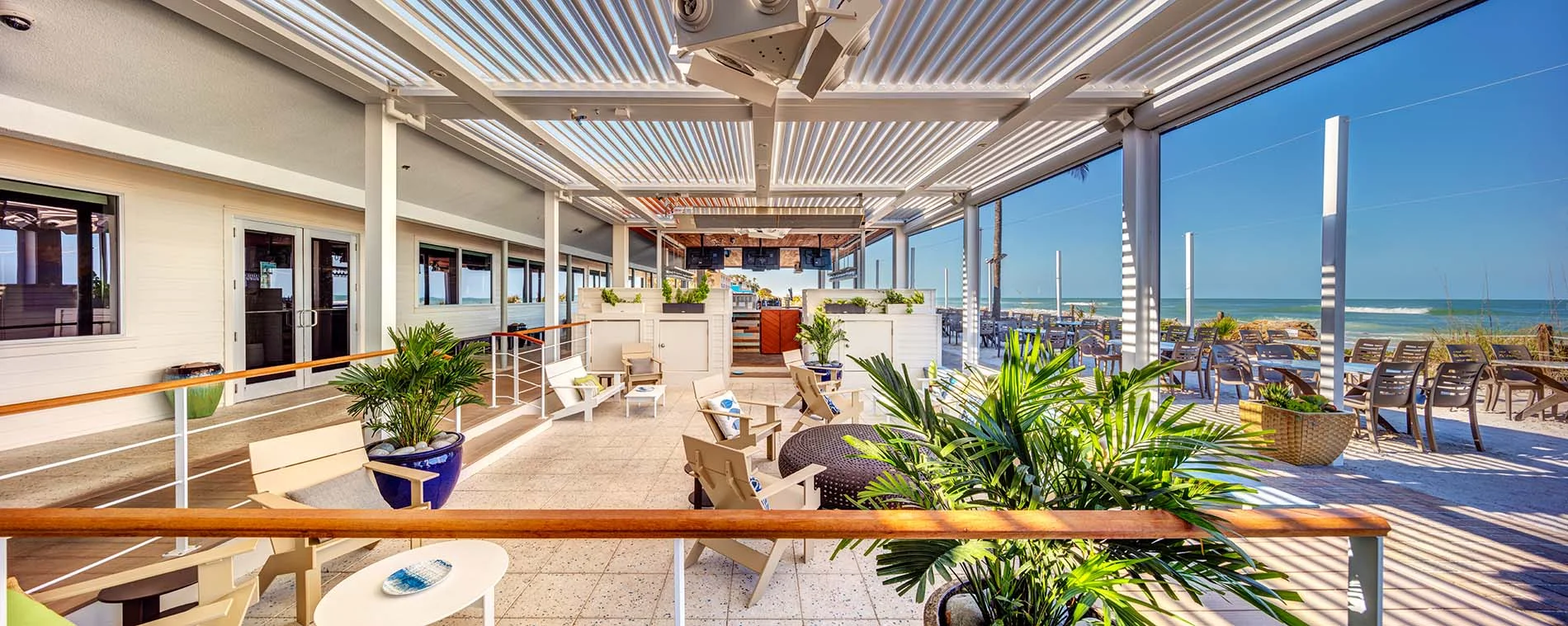
Screens: wind, sun and insects on the water
Open water means wind, and wind means blowing rain across tables even when the roof is closed. Motorized screens in side tracks solve that, and they solve two other waterfront problems at once: they cut low-angle sun glare off the water at sunset, and they keep no-see-ums off guests at dusk — which near mangroves and brackish water is a genuine service issue.
Note that comfort and privacy screens are not code-approved opening protection. If storm protection is part of the scope, motorized hurricane screens are a separate rated product with a documented design-pressure rating. Ask for the approval number.
The operating case
Waterfront operators generally evaluate these structures on four things:
- Recovered covers. Seating that is usable in sun, rain and wind rather than only in perfect conditions.
- Event bookability. A space you can contract for a wedding or corporate function without a weather contingency is worth materially more per booking.
- Maintenance cost. Aluminum and powder coat versus replacing canvas every few seasons and refinishing wood annually.
- Guest experience. Guests came for the water view. A structure that preserves sightlines while adding comfort is the point.
For adjacent venue types, see our guides to stadiums, clubs and hospitality venues and community amenity structures.
Frequently asked questions
Will aluminum hold up on a dock?
Yes. Aluminum does not rust, and with a marine-grade powder-coat finish and stainless hardware it is the appropriate material for direct marine exposure. Periodic freshwater rinsing keeps the finish clean.
Do these structures block the water view?
No. Post spacing and cantilever options are designed around sightlines, and the louvers open to sky. That is the main advantage over a fixed roof.
Can it stay open during service and close automatically in rain?
Yes. Louvers operate by remote, wall control or building automation, and a rain sensor can close the roof without staff intervention.
What about hurricane season?
Structures are engineered to site-specific design wind pressures for the exposure category. Read our hurricane guide for what a rating covers.
What areas do you serve?
Waterfront venues throughout South Florida and the Keys, including Fort Lauderdale, Miami, Jupiter, Palm Beach, Islamorada and Key Largo.
Plan a waterfront structure
StruXure South Florida works with marina operators, clubs and hospitality groups on design, engineering, permitting and installation. Request a commercial consultation and we will assess your site’s exposure, sightlines and seating layout.