
Equestrian Pergola Design for South Florida Horse Properties: Viewing Areas, Wash Racks and Show-Season Shade
An equestrian pergola solves a problem every South Florida horse property shares: the people, the horses and the equipment all need shade, and the sun moves. From Wellington and Loxahatchee Groves to the farms west of Delray and Jupiter, owners are adding motorized louvered structures at ring-side viewing areas, wash racks, barn courtyards and entertaining terraces. This guide covers where they work, what the code asks for and how to plan one that survives the season.
Why an equestrian pergola beats a fixed roof at the ring
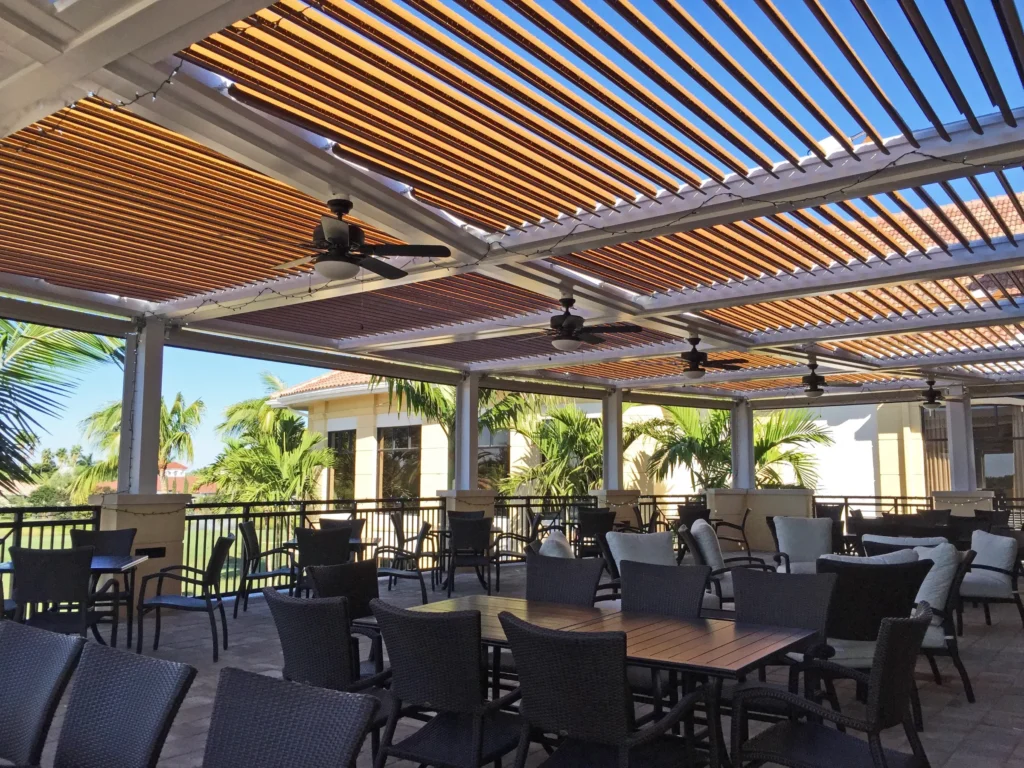
To start, a fixed roof gives you one shade pattern all day. At a riding arena that means the viewing area is shaded at 10 a.m. and baking by 3 p.m., or the reverse. In contrast, motorized louvers rotate through the day, so the same structure blocks a low winter sun during show season and vents heat in July. Likewise, close them and you have a dry place to watch a lesson in a passing shower. Open them and the breeze moves through.
Because the roof is aluminum and the frame is engineered for local wind loads, the structure does not need the maintenance of a wood shade barn. As a result, it gets rinsed, not restained. Our overview of how adjustable louvered roofs work explains the mechanics.
Four places an equestrian pergola earns its keep
Ring-side viewing and judging areas
Trainers, owners and parents, for instance, spend hours at the rail. For example, a louvered structure over a raised viewing deck gives them shade that follows the sun, a fan-ready ceiling and a dry seat when a cell rolls through. Side screens drop for low sun and no-see-ums without blocking the view of the arena.
Wash racks and grooming bays
Similarly, wash racks in full sun are hard on horses and on the people hosing them. A louvered roof shades the bay, and its integrated gutters move rain away from the footing. Therefore, choose a finish rated for constant moisture, and plan the slab to drain away from the posts.
Barn courtyards and tack-up areas
Meanwhile, the open area between barn aisles is often the hottest spot on the farm. A freestanding structure turns it into a shaded staging area for tacking up, vet visits and farrier work. Above all, keep the posts outside the traffic path and the clearances generous.
Owner and guest entertaining
Most equestrian properties host: barn parties, sponsor evenings, end-of-circuit dinners. Consequently, a screened, lit and fan-cooled louvered terrace by the house or the ring does the job a rented tent used to do, every week of the season.
Heat, horses and shade: what the research says
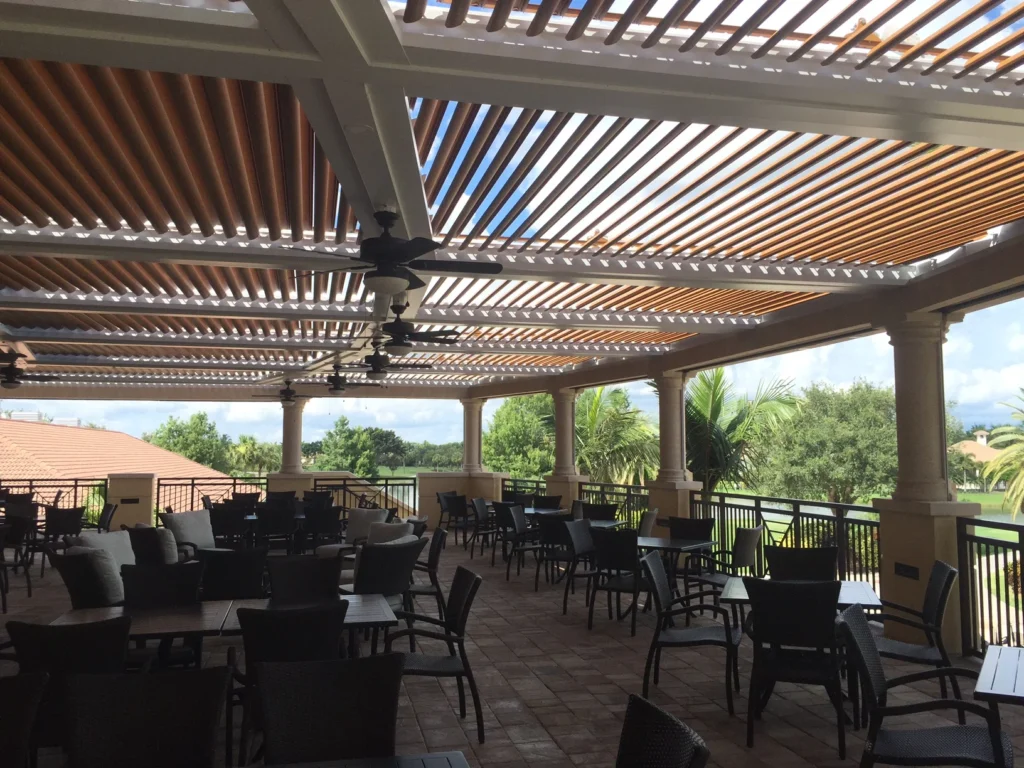
Sweat evaporation is the horse’s main way to shed heat, and South Florida humidity works against it. The University of Florida’s guidance on managing heat stress in horses lists shade, airflow and water as the basics. A louvered structure over a wash rack or a holding area supplies the first two, and it does so without trapping heat the way a low fixed roof can. For people, the same shade cuts direct sun during long show days.
Wind, code and permits on agricultural land
Horse properties in Palm Beach County sit in the same wind-borne debris region as the coast, and many are in open, exposed terrain. Because exposure category matters, an open pasture site sees higher design pressures than a sheltered suburban lot. Every StruXure structure is engineered per address, so the footings and connections match your exposure rather than a generic table.
Zoning, moreover, is the other question. Equestrian parcels may fall under agricultural or equestrian overlay districts with their own setback and accessory-structure rules, and some communities in the Wellington area have an architectural review process on top of the county permit. In short, confirm both before you site the structure. Our setback and lot coverage guide explains what to ask the building department, and our Wellington page covers the local process.
Designing an equestrian pergola that lasts
Farms are hard on structures. Plan for these details up front:
- Post protection. First, set posts on raised footings or behind curbs where horses, tractors and trailers move. A bollard is cheaper than a bent column.
- Clearance. A mounted rider or a horse on a lead needs more headroom than a dining terrace. Specify the beam height for the tallest use, not the average.
- Finish. Powder-coated aluminum handles ammonia, wash-down and sun. Rinse it on the same schedule as the barn fans.
- Drainage. Integrated gutters and downspouts should discharge away from footing and away from the slab edge, so the arena base stays dry.
- Power and controls. Motors, fans, lighting and screens need a dedicated circuit and weather-rated boxes. In other words, wire it once, during construction.
- Pests. Flies, wasps and birds follow horses. Read our guide on pest exclusion for louvered structures and consider a misting system for the viewing area.
Commercial and club equestrian pergola projects
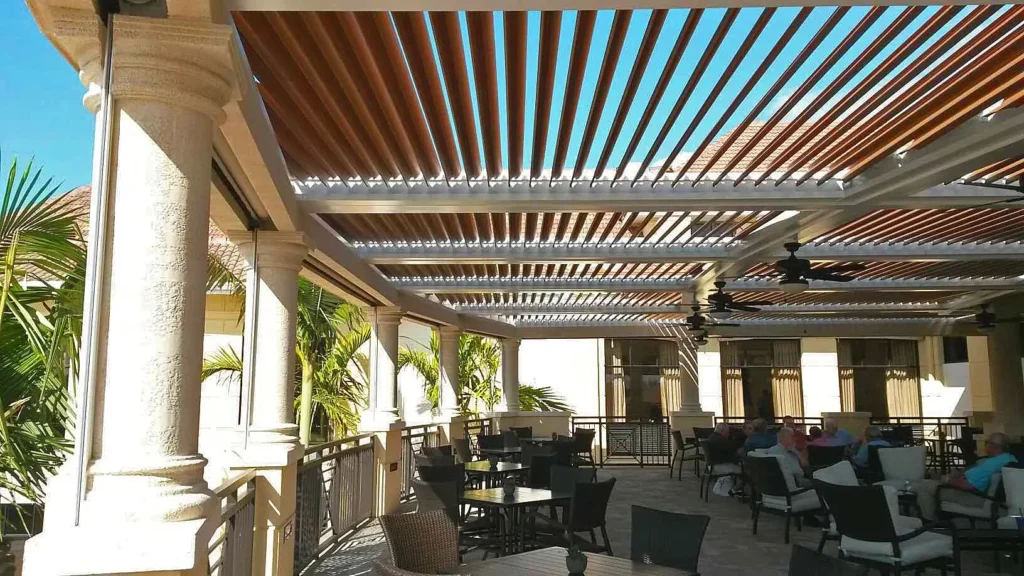
Finally, boarding facilities, show venues and polo clubs face the same heat with more people. A louvered structure over a spectator terrace or a sponsor lounge gives the venue a weather-independent hospitality space. Equally, it also photographs well, which matters for a club that sells memberships and sponsorships. Our commercial pergola team handles the larger spans, and our community amenity guide shows how associations approach the same problem.
Frequently asked questions
Does an equestrian pergola need a permit on agricultural land?
Almost always, yes. Agricultural zoning may relax some accessory rules, but a wind-rated structure with footings and electrical still goes through the building department. So ask the county before you assume an exemption.
Can the roof stand up to a Wellington summer storm?
The structure is engineered for the site’s wind exposure, and the louvers open to relieve pressure. Motorized screens are for sun, bugs and privacy; retract them before a storm, because they are not storm protection.
Will horses spook at moving louvers?
Most settle quickly, in the same way they do with barn fans and automatic waterers. To begin with, run the louvers a few times while horses are nearby and calm, and avoid operating them during a lesson until they are used to it.
How big can an equestrian pergola be?
Modular bays link to cover long viewing decks and wide courtyards. However, span and column spacing depend on the engineering for your address, so start with the footprint you want and let the design work back from there.
Planning shade for a horse property in Wellington, Jupiter Farms or the Redland? Schedule a site visit and we will map sun angles, traffic paths and the permit route before we quote.